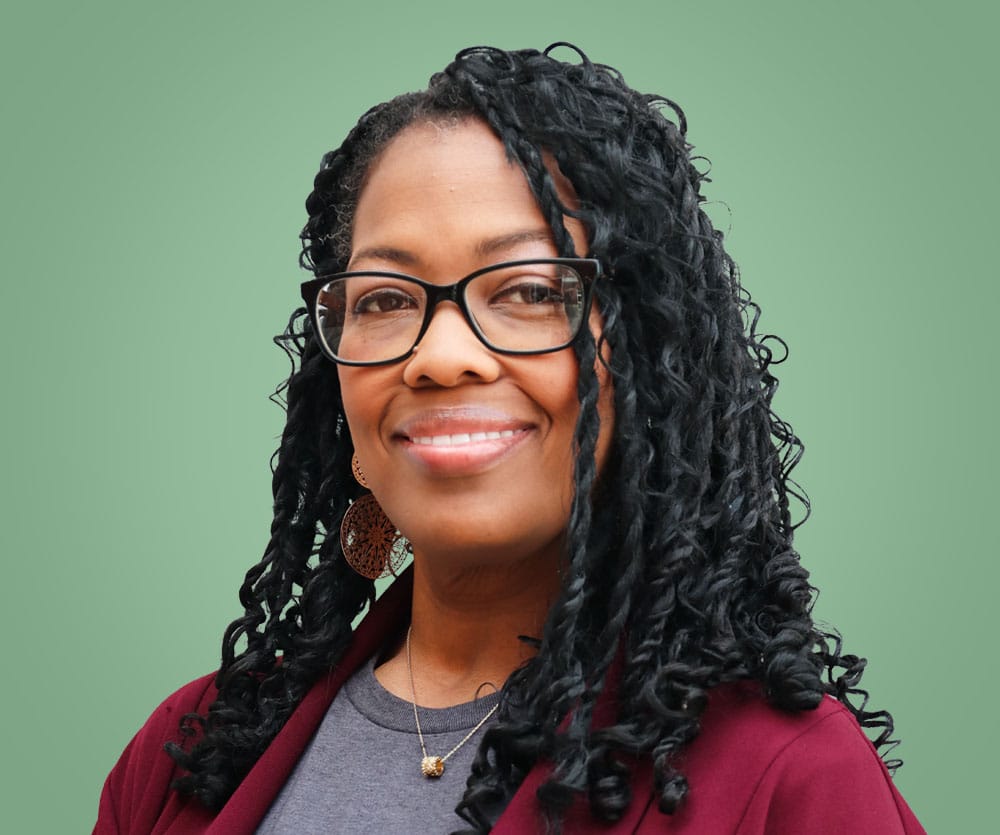
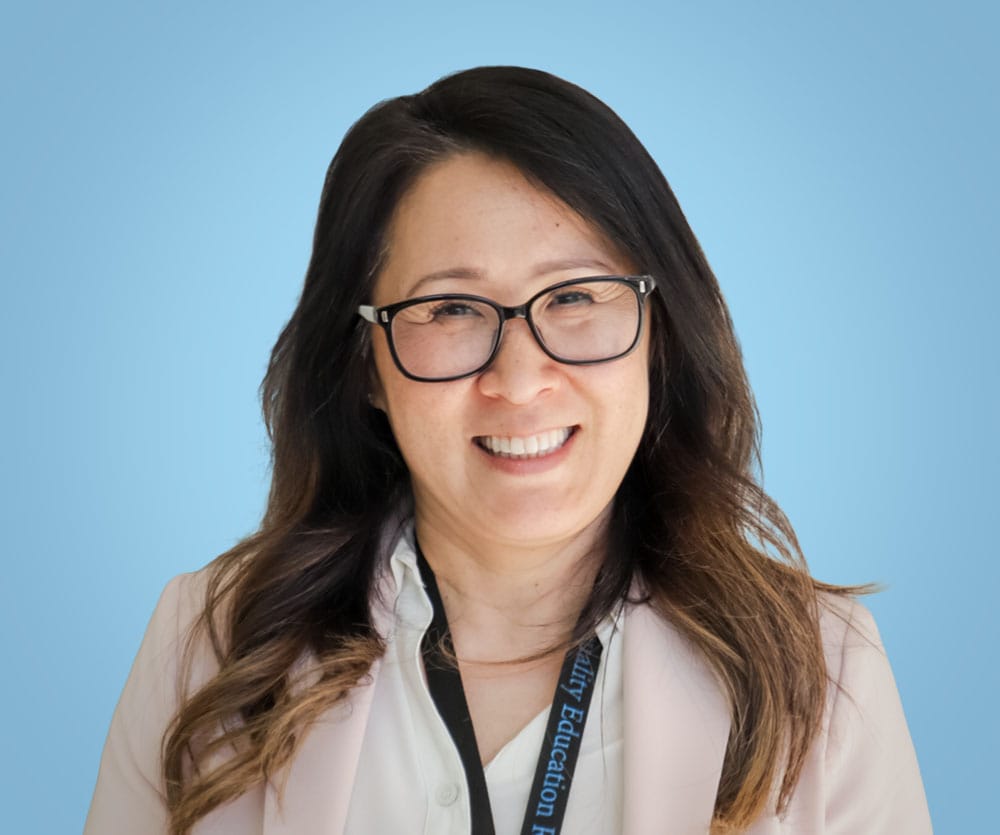
The Commit Partnership’s Systemic Educational Impact


The Commit Partnership’s Systemic Educational Impact
The Commit Partnership
, Dallas
, Texas
Available On:


LISTEN TO THE EPISODE
It really comes down to the system, and we have to make sure that we fix the system in order to support students and make sure they are successful, and that's really what led me to Commit, and I thought have to be part of solving this problem about fixing the system.
Abby Mayer Eelsen
Every student should be empowered by highly effective professionals in the classroom, at the campus level, and at the system leadership level, including school superintendents and district leaders, and then all the way up to school board talent as well.
Abby Mayer Eelsen
Enrolling in public pre-K makes students nearly twice as likely to enter kindergarten ready, which means that they are more likely to read on grade level in third grade, which makes them nearly four times as likely to graduate high school and enroll in some kind of postsecondary programming.
Abby Mayer Eelsen
[We need to make sure that] districts are investing in programming and resourcing like instructional coaching that provides teachers coaching for them, so that they can grow and develop as teachers, but also really making sure that students are on track, they’re being taught curriculum that is on grade level.
Abby Mayer Eelsen
Description
Abby Mayer Eelsen, the Chief Operating Officer of The Commit Partnership, joins us for an organizational spotlight podcast episode. Abby combines her experiences as an educator, fundraiser, advocate, and parent of a Dallas ISD student to connect the philanthropic community with opportunities to ensure all students receive an excellent, equitable education.
You’ll hear about:
- The Commit Partnerships’ mission and initiatives.
- The Commit Partnerships’ work for high-quality talent, rigorous instruction, and postsecondary access and success.
- The incredible work The Commit Partnership is doing in ensuring more students attain living-wage employment and long-term economic stability.
- How The Commit Partnership’s work increases teacher retention and student success.
Links Mentioned
- Learn more about The Commit Partnership: https://www.commitpartnership.org/
- Nominate a teacher for our Honored National Teaching Award: https://www.honored.org/nominate/
- Follow us on Instagram: https://www.instagram.com/honored/
- Follow us on Twitter: https://x.com/honored/
- Follow us on Facebook: https://www.facebook.com/Honored.org/
- Follow us on LinkedIn: https://www.linkedin.com/company/honored.org
- Follow us on TikTok: https://www.tiktok.com/@honoredteachers
Credits
- Music by DanaMusic: https://pixabay.com/users/danamusic-31920663/
- Music by AudioCoffee: https://www.audiocoffee.net/
Transcript
ABBY MAYER EELSEN: If you don’t have a diverse population of students, you allow pervasive biases to impact the student body community. And so it’s important, whenever you have a diverse student body, to have a diverse body of educators as well who are teaching that student body just because the students are more likely to A, see themselves in another teacher, but then B, they’ll probably be able to find a teacher that holds them to that high standard, that believes in them and that can push them and motivate them to succeed whenever they grow up.
HANNAH BOWYER-RIVETTE: Hello everybody, and welcome back to Inspiring Teachers: The Honored Podcast, where we shine a spotlight on life-changing teachers across the country. I’m Hannah, your podcast host, and our podcast is brought to you by Honored, which is a national nonprofit organization dedicated to honoring and elevating great teachers nationwide.
Our mission is to inspire and retain great teachers, keeping them in the classroom as long as possible. Every month at the school year at Honored, we select an exceptional educator in the United States to be the recipient of the Honored National Teaching Award. Each Honoree, as we call them, receives a $5,000 cash reward, and we then tell the story on our website and our social media platforms of how that teacher has impacted their students’ lives. To learn more about our organization, you can go to our website at honored.org. While you’re there, if you have a teacher you would like to recognize, you can nominate them at honored.org/nominate.
We are so excited to have you listening in on another organizational spotlight podcast episode. Today, we are joined by Abby Mayer Eelsen, the Chief Operating Officer of The Commit Partnership. Abby combines her experiences as an educator, fundraiser, advocate, and parent of a Dallas ISD student to connect the philanthropic community with opportunities to ensure all students receive an excellent, equitable education.
Abby grew up in San Angelo, TX, where she earned her bachelor’s degree in English and Education from Angelo State University. She began her teaching career in Leander ISD as a middle school Language Arts teacher. In 2013, she joined the philanthropy team at Genesis Women’s Shelter as the Grant Manager and then became the Director of Philanthropy. During this time, Abby became involved in her neighborhood Dallas ISD school, and that passion drew her to return to education, where she worked in the Human Capital Management Department for Dallas ISD.
She was selected as a member of the 2019 Dallas County Civic Voices Fellowship through Leadership ISD and holds a Master’s in Business Administration from Southern Methodist University. To start our episode off, you’ll hear from Abby, who shares her journey to where she is today. From growing up in a family that valued education to her experience as a teacher and working in the Dallas ISD’s central office, her journey has instilled in her a passion for access to education and the impacts it has on economic mobility.
ABBY MAYER EELSEN: My education career journey has really been focused on economic mobility. I became a teacher a couple of decades ago, and really was informed and inspired by my mom, who was actually the daughter of a school superintendent here in Texas. And education throughout her life, and then infused into mine and my sisters, was always just something that was valued. And I always knew that education was a path to economic mobility. I was a traditionally trained teacher. I went to college and received my bachelor’s degree in English and education.
And from there, went into my very first teaching job in a, at the time, small school district right outside of Austin, Texas, called Leander ISD, and got my first teaching job teaching eighth-grade Language Arts. And opportunities with my family took me from Leander and we moved to Denver, and I actually specifically sought out the school that I went to in Denver, looking for a campus that was focused on a turnaround type of model and focusing on additional resources and supports to students to really tackle some of the most challenging pieces of education and making sure that all students were able to have the success that was really deeply embedded in me.
And so from Denver, I moved to Dallas and taught a couple of years in Dallas ISD, and then was fortunate to move back to my hometown, San Angelo, where I taught eleventh-grade English at the high school that I graduated from. That was my last year to teach. I taught for seven years in the classroom, and really had that unique experience of teaching elementary school, middle school, high school, and in rural, urban, and suburban school systems.
I stayed home for a couple of years with my daughter, and then I went to work in the central office of Dallas ISD in human capital management. And really what I was looking for was, as a teacher in my classroom, I could impact 100 to 120 students that I had that year, and I really wanted to have a greater impact on more students, and so in Dallas ISD, I had that opportunity to then think about the 150,000 students in the school system and the 10,000 teachers, and really enjoyed getting to see that perspective.
It was also during a time that Dallas ISD was implementing a lot of new progressive ideas, including a pay-for-performance model for its teachers. A lot of school choice was beginning to unfold at that time, and so I learned a lot about the business side and the staffing and talent side of what it looks like in a school system. And it was during that time that I was part of a presentation, someone was presenting, and this data slide came up on the screen, and it had The Commit Partnership’s logo and title on it.
And what was on that slide was a graph detailing a cohort of eighth-grade students from the time they were in eighth grade through their student journey. And essentially, what that data slide said is that of those eighth graders, only about 12 to 15% of them went on to earn any kind of postsecondary degree, and most likely weren’t earning a living wage. And it really just broke my heart. I had been an eighth-grade teacher in Dallas ISD, and those were my students, and yet, with all the support I gave them, with all the opportunities they had, the system had failed them.
And that is what I took from that data slide, was that it really comes down to the system, and we have to make sure that we fix the system in order to support students and make sure they are successful, and that’s really what led me to Commit, and I thought have to be part of solving this problem about fixing the system.
HANNAH BOWYER-RIVETTE: Commit is a Dallas-based nonprofit organization dedicated to uniting school systems, higher education institutions, policymakers, businesses, nonprofits, community members, and foundations to create systemic change in our education system and improve economic opportunity. At its core, Commit’s work is dedicated to ensuring more students attain living-wage employment and long-term economic stability.
ABBY MAYER EELSEN: The Commit Partnership is a Dallas-based nonprofit, and we are the largest collective impact education backbone in the country. And what that means in practice, essentially, is that we serve as the node, or, if you will, that backbone, you can visualize a backbone, that unites school systems or school districts and charter networks and school systems with higher ed partners, policymakers, businesses in our local community, community members, nonprofits, foundations, everyone who interacts with part of the public education system.
And we do that behind a shared mission and vision. And the vision and the mission that guides us is that by 2040, at least half of all of our 25 to 34-year-old residents of Dallas County, irrespective of race, will earn a living wage. Currently, here in Dallas, only one-third of young adults meet that inflation-adjusted threshold for living wage attainment. And there remains a persistent disparity by race here in our community. So again, this goes back to that slide, seeing how many students are earning a living wage, and that is Commit’s North Star goal.
The good news is that since Commit was founded back in 2012, we’ve seen progress towards our mission, as well as growth in the number of students meeting key educational milestones that we know are aligned to it, such as pre-K enrollment, third-grade reading, and postsecondary completion. And regionally in that time frame, we’ve seen living wage increase by about 10%, and young adult poverty declined by about 7%. So we really think about these population-level outcomes as what we track and measure our work against.
HANNAH BOWYER-RIVETTE: Commit’s strategy centers around three interconnected systems: high-quality talent, rigorous instruction, and postsecondary access and success. Together, these systems impact the student journey from early learning through college and career readiness. By focusing on the educational experience at every level of instruction, they are working toward improving living wage attainment outcomes for all students.
ABBY MAYER EELSEN: So we think about living wage attainment again, through our public education systems, and that academic journey of students all the way from pre-K to a high-demand, high-wage career, and whether that is a transition directly out of high school into the career, or through postsecondary into that career. And here at Commit, we refer to our priority systems. The three that we really focus on is, first of all, high-quality talent, and then secondly, rigorous instruction, and then lastly, postsecondary access and success.
And so when we think about that high-quality talent priority system, we feel that every student should be empowered by highly effective professionals in the classroom, at the campus level, and at the system leadership level, including school superintendents and district leaders, and then all the way up to school board talent as well. And then, we also believe that every student, again, from pre-K through 12th grade, should have access to effective instruction, leading to mastery of content and readiness for college and career.
So I think of this as every student ready for kindergarten, they come in, they are ready for kindergarten, they’re ready to learn, they are at that place that they need to be. Every student ready for fourth grade, being ready because they are able to read at a third-grade reading level, and being able to read to learn at that point. And then all the way, thinking about students being ready for college and ready for their career. And so we really think about it as that readiness as they transition from these essential points in their academic journey.
And then finally, that third priority system around the postsecondary degree or attainment aligned with living wage employment. Our work, from team structures to goal setting to our budget, is centered around achieving these priority systems and making sure that the student journey across, and how they interact with each of these systems, is supported, and that that student is ultimately successful through their academic journey.
In my teaching career, regardless of what grade I was teaching or what type of school I was teaching in, I saw the intersection of all of these systems coming together, and so that’s really why Commit has centered in on what we feel are research-informed systems that will help us accelerate student outcomes in the way that we feel is best aligned to our work.
HANNAH BOWYER-RIVETTE: Access to high-quality early education can change the trajectory of a student’s life. Research shows that academic readiness throughout the educational journey is impacted by experiences as early as pre-K. Through Abby’s experiences during her time as a teacher, she witnessed firsthand the impacts that a lack of access can have on students far beyond their time of early education.
ABBY MAYER EELSEN: That early foundation is so important to making sure that students are set up for their entire student journey and their academic career, and it really does start as early as pre-K. And we know that provide
So these readiness levels and that early foundation do impact the student journey years down, and we also know that data shows that if a student falls behind and is not meeting that academic readiness benchmark, let’s say in third grade, that only one in five students really ever catches up. And so it’s essential that in those early years, students receive the best instruction possible. They receive the interventions needed to make sure that they are truly ready, and they are truly at the level that they need to be as soon as possible.
When I was teaching eleventh grade in my hometown, so teaching English III, which, here in Texas at the time, was the final course that students had to take in English in order to graduate high school. So it really was a critical year for students. And I had a student in one of my classes who I figured out over a couple of weeks that he was not able to read. Maybe he was reading at a third-grade level, but he was not reading at an eleventh-grade level. And I just asked myself, “How can a student get to eleventh grade and not know how to read?”
And then I asked myself, “What’s going to happen to this student when he graduates, and how is this lack of ability for him going to impact him further in his career?” Everything from filling out a job application to being able to read the forms to going into his first job and having onboarding and orientation manuals that are going to require reading. So thinking back to, he didn’t have that early foundation. He didn’t have that strong reading instruction and proficiency early on, and it has compounded now throughout his lifetime.
And so again, those early grades are essential and need to be where so much focus and effort is put towards our students and our teachers in supporting them in those early grades. And even making sure that we’re supporting teachers, once you do identify a student who is struggling, what does that look like for intervention and personalized learning, and supporting a teacher to address that while also continuing to teach and support the other students in the classroom who may be at different levels.
HANNAH BOWYER-RIVETTE: In speaking about Commit’s focus on postsecondary access, Abby shares about some of the barriers students face when navigating life after high school. A critical factor for postsecondary success is access to consistent, high-quality advising starting even as early as middle school. Through partnership with the organization, Education Is Freedom, Commit ensures students receive comprehensive college planning and career readiness services in middle school, high school, and beyond.
ABBY MAYER EELSEN: One of the biggest barriers is the lack of high-quality college and career advising. We hear a lot about advising ratios, and it really is a critical factor for students even thinking about moving into college. But so many times, students lack that clear guidance on even what their options are, what they need to be thinking about, how they access scholarships or different things like that, or how they access pathways that are affordable for them and their families.
So also thinking about do we have advisors who are helping students think through their next step, if maybe college is not the next pathway for them? But having those trained advisors staffed at a ratio where they can spend enough time working with each student throughout the year. And not even necessarily just their senior year, most students don’t have an advisor that supports them until their senior year, and by then, they’ve already made decisions, they’ve already told themselves, “I can’t do it, or it’s not for me, or there’s too many barriers, or I’ve already got a job lined up.”
So also starting to think, how do we begin supporting students earlier, as early as middle school, versus waiting until that final year when they are a senior? And one thing I’m really proud of at Commit, and how we’ve really started to think about this, is we partner with another organization called Education is Freedom, and this is what they do. They are a centralized college and career advising organization that works with our district partners.
They staff advisors on the campus to keep the ratio low so that they have dedicated time with every single student, to sit down and meet with them and really hear from the student what they want to do after they graduate. And then making sure that are you taking the right science course? Did you know that there’s another option at the school that provides this program that you should be applying into? And really helping students on that path because oftentimes students don’t even know what they need to ask.
And so to have those dedicated advisors, we’ve really seen that transform student success to one, making sure they’re keeping their grades up and they’re meeting their academic requirements in high school, but also that they’re filling out their college applications and they’re doing all these other pieces that, one barrier can be what makes a student say “This isn’t for me.” And we really want to remove all of those barriers so that every student has their option, and it truly is up to them to decide the pathway, versus them feeling like it’s already been chosen for them.
HANNAH BOWYER-RIVETTE: When thinking about how districts can work to create environments where both teachers and students can thrive, Abby emphasizes the importance of grounding the decision-making process in determining what is best for the students. Additionally, it’s important that districts invest in their teachers by providing high-quality resources and instructional coaching to help them refine their craft and ultimately hold students to high standards of success.
ABBY MAYER EELSEN: First of all, something especially at Commit that we really think about is that school leaders, from the board to the superintendents, the principals, have to be laser focused on student outcomes. Where are we right now? Where do we need to go, and what strategies do we need to put in place to get there? It makes me think back to the very first principal that I had in my first year teaching. Anytime a decision came up, he would always pause and say, “What is the best decision for our students? What is going to make sure that we get our kids where they need to be?”
And that’s always really stuck with me when this decision comes up, and there’s maybe hard for the system to change, or it may be hard to put additional funding over here, asking that question of “What is best for our students?” And so I’d say that’s really that first thing, of making sure it’s grounded in those student outcomes and what is best for students.
And then also thinking and tying back to high-quality talent and rigorous instruction as those priority systems, and making sure that districts are investing in programming and resourcing like instructional coaching that provides teachers coaching for them, so that they can grow and develop as teachers, but also really making sure that students are on track, they’re being taught curriculum that is on grade level.
Whenever I went and taught in Denver Public Schools and got my class, and fortunately, I was also given an instructional coach. And I probably wouldn’t have made it through that year without her. It was an incredibly hard first couple of weeks in that classroom with students that I was in a new school system, a new state, new standards, new curriculum.
But she showed up with me, and she helped me understand the curriculum and understand what I was teaching and using my pedagogy skills, truly deliver instruction that was on grade level with my students, coaching them, and providing that intervention and instruction for them. And she coached me, too. She helped me set my goals, and she helped me understand where I was continuing to grow as a teacher.
And while that was one of my hardest years teaching, it was also one of my most effective years of teaching and one of my most rewarding years of teaching because I truly felt like I had someone in my corner helping me become a better teacher. And so that’s, again, thinking of when we think about what school systems can do, investing in these structures that provide resources and support to your most important staff, which is your teacher. They’re the one in the classroom every single day with your students, and you have to invest in their support and the systems around them to make sure that they are as effective as possible.
HANNAH BOWYER-RIVETTE: Another key element of Commit’s work is centered around statewide policy to ensure policies are informed by the voices of educators, families, and community leaders. Once policies are passed, Commit then works alongside districts to support them with implementing new changes to increase opportunities and improve student outcomes.
ABBY MAYER EELSEN: Here at Commit, we think about this in twofold. And so we think about it both in the educators and our school leaders who are in the classroom, on the campuses, and how do we work directly with our district partners to help them implement new policies and even oftentimes inform new policies? How do we make sure that their voice is heard so that truly is practitioner-informed policy? So we really think about it in that way, too. But then we also think about, once the policy’s passed, how are we helping our school districts know that the policy existed, know that it got passed, and how is it going to implement them?
And that’s where Commit shows up. And we show up as also a policy implementation partner. And so, for one example, a couple of years ago, we worked with several partners to help pass a policy focused on advanced math pathways. So how could we, through policy, help make sure that students who are scoring very high on their fifth-grade statewide math exams get automatically placed into advanced math?
Because what research was showing us that a lot of students who tested very high would then transition into middle school and maybe not get put on an advanced math pathway, even though they were very, very capable. And we knew that students in advanced math courses would oftentimes take advanced math courses through high school, which would increase their persistence and success in college. And so we knew that getting more students into advanced math was essential.
And so we helped get a policy passed where this is to happen automatically, but that was not something that just gets blasted out to school districts with like, here’s how you do that, and here’s what that looks like. And so once that policy was passed, the Commit team turned around and went to work with our school districts to help them, one, understand the policy, and then thinking through, do you know how to identify which of your students tested high in fifth grade? Do you have enough advanced math courses to put all these students in advanced math courses in middle school?
Do you have the teachers to staff the advanced math courses? So really, then helping them think through the series of changes that may need to happen, and how we could support them in doing that. And so that’s one where both, how do we get the policy passed on the front end, informed by practitioners? And then how do we show up on the backside and help implement it in partnership with the district, where it doesn’t feel like a compliance effort of this policy was passed, you have to do this thing? But this policy was passed. How do we now implement it so that more students have this opportunity?
HANNAH BOWYER-RIVETTE: As educators face challenges such as burnout and decreasing job satisfaction, Commit’s work supports school systems in an ever-evolving landscape to retain educators. From providing high-quality instructional materials and instructional coaches to ensuring competitive compensation, these research-backed strategies lead to higher retention rates and ultimately improve student success.
ABBY MAYER EELSEN: First of all, making sure that teachers have access to really strong curriculum and instructional materials. A couple of years here in Texas, we also helped get a policy passed that helped put in place high-quality instructional materials in districts so that teachers don’t have to spend a lot of time creating their own materials. So, having that high-quality instructional curriculum given to a teacher and then the support with an instructional coach to help them deliver that curriculum at the same time.
So it goes hand in hand. They have to both have that access to the instructional materials, but they also have to have that coach who is supporting them, especially if you’re an early career teacher, to deliver the curriculum and to understand, are your students learning what they need to learn in these various moments, and how do pause and check for understanding, and when do you move forward and or intervene? And so I would say that both the curriculum and the instructional coaching are two critical pieces.
And then a third one that I would say is compensation, and making sure that teachers are compensated for their impact. And so this is something that here in Texas, we’re really proud that there is a way for our teachers to have a pathway to six-figure salary. And that’s through what’s called the Teacher Incentive Allotment, which was passed in policy several years ago, and it was directly informed by our local experience here in Dallas, where Dallas ISD created a multi-measure evaluation system that tied compensation for their teachers and principals to outcomes from students.
And it one, it allowed our top-performing educators to stay in the classroom, rather than feeling like “I have to go be a principal if I want to earn any additional income.” It also gave our newer teachers a really clear vision of what success looks like. And the third and final, it gave our entire school system a clear picture of who are our very best teachers, and how can we make sure that we are getting them in front of the students who need them the most, and how can we place them on campuses where they can have the greatest impact on students who really need that very, very effective teacher?
And I say all that in this idea of how do we retain teachers? Dallas ISD has a much higher retention rate than the other districts in our area, and when you look at their teachers who are the highest performing teachers, they are being retained at like 90% or higher. And so they are able to keep their best teachers in the classroom in the district in front of students who need them the most.
HANNAH BOWYER-RIVETTE: In 2020, Commit supported Dallas ISD in passing its largest school bond at the time, which funded the creation of the Dallas Career Institute North, a center that provides high school students with career and technical education for high-demand, high-wage careers. Later, Abby spoke at an event at this facility, and now, her daughter attends a school that partners with the institute. This full-circle moment is a powerful reminder of the systemic change that is possible through organizations such as Commit.
ABBY MAYER EELSEN: One of the things that Commit also does is we support our school systems with sourcing and thinking through how to get additional funding in the form of a local bond or Tax Ratification Election. And so the school systems can have additional funding to do new things or to expand resources and different things like that. And in 2020, we were proud to really support Dallas ISD as they passed what was, at that time, the largest school bond in the history of the state.
And then, a little over a year ago, so it came back full circle, I went and was honored to speak at an event at the Dallas Career Institute North, which is a campus that was built using the funding from the bond election. And this is a state-of-the-art facility that allows high school students with hands-on Career Technical Education directly connected to high-wage, high-demand jobs such as cybersecurity, health sciences, aviation, all these next-level careers.
So I got to sit there and be in this facility that was really, really incredible, and it provided this career pathway for students that didn’t exist before. And then also looking back now too, I have a daughter, and she’s a ninth grader in Dalla ISD, and her high school partners with this Career North Institute, and students like my daughter have the option to go spend half their day focused on a career path where they are getting direct support and instruction on that credential and that career pathway.
And so being able to see the bond election happen, the building get built, and then the direct impact it’s having on students being able to go into various programs and graduate, already having training, already being ready for the next step, has just been really fulfilling to see how something as kind of nuanced and political as a bond election can create this really huge, outsize opportunity for students across Dallas ISD.
HANNAH BOWYER-RIVETTE: Thank you so much for listening and joining us today to learn more about Abby Mayer Eelsen and The Commit Partnership. To learn more about Commit, you can visit their website at commitpartnership.org or click the link in the episode description. If you enjoyed today’s episode, you can follow us and leave us a review on whatever podcast platform you’re listening in from. Thanks again for listening, and make sure to tune in again next month, where we will hear the incredible story of the recipient of our April Honored National Teaching Award.
Your teacher could be featured on The Honored Podcast. Nominate them for our $5,000 Honored National Teaching Award!
More Honoree Stories
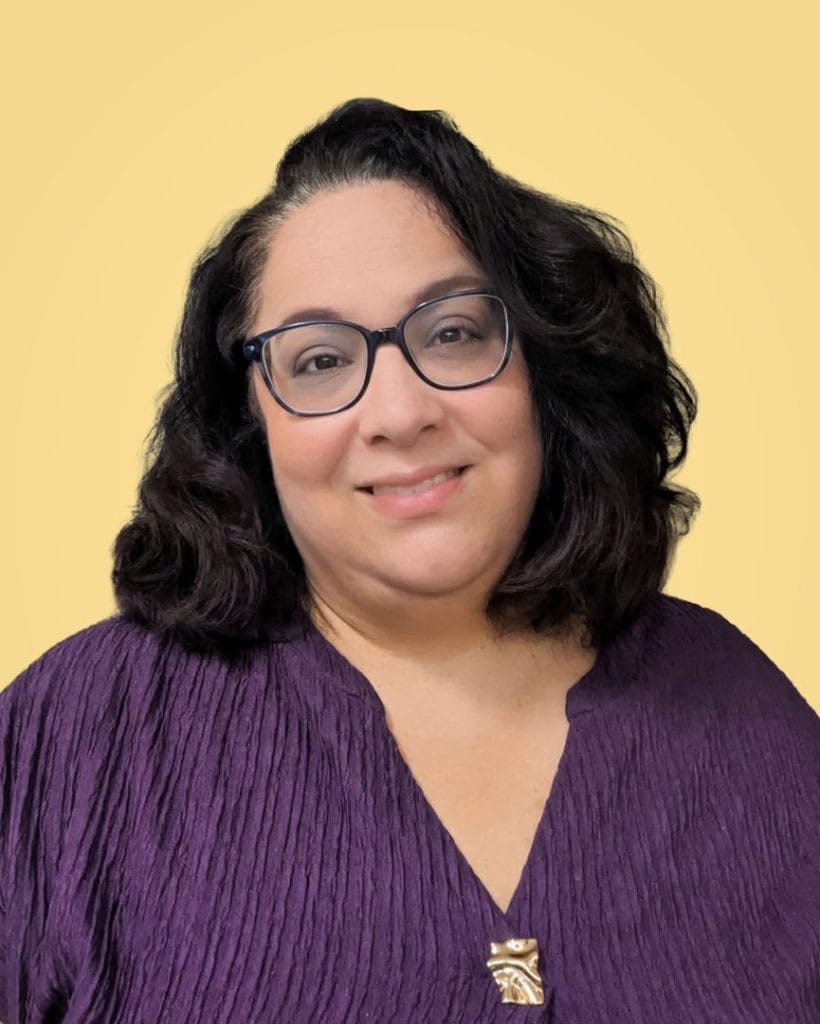
September
Madeline Gerena Franco
Whitney M. Young Magnet High School
Chicago, Illinois