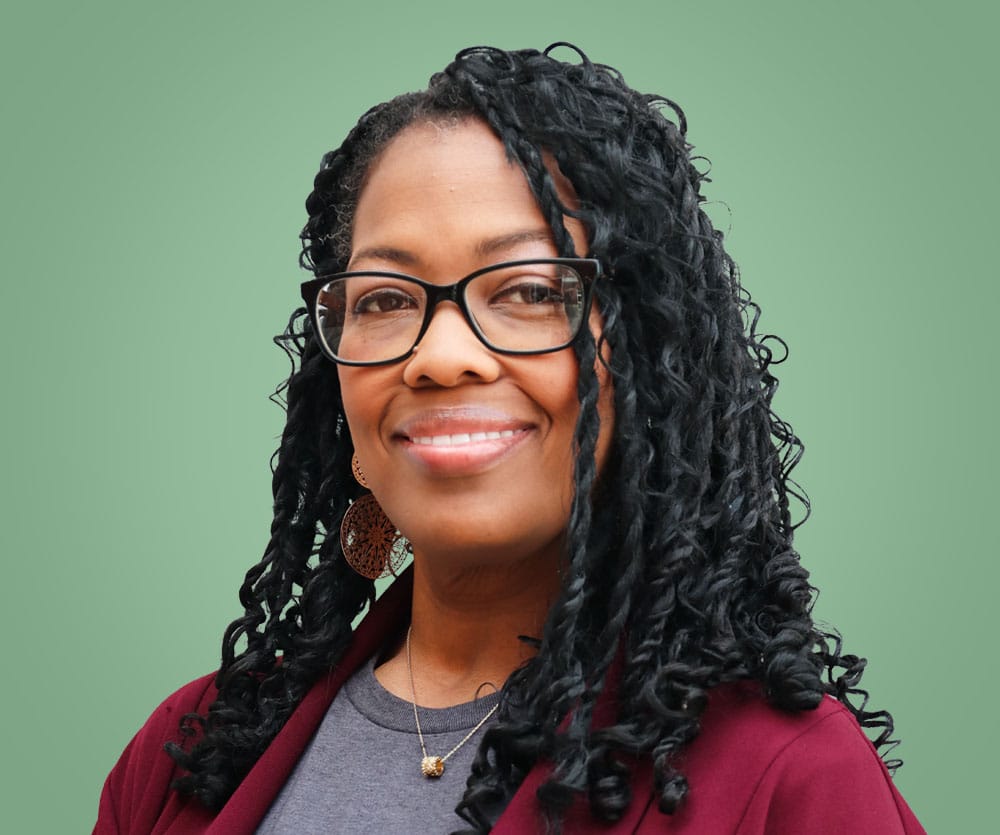
Julian Coleman


February 2026 Honoree
Julian Coleman
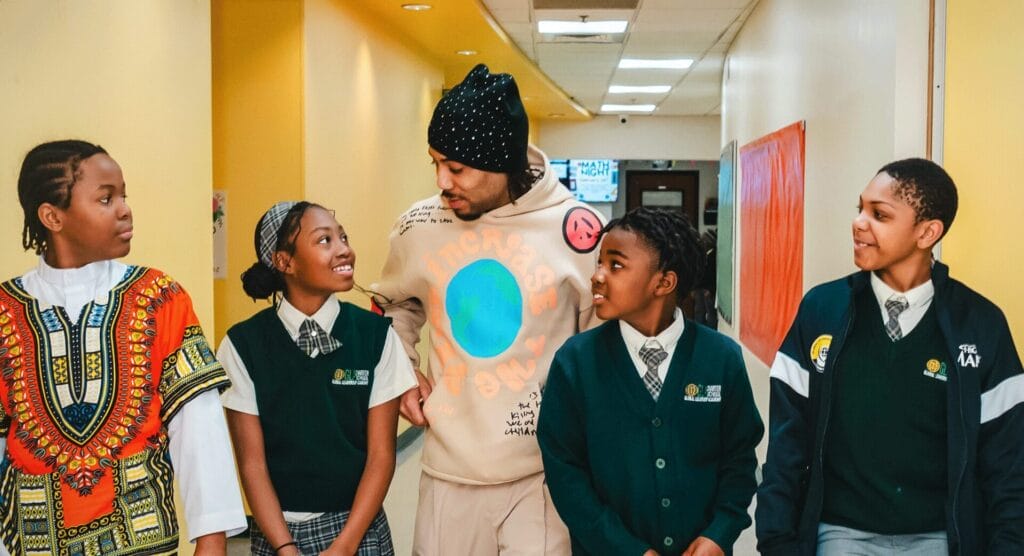
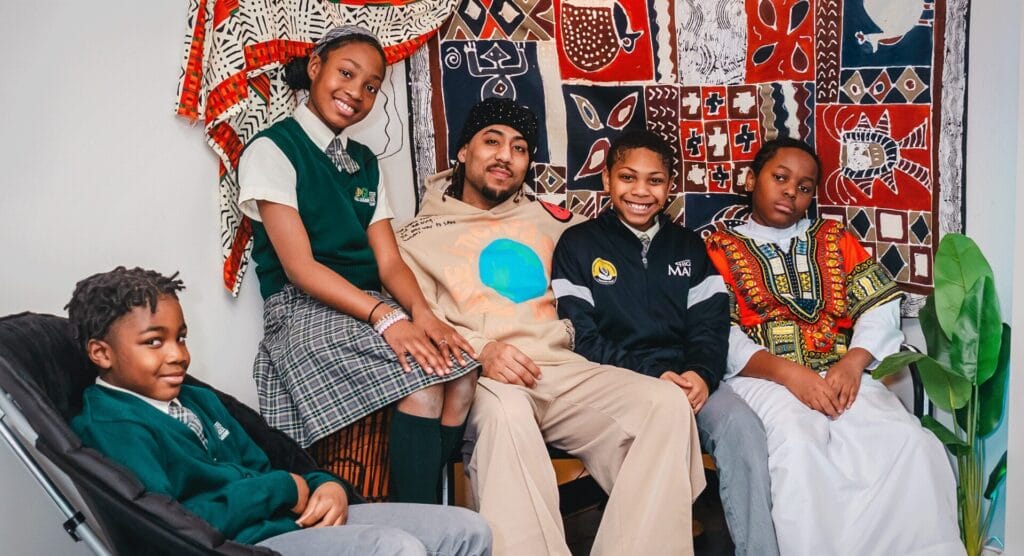
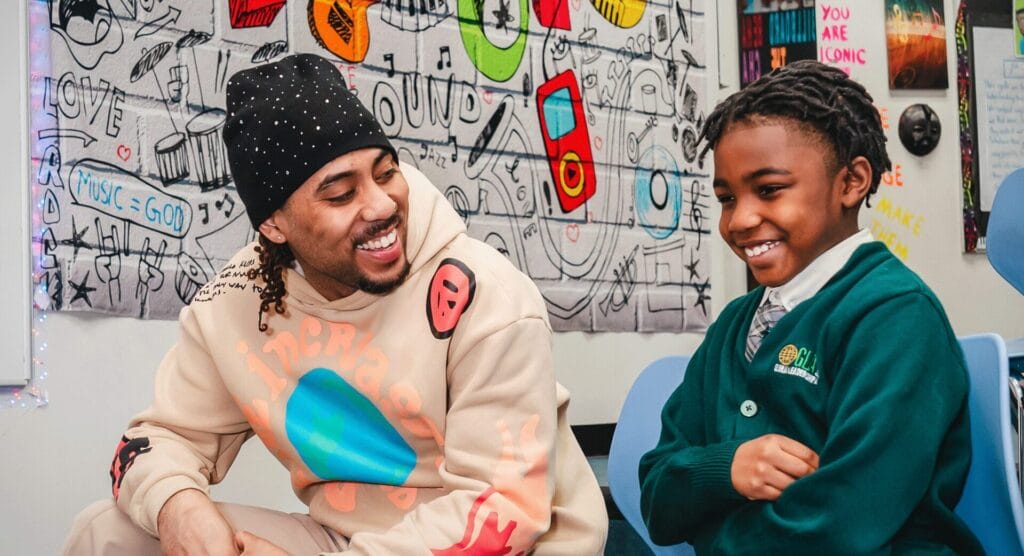
with his scholars, Christopher Rose, Uwais Hawkins, Jarkeer Lassiter, and Nilah Norman
Global Leadership Academy West
, Philadelphia
, Pennsylvania
Available On:


LISTEN TO THE EPISODE
"We are really helping to shape these kids in all different aspects, from the way that they see themselves, their confidence, their presence on stage in front of people, they're speaking in front of people."
Mr. Coleman
"I think it's important for them to know that there is success and a very beautiful life through the arts if you so choose this path."
Mr. Coleman
"When I just start to sing, that's one thing that makes me feel confident."
Justice Horton
"[Music] really speaks to the entire child, and it helps in so many areas that I don't think it really gets enough credit for."
Mr. Coleman
"I'm able to fuse my world and the world that I come from into the curriculum. So I'm able to offer a little bit of music history for my sixth graders, and I'm able to do cycles on songwriting with my seventh and eighth graders to give them a chance to express themselves creatively and differently."
Mr. Coleman
"I feel like this is a place where I can come to when I need an escape from everyday school work that gets really tough for me. And I just appreciate him as a teacher and as a person in general."
Zahrah Pitts
"When they trust you, it's easier to teach them. When they feel safe in your space, it's easier for them to respect you."
Mr. Coleman
"[Mr. Coleman being on The Voice] shows that anybody can do anything they put their mind to as long as they believe. And it encouraged me to keep moving forward and doing what I'm doing because if Mr. Coleman can do that, then I can too."
Trinity Bloom-Boyd
"We see a lot of things surrounding black men, but when it comes to singing, especially a song called "I Believe," and they were really believing that they could actually do it, and finally believing in themselves enough to stand up in front of other boys and sing, it was one of the most powerful moments I've had in teaching."
Mr. Coleman
"When I was in third grade, I really didn't know how to sing the school song, and he taught me how to sing it. So now I know how to sing the school song with everybody."
Jarkeer Lassiter
"The real happiness in life lies where your passion is."
Mr. Coleman
"I like to sing because it gets up my confidence."
Christopher Rose
"The evidence to me is when scholars escape from everywhere in the school just to come sit in this room because they feel safe. And that is why art education and music education are so important."
Mr. Coleman
Description
In recognition of Black History Month, we have partnered with Summer House Institute to honor an incredible Black male educator. Summer House Institute is an organization that exists to grow and develop young men of color who will soon finish college and enter the workforce through an affinity-based learning model.
Julian (King) Coleman, a K-8 music teacher at Global Leadership Academy West in Philadelphia, Pennsylvania, and recording artist, is the recipient of our February 2026 Honored National Teaching Award. Joining Mr. Coleman in this episode are eight of his scholars from 3rd, 5th, 6th, and 8th grade.
You’ll hear about:
- Julian Coleman’s journey to becoming a teacher.
- The impact Mr. Coleman has had on his scholars.
- Mr. Coleman’s dedication to creating a safe haven in the music room.
- Mr. Coleman’s passion for supporting scholars in cultivating a passion for music and the arts.
You’ll also hear from Viola Davis, EGOT award-winning actress, philanthropist, and CEO/Co-Founder of JuVee Productions & JVL Media. She shares about a teacher who left an incredible impact on their journey in our segment “Teachers Who Inspired”. This audio is credited to The Associated Press archive, and you can find more information on the source of this audio in the episode description.
Links Mentioned
- Nominate a teacher for our Honored National Teaching Award: https://www.honored.org/nominate/
- Learn more about Summer House Institute: https://www.summerhouseco.org/
- Follow Summer House Institute on Instagram: https://www.instagram.com/summerhouseinstitute
- Follow us on Instagram: https://www.instagram.com/honored/
- Follow us on Twitter: https://x.com/honored/
- Follow us on Facebook: https://www.facebook.com/Honored.org/
- Follow us on LinkedIn: https://www.linkedin.com/company/honored.org
- Follow us on TikTok: https://www.tiktok.com/@honoredteachers
Credits
- Music by DanaMusic: https://pixabay.com/users/danamusic-31920663/
- Music by AudioCoffee: https://www.audiocoffee.net/
- Teachers Who Inspired segment audio of Viola Davis: https://www.youtube.com/watch?v=Pps41eu9-qw
Transcript
MR. COLEMAN: We are really helping to shape these kids in all different aspects, from the way that they see themselves, their confidence, their presence on stage in front of people, they’re speaking in front of people. How they see themselves, and the value in which that they equate to themselves, is all developed in these arts classes.
HANNAH BOWYER-RIVETTE: Hello everybody, and welcome back to Inspiring Teachers: The Honored Podcast, where we shine a spotlight on life-changing teachers across the country. I’m Hannah, your podcast host, and our podcast is brought to you by Honored, which is a national nonprofit organization dedicated to honoring and elevating great teachers nationwide. Every month of the school year at Honored, we select an exceptional educator in the United States to be the recipient of the $5,000 Honored National Teaching Award. To learn more about our organization, you can go to our website at honored.org.
We are so excited to have you listening in on another Honoree podcast episode. In recognition of Black History Month, we have partnered with Summer House Institute to honor an incredible Black male educator. Summer House Institute is an organization that exists to grow and develop young men of color who will soon finish college and enter the workforce through an affinity-based learning model.
Today, we are joined by Julian Coleman, a K-8 music teacher at Global Leadership Academy West in Philadelphia, Pennsylvania. To help share the impact of Mr. Coleman’s teaching, we are also joined today by 8 of his scholars from 3rd, 5th, 6th, and 8th grade.
Before we dive into Mr. Coleman’s story, we are excited to kick off our Honoree episode with our special segment, ‘Teachers Who Inspired,’ where we invite well-known individuals to share a story about a teacher who had a lasting impact on their lives. Today, we’re thrilled to have our guest on our special segment, Viola Davis, EGOT award-winning actress, philanthropist, and CEO/Co-Founder of JuVee Productions & JVL Media. This audio is credited to The Associated Press archive, and you can find more information on the source of this audio in the episode description.
VIOLA DAVIS: Jeff Kenyon, he was a teacher in the Upward Bound program. And you know what? The best thing he told me is that I’m important. And I think that there’s a lot of probably awkward high school students out there that have kind of exed themselves out. You know, it’s an awkward phase in life. You know that. You don’t feel like you’re pretty enough, good enough, smart enough; nothing is enough. He taught me that I was enough. He listened to me. You know, that was the best education he gave me.
HANNAH BOWYER-RIVETTE: Throughout the rest of the episode, we’ll share Mr. Coleman’s story and the incredible impact he has on his scholars. To start us off, you’ll hear from Mr. Coleman, who reflects on what led him to teaching as he harnessed his natural leadership skills and the inspiration from his elementary school and high school teachers.
MR. COLEMAN: I think I’ve always been a leader by nature, and I think that I’m always driven towards community. So I think it’s interesting that I lead small communities musically. I remember being in elementary school, I had a teacher named Miss Becker, Mr. Malley, and Miss Jones. They really inspired me to step out of the corner that I feel like I so often can go into and really just begin to lead, whether it was answers in class or with responsibilities around the classroom or with the class in general. I remember being in elementary school, being inspired to go to the teacher stores and get like the chalk holders and find pens and all the supplies so that I could feel like I was that teacher.
But more importantly, I remember being in high school, and I had two teachers, one my music teacher, Dorina Morrow, as well as my dance teacher, LaDeva Davis. Who, LaDeva Davis has since passed, but both of them really kind of spoke to two sides of me. One kind of really spoke to the music and the love for choir and the love for voices and the love for professionalism and love for the persona of what a performer is and what a singer is and how they carry themselves. But also LaDeva Davis is the one who really kept me grounded and was really good at the interpersonal relationships.
You know, just as simple as me inspiring a child to sing. Uwais has never sung a day in his life, and a lot of my boys here at the school were really, really scared to sing, and I now have them out of their comfort zones all the way to the young lady who wasn’t in the interview, who came in and asked for a hug because she’s not having a good day. You know, both of those moments are just as important to me. One doesn’t outweigh the other.
HANNAH BOWYER-RIVETTE: In addition to teaching music, Mr. Coleman is a performer, recording artist, and mentor who brings his lived experience into the classroom to remind his scholars of the possibilities through music. By sharing his life and experiences outside of the classroom, he is building stronger relationships with his scholars, gaining their trust, and building a space where they can find a safe haven.
MR. COLEMAN: I feel as if the life that I live outside of this school almost makes the job that I do in the school a little bit easier. And it shows up in many different ways. Something as simple as, whenever I go to a concert, I always bring up tour merch, and that’s something that I use as an incentive for good behaviors and participation in class. Something as simple as the back of my laptop case is filled with all prior tickets, concerts, wristbands, and things that I’ve gone to.
Everything from Lucky Daye to Lone Hill to Chris Brown to Beyonce to Mary J. Blige to SZA. You know all of their favorite artists. And they’re constantly just reminded of the life that is possible through music. I let them know all of the things that I do, whether it’s hanging out with Nicki Minaj at the last tour, or whether it’s seeing background for Sam Smith just recently, or just anything that I do, I kind of keep them abrupt as to like, “Hey Guys, I might not be in school tomorrow, but here’s why.”
Because I think it’s important for them to know that there is success and a very beautiful life through the arts, if you so choose this path. And it’s a thing that I feel like has also allowed me to gain their trust a lot faster. Just knowing that I keep it very transparent with them. I’m very honest with them. I try to be as open and vulnerable with them as my arts teachers used to be with me, because that’s the experience that I had when I was in school. When I was having trouble with my parents at home, I would go to the dance room.
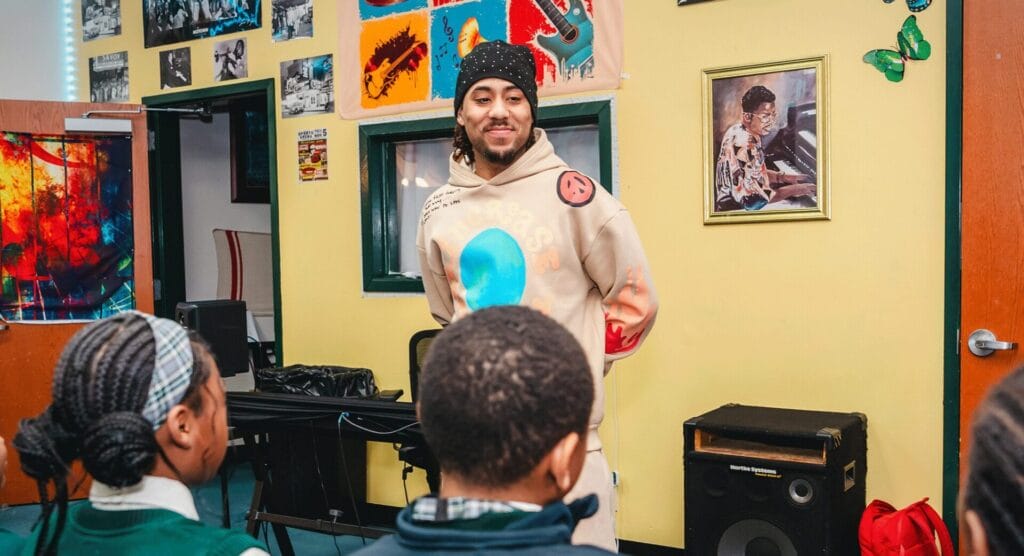
When I just needed a break from life, I would go to the music room. These are more than just classrooms; these are safe havens. And you can’t really see much, but I spent a lot of time really making sure I had corners and places within my space where they could see themselves. I have a mirror with affirmations surrounded. I have just tons of space in the room for them to come and feel like they could take a break from their life.
And although they’re young, they are navigating a lot for the very first time, and with that comes anxiety, and it comes doubt, and it comes things that are navigating through their everyday life. So I feel like I wear a lot of different hats, not just music teacher here. I wear older brother, I wear uncle, I wear dad, I wear a lot of the things, and I wear that with pride.
HANNAH BOWYER-RIVETTE: Music plays a powerful role in academic learning and personal development, shaping children’s confidence, presence, self-worth, and perseverance. Through everyday practices like performing, listening, and creating, scholars learn what it means to work hard toward something meaningful and develop their appreciation for music.
MR. COLEMAN: We are really hoping to shape these kids in all different aspects, from the way that they see themselves, their confidence, their presence on stage in front of people, they’re speaking in front of people. How they see themselves, and the value in which that they equate to themselves, is all developed in these arts classes. These everyday practices are helping them to become better people. They’re helping them to understand what it’s like to work hard towards something over and over and over and over and over.
This class helps them gain confidence in themselves and in front of other people, it helps to develop their own tastes in music and their own tastes in art, and how art speaks to them. And it helps to develop their words when they’re in here songwriting, or whether they’re studying lyrics from another song. It really speaks to the entire child, and it helps in so many areas that I don’t think it really gets enough credit for. And I have always been an advocate for the arts education. I went to an arts high school where arts was the center of our joy each and every day.
And although I am not in an art-centered school right now, they feel the presence of the music room, they feel the presence of the dance room, and they feel the presence of all of the other arts teachers that help cultivate their everyday lives. And for these scholars, specifically, these scholars here at this school, I’m in a West Philly elementary public charter school. These kids almost never get the exposure to the type of music, dance, theater, and art that they do through us.
And it breaks my heart a little bit, because I remember when I first started, some of these kids didn’t know who Aretha Franklin was, or Chaka Khan, or Stevie Wonder. And so, even introducing them to some of the living legends today has been just a breath of fresh air. I currently have a group of seventh and eighth-graders singing “You Raise Me Up” by Josh Groban. And I know without a shadow of a doubt they have never heard that music ever in their life before, and I literally have them singing it like they were just belting it out in the lobby this morning.
And it just brought me so much joy, because I remember when I first came here, they thought that music was just banging on drums and TikTok songs. Now they have a greater appreciation, a wider range, and understanding of the different types of music and how it shows up in our lives. And how we really use music a lot more than we think about, whether it be through TV shows and through film, whether it be through meditation, whether it be through classical, and hip hop, and jazz, and we’ve studied a lot of different genres here, so I’m really grateful for the opportunity to be able to have that impact on them.
HANNAH BOWYER-RIVETTE: In talking with Mr. Coleman’s scholars, they all spoke about how music has grown their confidence. Through his teaching, scholars explore the sense of community and belonging that music creates and build the confidence to step outside of their comfort zones.
TRINITY BLOOM-BOYD: When I was little, I used to sing a lot, but I would never sing in front of people, because I always be nervous to hear other people thought about my singing. But when I was in Mr. Coleman’s class in the fifth grade, and when we had auditions for our parts in the Blazer Ceremony, he really helped me to feel more comfortable and be okay with singing in front of other people.
UWAIS HAWKINS: Yes, same thing, because me and Trinity, we was in the same class, and we both don’t like singing in front of people. So, Mr. Coleman, like every time, we will always practice. First, we’ll do like tongue twisters, we’ll do all things to get our voice energized. And it was just one time, it was 5c 5b and 5a, and they had everybody in the music room. And it was me, my two friends, and Trinity, and we was always singing in front of them so we could boost our confidence.
NILAH NORMAN: Either when I’m singing or when I crack when I’m singing, Mr. Coleman will help me do some warm-ups so I can get my voice back.
JUSTICE HORTON: So one thing about Mr. Coleman is that when I sing with my class, I’m around a lot of people. So I really don’t like being around a lot of people. So really, when I just start to sing, that’s one thing that makes me feel confident.
JARKEER LASSITER: The reason why he got me singing is because when I was in third grade, I really didn’t know how to sing the school song, and he taught me how to sing it. So now I know how to sing the school song with everybody.
CHRISTOPHER ROSE: I like to sing because it gets up my confidence. I’ve sung where a lot of people was at, so it helped me get my confidence up.
HANNAH BOWYER-RIVETTE: Mr. Coleman’s teaching philosophies are rooted in the importance of relationship-building. For him, trust is everything and allows his scholars to feel more comfortable with the vulnerability that comes with music. His music room is a safe space where scholars can take risks, express their emotions, communicate openly, and develop their personal character.
MR. COLEMAN: It’s important to me because art is feeling. And if they don’t trust you, they’re not going to feel. And when they trust you, it’s easier to teach them. When they feel safe in your space, it’s easier for them to respect you. And more than anything, before I do anything, I build the relationship because that is what’s going to keep them interested, and it’s what’s also going to sustain them as they’re here. And by the time they graduate, and if they get themselves into anything, I know they’ll think about Mr. Coleman.
That girl who comes in here, she was a very, very, very troubled child when I first got here. It was almost as if nobody wanted to deal with her; nobody wanted her in their classes. And so I just started having lunch with her. That little bit has gone a long way, and now she’s in the fifth grade, almost sixth grade, and she no longer yells, she no longer throws her hand, she no longer fights. She just now comes to the music room.
And it could be as simple as, “Mr. Coleman, can I just sit in the corner? Mr. Coleman, can have a bottle of water? Mr. Coleman, can have a hug?” And that, to me, is the evidence of why relationship is so important. Because a lot of what I find is that a lot of these kids, they don’t have dads at home. They don’t have brothers and sisters that will pour into them. They don’t even necessarily might have parents who will sit and just talk and listen to them and let them get whatever they want off their chest without feeling like they have to be scared as to what to say.
I’ve had scholars come in my classroom, and through that songwriting cycle, it was one of the most powerful moments I’ve had at this school, because these kids were literally writing about the non-existent relationships between them and their fathers, how they feel so much pressure from their families because they have to take care of their younger siblings because their parents are always at work, how they feel misunderstood, how they don’t have anyone to talk to, how they don’t, and I’m just sitting here like, wow, that was what my art teacher was for me.
That was the moment that I knew for 45, 50 minutes I could come in and just take a deep breath. Whatever I felt, whatever came, was accepted. Because we are the only teachers in this school, we are the only teachers in the country, we are the only classes that are not measured by data. No, I don’t judge my kids based on how fast they learned this or that. I judged them based on how they’re learning and developing as people and their character and all of the other things that don’t have anything to do with an exit ticket or a daily objective. That is, to me, the power of art and how it shows up in these kids. And it’s very evident how children act when they don’t have an outlet.
HANNAH BOWYER-RIVETTE: As a testament to Mr. Coleman’s dedication to relationship-building, his scholars describe the music room as a place where they are supported, encouraged, and challenged. In everyday moments and moments that push the boundaries of their comfort zones, they know Mr. Coleman is always there.
ZAHRAH PITTS: I like having Mr. Coleman as a music teacher, because he really helps me flourish my creativity. And for one of his classes, we had to write songs about different topics. And the topic that he picked for me was a touchy subject for me that I don’t really like discussing with a lot of people.
But he helped me step outside my comfort zone and express it in a way that didn’t make me feel forced or anything, or made me feel sad about it. But it actually helped me get the closure that I needed for that specific topic. And he just makes learning a lot funner than most classes. And I feel like this is a place where I can come to when I need an escape from everyday school work that gets really tough for me. And I just appreciate him as a teacher and as a person in general.
UWAIS HAWKINS: Mr. Coleman, we were doing this Blazer Ceremony to go to collegiate, and he actually let me sing a part, and I was nervous, but he was trying to lead me on, because when I’m singing or talking in front of a lot of people, I get a lot of anxiety, and he let me focus on what I gotta do.
HANNAH BOWYER-RIVETTE: Mr. Coleman is passionate about adapting the curriculum to reach all scholars. He creates opportunities across grade levels for scholars to explore music, give them creative freedom, and challenge themselves. He blends activities like games, songwriting, and exposure to global music to craft intentional lessons that reach beyond music and into his scholars’ personal development.
MR. COLEMAN: I think that I have it pretty good here in terms of, like, there’s a lot of flexibility with the curriculum. For the young kids, we use QuaverMusic a lot, which really helps with not even just the fundamentals, but also being able to give them visuals. The younger kids are big on visuals, especially when it comes to music. Lots of games, lots of things. Like, they think we’re playing games, but I’m also ear training them, or I’m developing their ears to be able to hear the difference between major and minor, or the different paces and tempos and stuff.
But I’m able to fuse my world and the world that I come from into the curriculum. So I’m able to offer a little bit of music history for my sixth graders, and I’m able to do cycles on songwriting with my seventh and eighth graders to give them a chance to express themselves creatively and differently. And that is so important to me because I understand the kids that I’m working with, because I was once them. I grew up very close to this neighborhood. I understand the limited resources that are there.
And so my job is to kind of take the life that I live and sprinkle a little bit in each class so that they understand that you could actually write a song, and you could actually win a Grammy for it, and you can actually make a lot of money off of this one song. There are people in the city who have done just that, whether it be The Roots, whether it be Boyz II Men, whether it be Jazmine Sullivan, whether it be the iconic Jill Scott, it is possible, and it’s possible with people that look just like you from neighborhoods just like yours.
What’s been interesting lately is watching them discover how music shows up in our lives differently and how we relate it to different emotions. So, like for instance, on Mondays, we do this thing called meditative Mondays. We come in, and I’ll start off just asking them how their weekend was. I will purposefully take about maybe 10 to 12 minutes of my class to do that. It’s important to them, it’s important to me. And then for the rest of Mondays, I’ll listen. We’ll listen to either different guideds or just straight meditative music.
And at first it was a struggle, because they were just like, “What is this? This is not even music. Like what is going on?” And a few weeks in, it is something that they look forward to. They get a second to decompress after their weekends, which are oftentimes spent with so much noise. And then they get to decompress before they start a very academically rigorous week.
Also, we’re a global studies school here, so a lot of the songs are often in other languages, whether it be from different countries like India, Costa Rica, or Brazil. I’m really grateful that I’m able to have fun with the curriculum. I’m able to develop cool, different games and expose them to songs and other languages that they wouldn’t normally be able to be exposed to.
HANNAH BOWYER-RIVETTE: In talking with some of Mr. Coleman’s scholars, they shared their favorite memories in his class. From music games to dance parties to developing the courage to sing in front of others, his class is a space not only for fun and personal development. Through his lessons and by sharing his own journey as an artist, he sparks a love for music that allows his scholars to explore the arts.
TRINITY BLOOM-BOYD: We would be in his class, and he showed us his audition for The Voice, and it was so cool to see our music teacher, that’s in our room that was on TV, who could sing like that. And it shows that anybody can do anything they put their mind to as long as they believe. And it encouraged me to keep moving forward and doing what I’m doing because if Mr. Coleman can do that, that I can too.
CHRISTOPHER ROSE: One time we was playing a listening game, but we were on the steps, and then we had to run down and hit the bell, but if he stops the music, we gotta stop.
NILAH NORMAN: I remember this one time at the end of our class, like this was our last time here. We had a dance party, and it was so fun.
JARKEER LASSITER: We was playing this game called major or minor. It was a really fun game. And we watched the movie, I think it was The Polar Express. And yeah, he let us have free seating. And he teach me how to sing. So sometimes I’ll be singing him, and, yeah, I love him.
EVA JOI DUNLAP: Him giving me a jacket from a Beyoncé concert.
UWAIS HAWKINS: Mr. Coleman is a good teacher. And he actually teach us how to do high pitch, low pitch. And he likes to have fun a lot. It could be every time if we doing good in class or if like, we’re just chilling. And he’s like, a really good teacher every day.
JUSTICE HORTON: I like singing, listening to music, and dancing and stuff. The reason why I’m so good at singing is because when I was in second grade, I didn’t know how to sing, so that’s why I kept on practicing and practicing at home. So now that I’m in third grade, he’s been teaching me how to sing really good. So that’s why I know how to sing good.
HANNAH BOWYER-RIVETTE: In our conversation, Mr. Coleman reflects on a powerful and emotional memory from his teaching journey. When he first started teaching at his school, he found that there was a general lack of interest in music from the boys in the class. Through intentional connection and representation, he shifted their perception and opened the door for curiosity and a love for music.
MR. COLEMAN: It was getting to the point where I guess music before me, the boys just kind of sat in the back of the class, and it was really just almost like a girl’s world. But I challenged that because I’m a boy, and I sing, and I love music. And watching them fall in love with something that they once said they hated was such an emotional moment for me. Because I’m like, I remember when this moment happened for me. And I remember how it changed my life in ways that at that time I didn’t even know.
This was last year. I was having auditions, and we were singing “I Believe,” which is from the movie Honey. And they were auditioning for solos for what we call a Blazer ceremony, from the fifth graders when they graduate and go to sixth grade. So it’s like a separation between the elementary school and middle school. And the day we had auditions, the principal actually came in. It ended up being a day of my formal observation. I had totally forgotten. But it wasn’t even about the observation. It was really about the auditions.
And as they were singing, boy after boy after boy, then girl, then boy, then girl, then boy, then boy, then boy. It was so much male presence that was excited, she started bursting into tears. And her tears made them start bursting into tears, and it was just like a whoa moment, like I kind of just stopped. And it was just like the room was filled with so much emotion, because we don’t often see that.
We see a lot of things surrounding black men, but when it comes to singing, especially a song called “I Believe,” and they were really believing that they could actually do it, and finally believing in themselves enough to stand up in front of other boys and sing, it was one of the most powerful moments I’ve had in teaching.
HANNAH BOWYER-RIVETTE: As he thinks about the future, Mr. Coleman hopes that his scholars will remember the power of music and the opportunity it has to take them beyond what they imagine. Whether his scholar’s passion is music, art, dance, or any other path, he hopes they follow their passion and work confidently toward their dreams.
MR. COLEMAN: Even after they leave the school, I really want them to know that life is so much more than what they currently see. Music has taken me to some of the biggest stages in the world, to some of the biggest countries in the world. All of my jobs since I turned 18, with the exception of the Apple Store, have all centered around music. Whether I was teaching music, recording music, playing music at Howl at the Moon dueling piano bar, or whether I’m being a wedding singer, or whether I’m being a songwriter for different artists, this life is possible, just like anything else.
And we come from a culture that doesn’t often believe that life is possible through art and that it’s just a hobby, but you better go to school and get a real job. Or if you don’t go to school, then you better find a trade so you can just become a mechanic or an electrician. Life is so much more than that, and the real happiness in life lies where your passion is. And not even all the kids’ passion isn’t music.
I’ve watched some of the kids find their love through not saying one word and just moving and dancing, or not saying one word and just painting. There is such power through what we do. And the impact starts here. It doesn’t always start with a hit song or doesn’t always start with a piano concert. The impact starts here. And life through the arts is possible if you just believe.
HANNAH BOWYER-RIVETTE: In wrapping up our conversation with Mr. Coleman, he shares the vitality of music education. The impact of music education and his teaching is clear through the life-changing evidence of personal growth. From behavioral improvements to providing a healthy outlet for emotions to fostering a love for music, Mr. Coleman’s work reminds us that an investment in the arts transforms lives.
MR. COLEMAN: I love what I do. It has its exhausting days, like most things, but I love the trust that these kids have given me. It means the world to me. And I know that what I do is not gone in vain. I see the evidence every single day. The evidence to me is watching a child go from 62 behavioral calls a year to two.
The evidence to me is watching a little girl turn her life around because she’s thinking about her music teacher before she does anything. The evidence to me is when scholars escape from everywhere in the school just to come sit in this room because they feel safe. That is the evidence to me. And that is why art education and music education are so important.
HANNAH BOWYER-RIVETTE: Thank you so much for listening and joining us today to learn more about Julian Coleman, our February Honoree and recipient of the Honored National Teaching Award. To read more about his story, you can visit our website at honored.org or click the link in the episode description. If you have a teacher who you want to recognize and nominate for our teaching award, you can head to honored.org/nominate to recognize a teacher today. If you enjoyed today’s episode, you can follow us and leave us a review on whatever podcast platform you’re listening in from. Thanks again for listening, and make sure to tune in next month to hear the incredible story of our March Honoree.
Your teacher could be featured on The Honored Podcast. Nominate them for our $5,000 Honored National Teaching Award!
More Honoree Stories

September
Madeline Gerena Franco
Whitney M. Young Magnet High School
Chicago, Illinois