TEACH.org’s One-Stop Platform for Teachers


TEACH.org’s One-Stop Platform for Teachers
TEACH.org
, USA
Available On:


LISTEN TO THE EPISODE
TEACH really tries to come at it from different angles, to support folks. And not just saying, here's a one sentence or sticker answer that applies to everybody, but how can we really work with each individual to say, how can we support you in answering the questions in a way that like fits and feels best to you in your teacher journey.
NiKole Nickerson
It's so uniting to be in a space full of folks who are so excited to pour into teachers and to pour into the students in our respective states and in all of our regions that TEACH partners with.
Angela Wunderlich
The goal, what Angela was saying of chipping away at those issues. We all notice that teachers deserve more. Teachers deserve the respect. Teachers deserve to be put on a pedestal.
NiKole Nickerson
It's really amazing to know that TEACH can support the incredible work that's already happening and that, we're just chipping away at these many barriers to becoming a teacher. And it felt really profound to know that our supports are really needed in the background of supporting all these amazing candidates on their journey to becoming teachers.
Angela Wunderlich
Description
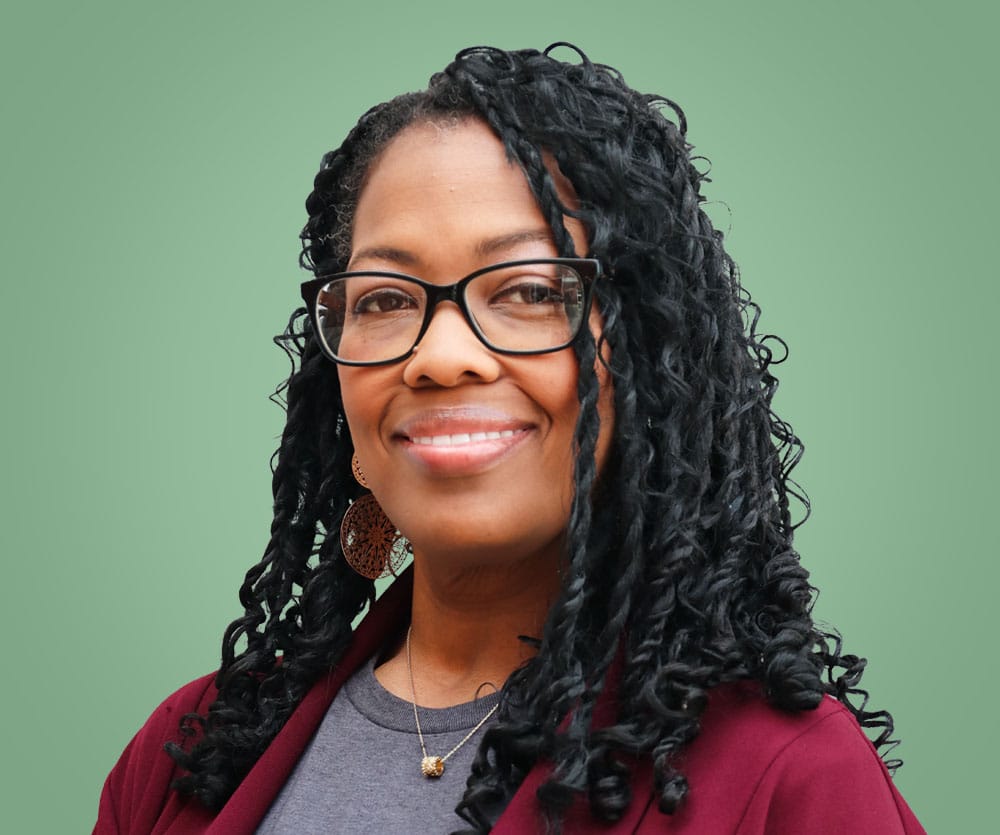
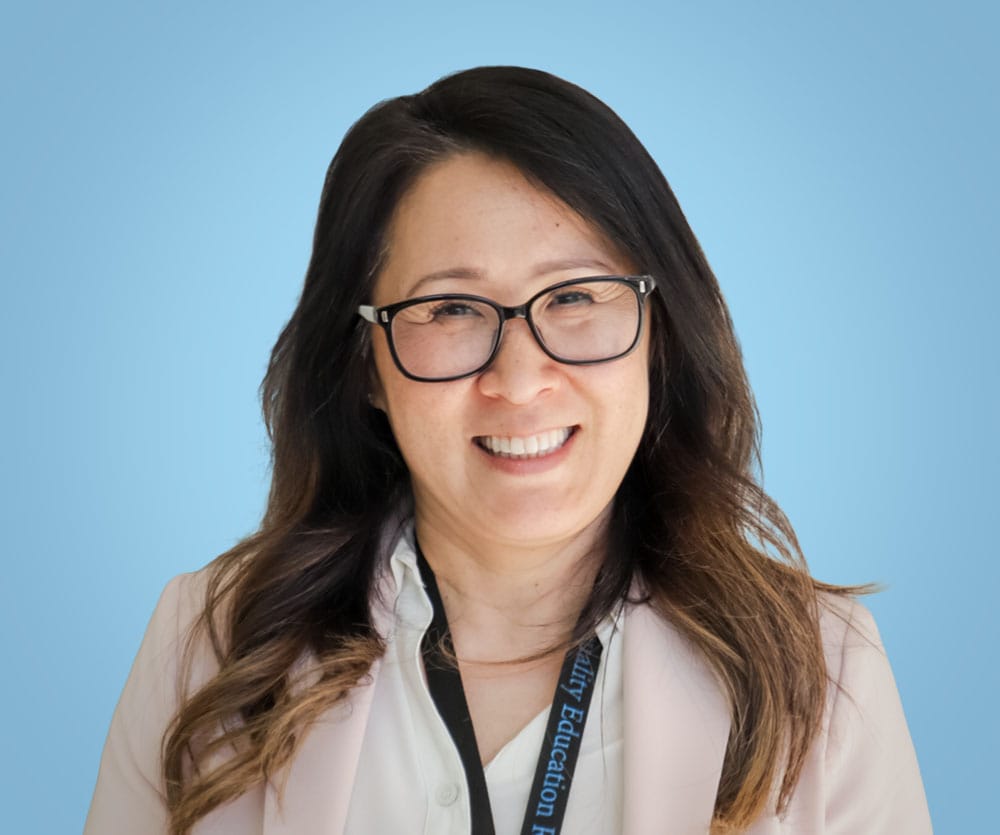
Angela Wunderlich and NiKole Nickerson, Senior Regional Program Managers at TEACH.org, join us for an organizational spotlight podcast episode. As Senior Program Manager at TEACH.org North Carolina, Nikole combines a deep empathy and passion for education with a BA in History and an M.Ed in Social Studies Education, and an MPA, with an Ed.D in Higher Education Leadership on the horizon. Her passion for education drives her work, creating impactful programs and initiatives. Angela, a Senior Program Manager at TEACH.org Minnesota, is an educator and innovator who has pioneered roles and programs in every full-time position she’s held. With a BA in Education and Hispanic Studies from Bowdoin College and a K-12 World Language Teaching Certification, she brings a passion for language learning and curriculum development. Whether leading new initiatives or shaping learning experiences, Angela thrives in dynamic environments.
You’ll hear about:
- TEACH.org’s mission and initiatives.
- The incredible work TEACH.org is doing in recruiting and retaining teachers.
- The tools and resources offered through TEACH.org’s one-stop shop platform.
- How TEACH.org is chipping away at the barriers individuals face on their paths to becoming educators.
Links Mentioned
- Learn more about TEACH.org: https://www.teach.org
- Learn more about TEACH.org North Carolina: https://northcarolina.teach.org
- Learn more about TEACH.org Minnesota: https://minnesota.teach.org
- Follow TEACH.org on Facebook: https://www.facebook.com/teach.org
- Follow TEACH.org on LinkedIn: https://www.linkedin.com/company/teach-org/
- Follow TEACH.org on Instagram: https://www.instagram.com/teachorg/
- Follow TEACH.org North Carolina on Instagram: https://www.instagram.com/teachNCorg
- Follow TEACH.org Minnesota on Instagram: https://www.instagram.com/teach_mn
- Nominate a teacher for our Honored National Teaching Award: https://www.honored.org/nominate/
- Follow us on Instagram: https://www.instagram.com/honored/
- Follow us on Twitter: https://x.com/honored/
- Follow us on Facebook: https://www.facebook.com/Honored.org/
- Follow us on LinkedIn: https://www.linkedin.com/company/honored.org
- Follow us on TikTok: https://www.tiktok.com/@honoredteachers
Credits
- Music by DanaMusic: https://pixabay.com/users/danamusic-31920663/
- Music by AudioCoffee: https://www.audiocoffee.net/
Transcript
ANGELA WUNDERLICH: It’s really amazing to know that TEACH can support the incredible work that’s already happening and that, we’re just chipping away at these many barriers to becoming a teacher. And it felt really profound to know that our supports are really needed in the background of supporting all these amazing candidates on their journey to becoming teachers.
NiKOLE NICKERSON: The goal, what Angela was saying of chipping away at those issues. We all notice that teachers deserve more. Teachers deserve the respect. Teachers deserve to be put on a pedestal.
HANNAH BOWYER-RIVETTE: Hello everybody, and welcome back to Inspiring Teachers: The Honored Podcast, where we shine a spotlight on life-changing teachers across the country. I’m Hannah, your podcast host, and our podcast is brought to you by Honored, which is a national nonprofit organization dedicated to honoring and elevating great teachers nationwide. Our mission is to inspire and retain great teachers, keeping them in the classroom as long as possible. Every month at the school year at Honored, we select an exceptional educator in the United States to be the recipient of the Honored National Teaching Award. Each Honoree, as we call them, receives a $5,000 cash reward, and we then tell the story on our website and our social media platforms of how that teacher has impacted their students’ lives. To learn more about our organization, you can go to our website at honored.org. While you’re there, if you have a teacher you would like to recognize, you can nominate them at honored.org/nominate.
We are so excited to have you listening in on another organizational spotlight podcast episode. Today, we are joined by NiKole Nickerson and Angela Wunderlich, Senior Regional Program Managers at TEACH.org. As Senior Program Manager at TEACH.org North Carolina, Nikole combines a deep empathy and passion for education with a BA in History and an M.Ed in Social Studies Education, and an MPA, with an Ed.D in Higher Education Leadership on the horizon. Her passion for education drives her work, creating impactful programs and initiatives. As Senior Program Manager at TEACH.org Minnesota, Angela is an educator and innovator who has pioneered roles and programs in every full-time position she’s held. With a BA in Education and Hispanic Studies from Bowdoin College and a K-12 World Language Teaching Certification, she brings a passion for language learning and curriculum development. Whether leading new initiatives or shaping learning experiences, Angela thrives in dynamic environments. To start our episode off, you’ll hear from NiKole and then Angela, who each share their journeys to where they are now as Senior Regional Program Managers at TEACH.org.
NiKOLE NICKERSON: I started out as a high school History teacher in North Carolina. I always knew I wanted to be a teacher. I actually thought I wanted to be an elementary school teacher, and my undergrad, or EPP, as we call it, allowed me to go into the classroom. And I was like, maybe elementary is a little too small. And so I transitioned into secondary and fell in love with History. From there, I taught for about five or six years, both in Title I public schools and moved into college access, which was really exciting for me, because I was able to serve the same population of students so low low-income, underrepresented folks in North Carolina. And then from college access, I ran into my current supervisor, and this job was just perfect, combining all of the things that I love, the population, the state that I was born and raised in. So teaching has always been something that I’ve been passionate about, and I’ve definitely had teachers who’ve inspired me to stay in education and stay in this work.
ANGELA WUNDERLICH: I was really grateful. In college, there was a program where I could both complete all the education components and requirements and then also graduate with a teaching license right out of undergrad. And so I did that, and ended up teaching high school Spanish in the Boston area, and I absolutely loved it. But my first year teaching, the pandemic hit, and so it was a wild concoction of starting in the classroom, and then all of a sudden, mid-year, going into online teaching. And it was a tough combination of, I loved teaching in the classroom, especially a foreign language because there’s so much rich conversation and learning that can happen when you’re in person. But then, switching to an online mode also while living in like a big city that was entirely shut down, and teaching out of a nine-by-nine bedroom in an apartment was not, ultimately, what I envisioned. And so at the time, I moved home to Minnesota and ended up working for a nonprofit here, connecting folks to outdoor learning and opportunities.
Kind of, while I was seeing like, what is the process of getting my teaching license here in Minnesota? And Minnesota has a complex licensure system, as do many states across the country, but it took some time. And ultimately, I didn’t end up going back to the classroom here in Minnesota, but I always thought I wanted to go back into the education world in some way. And so I loved this opportunity through TEACH.org to really support teachers in having the nuts and bolts they need to get connected to the classroom. So it feels great to marry nonprofit work with the education sector.
HANNAH BOWYER-RIVETTE: Behind us all is a story of a teacher who had a life-changing impact on us. To share who inspired them, Angela tells a story about her high school English teacher who left an unforgettable impact on her. NiKole also shares more about how her 4th-grade teacher and high school History teacher provided support for her beyond the classroom.
ANGELA WUNDERLICH: It feels like I have been so blessed with so many really incredible teachers and mentors from my education past, but one that really sticks out to me was Dr. Margaret McCarney. She was my high school English, Lit, and various sorts of electives as I went up in high school, teacher, and it felt like she really had this knack. She was so smart, she was so brilliant, but she could find a way to connect to every student in the classroom with her work and how she taught. But not only did she really bring people in in the way that she taught, and really make everybody feel like they had a stake in their learning. But I think she also really could understand you outside of the classroom, and really brought that care and intention to how she worked with you every day, and it felt like she saw me as a whole person, and that really made me even more invested in her class and the work I was doing.
NiKOLE NICKERSON: So I have two Miss Brenda Price, she was my fourth-grade teacher, and Mr. Patrick Stokes, he was my high school History teacher. And both of those folks really poured into me outside of the classroom. So when I had some really difficult things happening at home, I was not making the best decisions as a student, as some teenagers do, I was certainly one of them. And things that were out of my control, they really poured into me as a human. So they did things that were outside of their job description, and I really admire that because sometimes, students come into the classrooms and they have the weight of the world on them, and they don’t know how to articulate what it is that’s going on.
And they’re not old enough to have to, right? But these two individuals, I owe them my career. I owe them so much for really being able to see me but see me. Not maybe my smart mouth or not turning my work in, or something like that, but knowing that I really needed a mother and a father figure in those times. So yeah, I owe them my career. And honestly, owe them the way that I carry myself around students that I come in contact with, too. Because the school work is great, and yes, it may be helpful to know all the presidents, but it’s really important to have that support system and a soft place to land.
HANNAH BOWYER-RIVETTE: TEACH.org is a nonprofit organization that is dedicated to finding and supporting the next generation of teachers to ensure our nation’s students have the teachers they deserve. Through their work, they partner with state education agencies, school districts, nonprofits, and Teacher Prep Programs in their partner regions to effectively recruit and retain educators.
NiKOLE NICKERSON: TEACH.org is a nonprofit that is dedicated to ensuring that there are teachers in the classroom, that those teachers have diverse backgrounds, and those teachers will stay in the classroom. There are so many folks passionate about becoming teachers. Angela mentioned earlier that the road to finding out how to become licensed once you have graduated college, or maybe you didn’t finish, and that’s tricky. So TEACH.org and then within our individual states, we’re here to partner with EPP so our colleges and universities, our LEAs, so our school districts within our states to say, “Hey, we are a one-stop shop for everything you need to become a teacher. If you want to find an EPP to go to, if you need to know how or where to take your test, whether it’s your edTPA, your Praxis, we are a one-stop shop.” We try to make everything really easy and succinct because our students across the country deserve teachers that are passionate, that want to be there, and that will stay.
ANGELA WUNDERLICH: Well said, NiKole. I think the only thing I would add. We know that recruitment and retention, they should be working partners. They go hand in hand. And I think something that TEACH is really focused on is that recruitment, the initial how are we getting really quality teachers into the classroom in a way that they feel prepared and like they have the knowledge, they need to be really successful, especially in those early and hard years of teaching. But I also think it’s because both recruitment and retention are such huge topics and huge undertakings, TEACH really focuses on going a mile deep in the recruitment space, but we really hope within each region that we partner with to find partners that are really focused on the retention side of things.
And I think the other piece, along with partnership, is the backbone of TEACH’s operations, and it’s really important to our work. We could never exist in a bubble. And as part of being that one-stop shop that NiKole mentioned is really ensuring that we gather everybody, like those EPPs, like those school districts, like our community-based organizations at the table. And our intentions are never to recreate the wheel or to come in and say, here’s how to do things. It’s always to come alongside each of those players that NiKole talked about and say, “How are we elevating the work that you’re doing?” Because so many folks in the ED world wear a million hats and three or four or five more beyond that. And so I think we’re really trying to come along and say, “What are the recruitment needs that you might have?” And so our platform remains the same, but the way that we’re able to partner with folks to really advance their needs changes based on who we work with and even region to region.
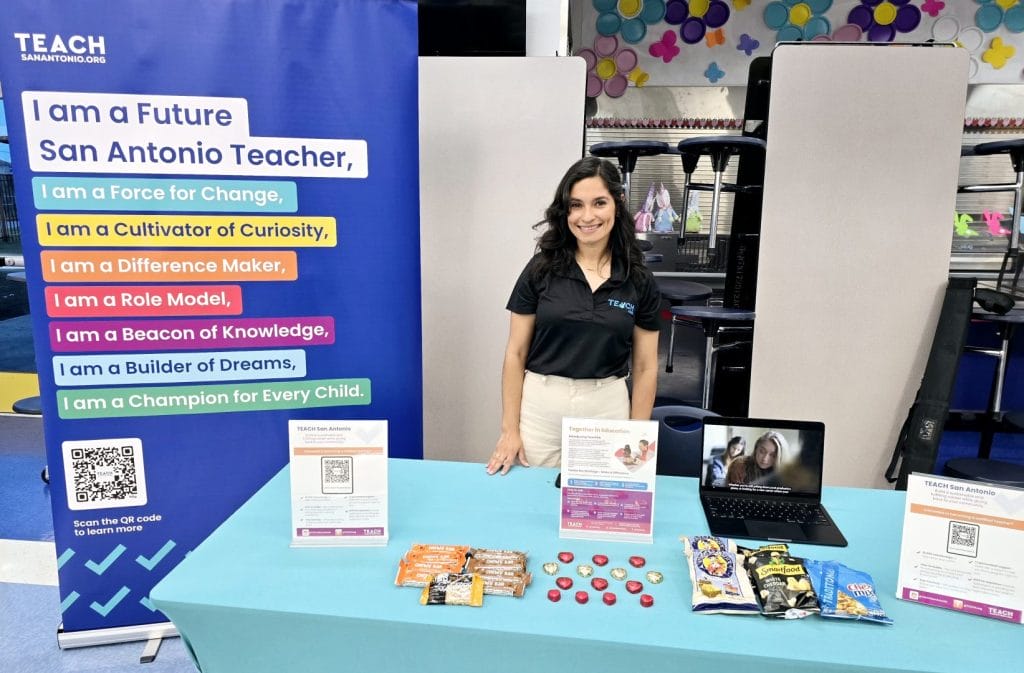
HANNAH BOWYER-RIVETTE: While working with TEACH.org, Angela recently had the opportunity to attend a Teach for America Open House, where she connected with teachers getting ready to start their careers. In witnessing the passion and excitement these new teachers have, and in having conversations with Teach for America organizers, she saw firsthand how TEACH.org’s initiatives are supporting educators in their journeys.
ANGELA WUNDERLICH: I went actually earlier this week, to Teach for America’s Open House here in the Twin Cities. And it was an opportunity to come in and see their current educators doing their summer practicums and getting ready for what will be their Tier II license here in Minnesota. And the work that they do is really profound. You’re seeing young teachers that are getting ready to start their teaching career and get in the classroom and begin all of the things in action. And there’s so much passion behind the work that they do and why they want to be in the classroom. And their love for their students, that they’ve created even over 5 weeks in this teaching summer school intensive.
And it was really interesting because in talking to their organizer, she was saying that even some of TEACH’s resources, like we offer up to $100 of fee reimbursement towards either a Teacher Preparation Program. Or in Minnesota, for example, towards a licensure application fee. And she was saying that for some of these corps members, that’s huge because that’s money that doesn’t have to come out of their pocket up front to be able to hit those milestones of becoming a licensed classroom teacher. And it was one of those moments where it’s really amazing to know that TEACH can support the incredible work that’s already happening and that we’re just chipping away at these many barriers to becoming a teacher. And it felt really profound to know that our supports are really needed, in the background of supporting all these amazing candidates on their journey to becoming teachers.
HANNAH BOWYER-RIVETTE: Building on their work with TEACH.org, NiKole reflects on the relationships she’s built through connecting with representatives through their Educator Preparation Programs. Although education can be a divisive topic, she has found that every person she has interacted with shares the same, inspiring goal: to chip away at the barriers individuals face on their path to becoming an educator.
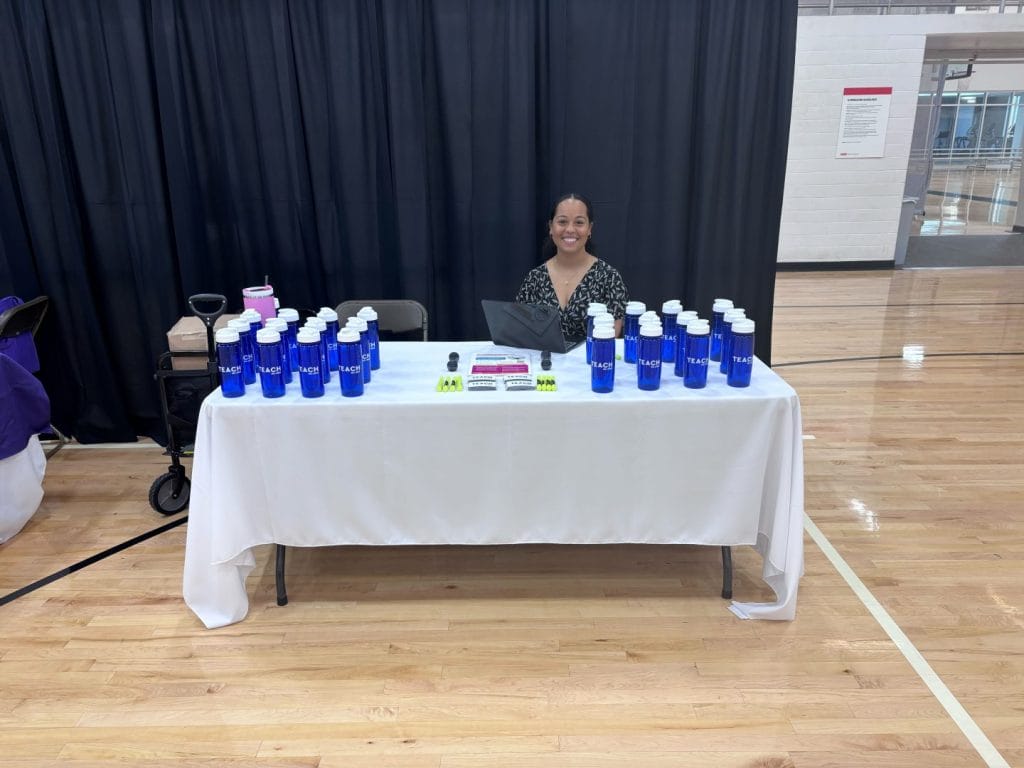
NiKOLE NICKERSON: I’ve had the pleasure of meeting so many representatives from our EPPs in person, which is great, and online. And as political as education has become and in some ways, divisive unfortunately, every single person that I’ve come in contact with at the college university level, at NCDPI, they’ve been wonderful in North Carolina, the goal, what Angela was saying, of chipping away at those issues. We all notice that teachers deserve more. Teachers deserve the respect. Teachers deserve to be put on a pedestal. And all of them need help. So it’s almost one of those unifying kind of feelings when I go to NC State and it’s a college fair or at high school fair during the summer. And everyone there may not speak to them in the mall, or we may not connect in any other way, other than teaching.
HANNAH BOWYER-RIVETTE: In our conversation with NiKole and Angela, they discussed the ongoing challenges in attracting and retaining teachers in their respective regions. From financial barriers to navigating the licensing process to retaining teachers, they share more about the obstacles that fuel TEACH.org’s work.
ANGELA WUNDERLICH: I think that’s the first things that we hear about in North Carolina, and I’m assuming across the country as well, is money and how much is expected of teachers during a regular school day. So I’m sure Angela can relate when you’re a teacher, you have taught, in high school at least, you’ve taught your 4, maybe 6 or 8 classes. Maybe your planning period is taken away, and then you’re working a sport. Maybe you’re a coach, I think both of us were coaches as well. And some teachers have families, and they’re trying to make ends meet on salaries that just simply do not sustain a family, whatever that looks like to those teachers. And then certainly figuring out how to become licensed and getting those steps in one place.
How do we get folks who are passionate about this work? We train them appropriately, we protect them within the role, and we uplift them? Do they want to become a principal? Maybe they want to be their team lead? There’s so many different things in supporting teachers in all of our regions that I think TEACH does a really good job of filling the gap for is what I would say. Angela is absolutely right. Teachers and educators wear so many hats, and it’s not that they can’t do it. It’s that maybe they don’t have the time. Same with our state agencies that are funding us, or whomever is funding us, we want to fill that gap. So I would say pay for sure, figuring out how to become licensed, and figuring out how to keep those folks who are passionate to stay passionate, and train them as they’re in that role, and uplift them.
NiKOLE NICKERSON: Yeah, well said. I wouldn’t add too much, only other than, even before you consider pay, you know, I think that that’s a huge consideration. And some folks say, “All right, if I need to go on to become licensed, do I need a bachelor’s degree? That costs money. Then, if I have a Bachelor’s degree, but maybe I’m a mid-career changer, I need to go back to school, so that’s either a master’s degree or that’s pursuing a licensure-only option.” That all has a cost, that I think it’s tough for folks to reckon with. You know, I have to pay X amount of money to go back to school to get a degree for a job that might not pay well, as you know, NiKole, you stated really well. So I think, we’re wrestling with so much on the front end of to even get folks in the classroom. Also, at TEACH, we talk about, there’s these 10 perception barriers that research shows into getting into teaching. And they break it down into a couple of different overall categories of self connection, emotional connection, intellectual connection, and pragmatic connection.
So it’s everything of, “Will I be good at it? Will people look like me doing this work? Am I one of the only teachers of color, for example, in a majority white school?” I think that was something that I really considered as a teacher of color. “Would it be aligned to my sense of purpose? Will my family support this work? What does that look like to have? Is it valued? And then also, how does it look to grow in this work? How will I be supported?” So I think that there are all these different barriers that, as NiKole mentioned, that TEACH really tries to come at it from different angles, to support folks. And not just saying, here’s a one sentence or sticker answer that applies to everybody, but how can we really work with each individual to say, how can we support you in answering the questions in a way that like fits and feels best to you in your teacher journey.
HANNAH BOWYER-RIVETTE: To combat these challenges, TEACH.org has built a comprehensive, one-stop platform designed to support teachers through their education journey. Through their platform, they offer tools and resources to help individuals find the best Educator Preparation Program, prepare for certification exams, receive financial aid, connect with mentors, and so much more.
ANGELA WUNDERLICH: It begins with this one-stop shop platform that NiKole was talking about. So somebody being able to come on one web page. You know, in Minnesota, we have over 30 Teacher Preparation Programs. But then, yet alone, like the University of Minnesota is technically one Teacher Preparation Program, for example, but has many different programs underneath it. So suddenly, you’re looking at hundreds of options. And so consolidating that onto one digital platform is huge. So we have a Teacher Preparation Explorer tool where somebody can come and say, “All right, what EPP might be best for me?”
To the financial piece, we offer financial incentives into ultimately hitting apply to a Teacher Preparation Program in your state. And so those financial incentives are those fee reimbursements that we talked about, up to $100 off. We also have scholarship opportunities multiple times per year, depending on the state, but also other regions that we work in do various additional scholarships. Maybe if you’re a shortage area subject teacher, or maybe if you’re a paraprofessional going on to teaching to become a licensed teacher. So we offer some specific scholarships as well. Another huge piece of our program is our coaching and advising work. And so in each TEACH region, we connect with and train current classroom educators to become coaches through TEACH.org in every region.
And so one, the ins and outs of the state’s licensure systems, but they also can touch on their own work and experience as a teacher. And this is a great way to start at the very top of the funnel of “I’m thinking about becoming a teacher, what do I need to know?” All the way down to “help me find a Teacher Preparation Program that might fit my needs.” And so we’re really able to, again, have those tailored conversations to help folks through those 10 perception barriers. We also offer test prep, and then also other things, like applications, resources, guides, and inspiring messages and articles from teachers in our regions.
NiKOLE NICKERSON: Something I would add is we also host virtual sessions with EPPS and LEAs consistently throughout the year. So what that can look like in North Carolina specifically, I may have North Carolina State, AP State, and ECU, and all of them are on a virtual call. There’s a presentation, participants sign up, and we create toolkits for those EPPs. So they really don’t have to do anything but show up and we have the participants there for them. So those toolkits have social media posts, they have email templates, they have anything that you could think of. And you have the representatives right there in front of you, so you can ask these questions and they can answer right there on the spot. And so that’s really exciting.
And so, partnering with the LEAs, we’ll send out a school-based survey. Sometimes, there are folks in the schools who aren’t currently working as teachers or even teacher assistants, but they’re considering becoming a teacher. So we have sent out school-based surveys and say, “Hey, are you one of those people that have been thinking about it but you’re not quite sure how to go about it?” And so, the leaders of those school districts can look at the surveys and say, “Wow. I didn’t know that such and such in this school was interested in becoming a teacher. Let me see how we can support them.” Angela also mentioned test prep.
So in our different regions, North Carolina being one of them, in the past, we’ve received state funding to support folks with their tests. So all of these services are completely free. And then when we do have these special promotions like test prep, we can also get you licensed to Study.com to help you with these tests. Tests can scare people. I was never a great test taker, and so that freaked me out. But those options are really awesome, especially for folks who are changing careers, as Angela mentioned, and they’re nervous or haven’t been in school for a while. We want to do everything we can to be helpful to all involved. Tell us and we will find a way to fill that gap.
HANNAH BOWYER-RIVETTE: In looking to the future, NiKole and Angela express their hopes for the future of education, where educators feel empowered, proud, and supported throughout their careers. They also hope to see wider representation in the teaching workforce to reflect and inspire the communities they serve. Through their work, they are committed to breaking down the barriers of the teaching profession and uplifting the public perception of educators.
NiKOLE NICKERSON: I would love for specifically in North Carolina. I’m speaking from a North Carolina perspective, but certainly all of our regions and across the country. I really want teachers or folks interested in teaching to really be empowered by that decision and walk out of their classroom, go home, and be so proud of what they do. I know all of us at TEACH we’re really proud of the folks that we come in contact with, but we’re also proud of the work that we’re doing. Because we know that we’re impacting the teacher, we’re impacting the school, the students, the families.
I mean, we’re talking potentially impacting a child that maybe is having issues at home, trouble at home, and this is their stability. School was my safe space because of these teachers, and so I’m hoping that the trickle down effect well after we’re retired and doing whatever we’re doing, that all of the work that we’ve done, all of these free services on TEACH.org trickling down generations and families and empowering folks in education, from public education, private higher ed and so on and so forth.
ANGELA WUNDERLICH: Yeah. I mean, so well said, NiKole, I think it’s so important for folks to be able to see themselves represented in spaces. And so I would love for anybody to be able to say, I want to become a teacher, and I can envision how to become a teacher, and here are the steps to do it, and here’s how it’s made easy. And then I think that impacts then all of your students that suddenly see themselves represented in a teacher in one way or another, in their classroom, or maybe in many ways in a classroom. And then I think, the more positive the perception of teaching, then it grows into the perception of school, and the stronger schools you have, the stronger the communities.
And I really think teaching leans into the phrase, “we all do better when we all do better”. And I think the more TEACH can continue to support that, we’re just trying to chip away at making this profession that’s the backbone of everything we do. We’re raising these next generations, so the more that we can make that accessible to folks, I think the more we all do better. And I think the more hope we give to future generations, and generations that are really wanting, that work that is so grounded in relationship-oriented connection, I think is really ever more important in this day and age.
HANNAH BOWYER-RIVETTE: Thank you so much for listening and joining us today to learn more about Nikole Nickerson and Angela Wunderlich, Senior Regional Program Managers at TEACH. To learn more about the organization, you can visit their website at TEACH.org or click the link in the episode description. If you enjoyed today’s episode, you can follow us and leave us a review on whatever podcast platform you’re listening in from. Thanks again for listening, and make sure to tune in next month, where we will hear the incredible story of our first Honoree for the 2025-2026 school year.
Your teacher could be featured on The Honored Podcast. Nominate them for our $5,000 Honored National Teaching Award!
More Honoree Stories
September
Madeline Gerena Franco
Whitney M. Young Magnet High School
Chicago, Illinois