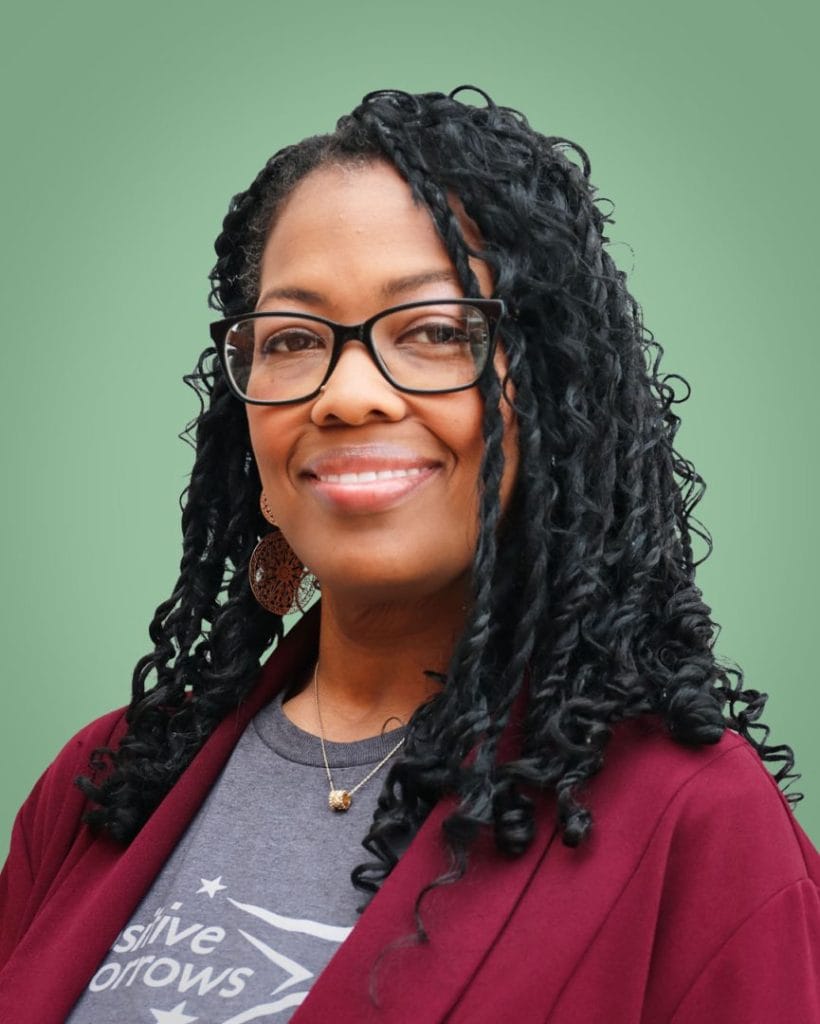
Shavonya Coleman


June 2026 Honoree
Shavonya Coleman
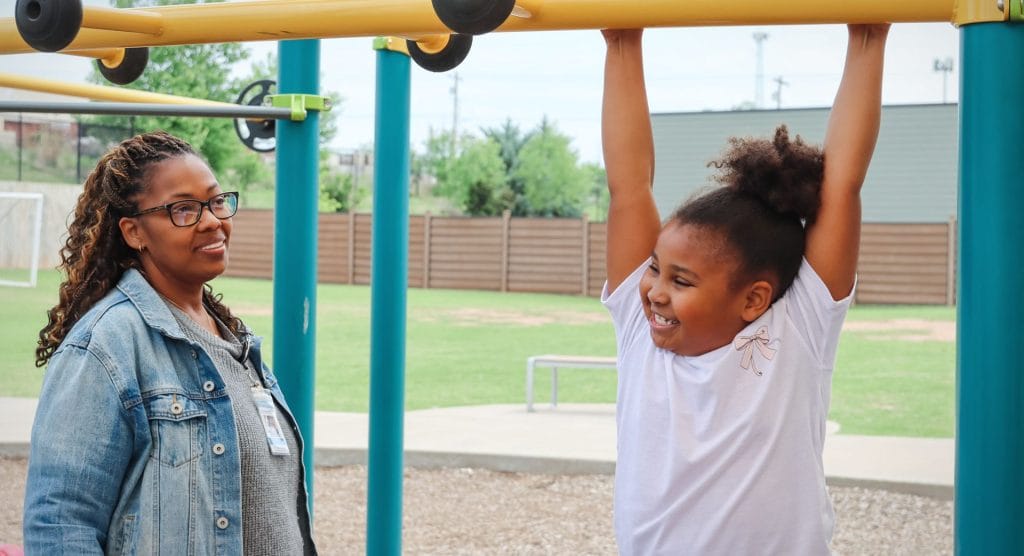
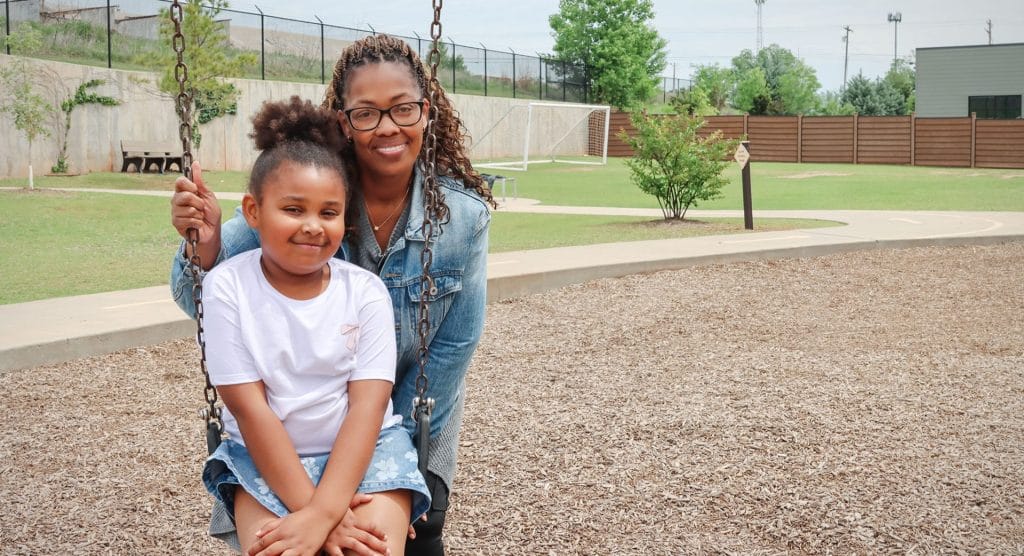
with her student, Serenity Chrislyn Lashay
Positive Tomorrows
, Oklahoma City
, Oklahoma
Sponsored by: Jean Hammerback
Available On:


LISTEN TO THE EPISODE
"The end goal is to make sure that the parent and their child have a wonderful school and academic experience."
Shavonya Coleman
"[Mrs. Coleman] just makes you think I wish I were here in kindergarten, first grade, second grade as well."
Krystle Latrice
"With the demographic of students that we teach, trust is one thing that many of them struggle with, just because of all the things that they have been through in their short little lives."
Shavonya Coleman
"[My daughter] said, 'I need a teacher who can teach me how I learn.' And she said, Mrs. Coleman teaches her how she learns."
Krystle Latrice
"What I do love is that we have that family support component of our school, that in the event they do step off the bus, their whole life has changed. Okay, that's not the end of your journey with Positive Tomorrows."
Shavonya Coleman
"I like how she does brain breaks with us because she actually moves and does it with us. It makes it feel more like it's real, like I'm actually in the brain break."
Serenity Chrislyn Lashay
"We're able to give those students a smaller learning experience while still addressing the same Oklahoma Academic Standards, but just on the level that they have."
Shavonya Coleman
Description
Shavonya Coleman, a 3rd-grade teacher at Positive Tomorrows in Oklahoma City, Oklahoma, is the recipient of our June 2026 Honored National Teaching Award. She was nominated for this award by the parent of her student, Serenity. Joining Shavonya in this episode are Serenity and Serenity’s mom, Krystle.
Positive Tomorrows is a school serving families experiencing homelessness. They offer kids stability and quality education while giving parents the support they need to create a better life.
You’ll hear about:
- Shavonya’s journey to becoming a teacher.
- The impact Shavonya has had on Serenity and Krystle.
- Shavonya’s dedication to meeting students where they are and creating a safe environment for students to learn.
- The impact of Positive Tomorrows on students and families.
You’ll also hear from NiKole Nickerson, the Senior Regional Partnerships Manager at TEACH.org North Carolina. She shares about a teacher who left an incredible impact on their journey in our segment “Teachers Who Inspired”. NiKole combines a deep empathy and passion for education with a BA in History and an M.Ed in Social Studies Education, and an MPA, with an Ed.D in Higher Education Leadership on the horizon. Her passion for education drives her work, creating impactful programs and initiatives.
Links Mentioned
- Nominate a teacher for our Honored National Teaching Award: https://www.honored.org/nominate/
- Read the incredible nomination for Shavonya Coleman: https://www.honored.org/nominees/shavonya-coleman
- Learn more about Positive Tomorrows: https://www.positivetomorrows.org/
- Learn more about TEACH.org: https://teach.org
- Follow TEACH.org on Instagram: https://www.instagram.com/teachorg/
- Follow us on Instagram: https://www.instagram.com/honored/
- Follow us on Twitter: https://x.com/honored/
- Follow us on Facebook: https://www.facebook.com/Honored.org/
- Follow us on LinkedIn: https://www.linkedin.com/company/honored.org
- Follow us on TikTok: https://www.tiktok.com/@honoredteachers
Credits
-
- Music by DanaMusic: https://pixabay.com/users/danamusic-31920663/
- Music by AudioCoffee: https://www.audiocoffee.net/
Transcript
SHAVONYA COLEMAN: With the demographic of students that we teach, trust is one thing that many of them struggle with, just because of all the things that they have been through in their short little lives. So the first thing is to be consistent. Positive Tomorrows is a school that is highly, highly structured, from administration to family support, down to the classroom; it’s highly structured, and every day pretty much looks the same.
HANNAH BOWYER-RIVETTE: Hello everybody, and welcome back to Inspiring Teachers: The Honored Podcast, where we shine a spotlight on life-changing teachers across the country. I’m Hannah, your podcast host, and our podcast is brought to you by Honored, which is a national nonprofit organization dedicated to honoring and elevating great teachers nationwide. Every month of the school year at Honored, we select an exceptional educator in the United States to be the recipient of the $5,000 Honored National Teaching Award. To learn more about our organization, you can go to our website at honored.org.
We are so excited to have you listening in on another Honoree podcast episode. Today, we are joined by Shavonya Coleman, a 3rd-grade teacher at Positive Tomorrows in Oklahoma City, Oklahoma. She was nominated for this award by the parent of her student, Serenity. To help share the impact of Shavonya’s teaching, we are joined today by Serenity and Serenity’s mom, Krystle. Positive Tomorrows is a school serving families experiencing homelessness.
They offer kids stability and quality education while giving parents the support they need to create a better life. Before we dive into Shavonya’s story, we are excited to kick off our Honoree episode with our special segment, ‘Teachers Who Inspired, where we invite individuals to share a story about a teacher who had a lasting impact on their lives.
Today, we’re thrilled to have our guest on our special segment, NiKole Nickerson, the Senior Regional Partnerships Manager at TEACH.org North Carolina. NiKole combines a deep empathy and passion for education with a BA in History and an M.Ed in Social Studies Education, and an MPA, with an Ed.D in Higher Education Leadership on the horizon. Her passion for education drives her work, creating impactful programs and initiatives.
NIKOLE NICKERSON: So I have two. Miss Brenda Price, she was my fourth-grade teacher, and Mr. Patrick Stokes, he was my high school History teacher. And both of those folks really poured into me outside of the classroom. So when I had some really difficult things happening at home, I was not making the best decisions as a student, as some teenagers do, I was certainly one of them. And things that were out of my control, they really poured into me as a human.
So they did things that were outside of their job description, and I really admire that because sometimes, students come into the classrooms and they have the weight of the world on them, and they don’t know how to articulate what it is that’s going on. And they’re not old enough to have to, right? But these two individuals, I owe them my career. I owe them so much for really being able to see me but see me.
Not maybe my smart mouth or not turning my work in, or something like that, but knowing that I really needed a mother and a father figure in those times. So yeah, I owe them my career. And honestly, owe them the way that I carry myself around students that I come in contact with, too. Because the school work is great, and yes, it may be helpful to know all the presidents, but it’s really important to have that support system and a soft place to land.
HANNAH BOWYER-RIVETTE: Throughout the rest of the episode, we’ll share Shavonya’s story and the incredible impact she has on her students. To start us off, you’ll hear from Shavonya, who reflects on what led her to teaching as she transitioned from pursuing a career in the medical field to the education field.
SHAVONYA COLEMAN: I have very vivid and fond memories of my second-grade teacher. Her name was Miss Ward, and that was ages ago. However, what I do remember about her class is that she ran a tight ship. However, there was so much love and nurturing that I felt from her being my teacher. If I were to think of what you would call a strict teacher, I would think of Miss Ward. However, my most foundational learning came from her classroom. I know how to capitalize sentences and put punctuation at the end, and my multiplication tables.
And I feel like those are very foundational in Miss Ward’s class because of the type of classroom and the type of nurturing that she gave her students. I did somewhere along the way of my education become interested in the medical field. I did have an opportunity in high school to attend somewhat of a summer medical program through the University of Oklahoma. We went through all of the medical fields and did somewhat of an internship. That piqued my interest, but there was still something just kind of tugging at me that education was where I wanted to be.
When I finally did enroll in the University of Oklahoma, things started to shift. I ended up with a part-time job at a daycare center, and just being around those children and seeing the little light bulbs go off and their points of learning, just with things as small as their alphabet or letter sounds, it just did something within me as a future professional. So I did end up changing my major.
Along the lines, I got married, moved to a military town in Georgia, where I actually finished my Early Childhood Education degree, and then I received a Master’s in Elementary Education with a focus on Elementary Mathematics. So I have been a public school teacher, charter school teacher, private school teacher, all the things as well as being an educator on the parent side. So it’s been a journey, but it’s one that 22 years of teaching it’s been a blessing.
HANNAH BOWYER-RIVETTE: To learn more about Shavonya’s impact, we spoke with Krystle, the parent of student Serenity. From their first interaction, Krystle knew that this school year would be different, as she witnessed Shavonya’s caring and attentive nature. These qualities became even more evident throughout the beginning of the school year as Shavonya identified Serenity’s needs for speech therapy, something that had been overlooked in her previous school experiences.
KRYSTLE LATRICE: From day one, when we went into the school to tour her classroom, where she was going to be, who was going to be her teacher, where she’s going to sit, and all that stuff, she was literally, she’s the sweetest, most open person ever, and she’s very attentive. So coming from a school where I had 28 kids in her classroom, she was overlooked. I literally told her, I think I wrote it in a text actually.
I was like, “I literally have been telling her other school this for the longest, and they told me, No, it’s fine. I don’t hear anything. I don’t hear anything.” And literally, on day two of her being in the class, Mrs. Coleman was like, I think Serenity would benefit from speech therapy. And I’m just like, “Where have you been all my life?” It just makes you think I wish I were here in kindergarten, first grade, second grade as well.
HANNAH BOWYER-RIVETTE: At Positive Tomorrows, trust is the foundation for everything. As students enter the classroom with so much uncertainty, Shavonya prioritizes consistency and routine to give them a sense of safety. Working in a classroom of students at varying academic levels and personal experiences, she creates an environment where all students feel safe, seen, and ready to learn.
SHAVONYA COLEMAN: It is a challenge, I have to say, with the demographic of students that we teach, trust is one thing that many of them struggle with, just because of all the things that they have been through in their short little lives. So the first thing is to be consistent. Positive Tomorrows is a school that is highly, highly structured, from administration to family support, down to the classroom; it’s highly structured, and every day pretty much looks the same.
You know what you’re going to get, you know where you’re going to be, you know who’s going to pick you up, and you know where you’re going to go to breakfast. It’s very structured. It’s very routine. And so we find that is something that is very much needed. Also, a lot of times, the students that come in are behind quite a bit academically because they’ve been unhoused for a while, or they’ve been moving from school to school to school.
And so if you can picture a new student coming in, “Well, they already know this, and I don’t know that,” it does take a lot to get those students to trust me, we’re going to start here, we’re going to get to step one, step two, step three, and you’re going to be eventually where you need to be. And so not just the academic trust, but are you going to keep your word? If we say that we’re going to go here on this date or we’re going to be doing this activity.
And I’ve seen it time and time again, any little veer off of schedule or routine, it does create almost a moment of panic that, okay, things are changing. Things that I’m used to are changing, but eventually those students will begin to put their trust that, okay, maybe things have changed right now, but I know that my teacher loves me. I know that the staff cares for me. I know that I am safe and that I have purpose here, and so even if things do become out of the routine, they know that they can trust us.
HANNAH BOWYER-RIVETTE: Shavonya’s foundation of trust extends beyond the students, as she also helps parents rebuild their relationship with school after previous negative experiences. With a full team of staff beside her, from family support specialists to the administration to classroom assistants to counselors, she works toward creating the best academic experience for both the parents and students.
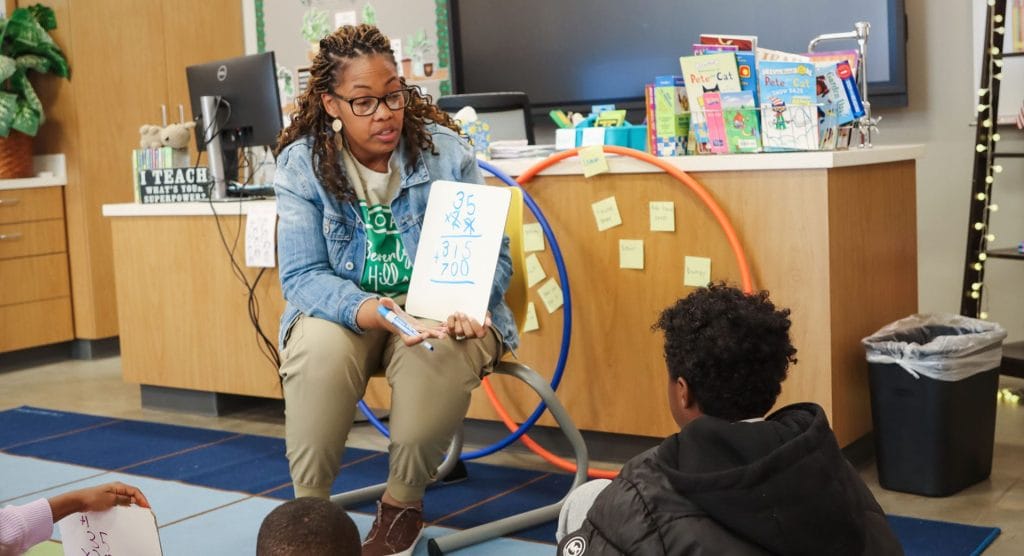
SHAVONYA COLEMAN: Especially if you are a student who has ever moved from one school to another, there are pros and cons, and I think that’s a lot of what our students deal with is having negative experiences at other schools. One good thing about Positive Tomorrows is that our school is very heavily supported. So yes, I have my strategies of how I can help turn that experience around.
But we have a family support team, we have a counseling team, we have awesome administration, and we have some of the best classroom assistants that I’ve ever worked with. So it’s, it’s very much a team effort. A lot of times, the negative experiences from prior schools it filters over to the parent because, as a parent, you’re the one who has to hear about that experience from your child. You may have had to be the one to go to the school and deal with that negative experience.
I like to keep good communication open with our parents to let them know that even if something comes up, we’re on the same team. Sometimes we may agree to disagree, but at the end of the day, the end goal is to make sure that the parent and their child have a wonderful school and academic experience. So I think letting the parent know and the student know that, “Hey, we have the same goal. We have the same end in mind.” And so if they’ve had those negative experiences, not every experience is going to be the same. Positive Tomorrows is such a wonderful school.
And it’s funny to think about it because some of those negative experiences I’ve experienced at previous schools myself, on the teacher side, so I get it, but I’m able to learn from those experiences and say, “Okay, this is how it happened here. I hear you, I see you, and let’s work through it together.” And so even if I’m not able to provide the solution, I have a team of co-workers that will help me get to that end goal.
HANNAH BOWYER-RIVETTE: For Krystle, Shavonya’s support has been transformative as Serenity has found a teacher who understands how she learns. She is eager to wake up every morning and go to class, excited about what she will learn with the support of such a caring teacher.
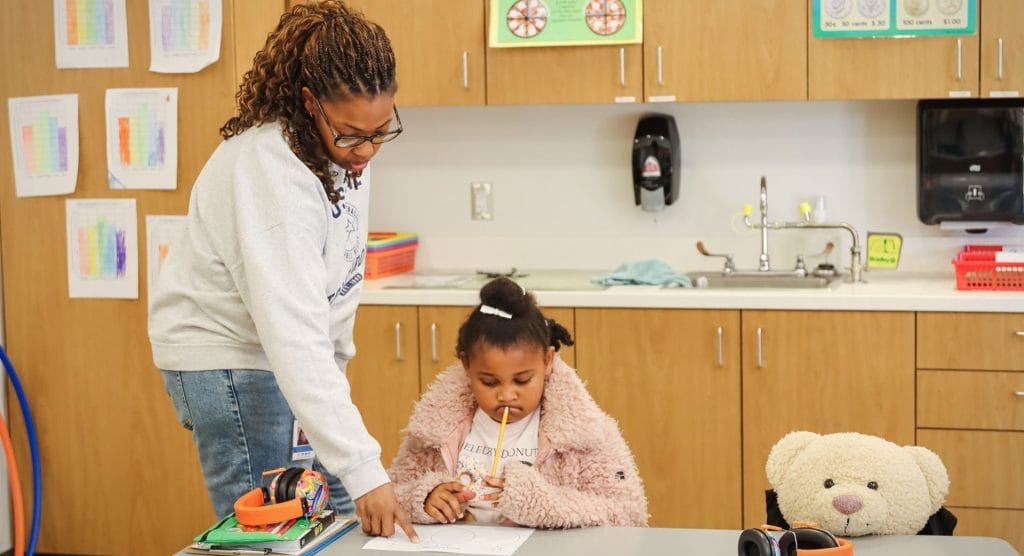
KRYSTLE LATRICE: When she was at her old school, I was thinking about keeping her back because I felt like she wasn’t grasping what the teacher was teaching. It was literally my second grader who said it. She said, “I need a teacher who can teach me how I learn.” And she said, Mrs. Coleman teaches her how she learns. That’s just a big thing for me.
She used to dread going to school; she wanted to miss. Now, if I’m late, it’s a problem. I’m glad that she has her because I know I fell through the cracks when it comes to schooling, and I’m glad that she has a mom who is involved, and then when you have a teacher that’s involved, you can’t go wrong, it’s home and school. So we’re on the same plan. She knows all her multiplication tables. That’s insane to me.
The first day, she panicked, had a meltdown. Day two, she knows them all. She’s like a sponge. Literally, a sponge. That’s why I nominated her. She just makes it be like, okay, there are our good teachers still there that really are there because they care. No, she genuinely cares. You can tell.
HANNAH BOWYER-RIVETTE: As a trauma-informed educator, Shavonya creates an environment of consistency and stability for students whose lives feel unpredictable outside of school. With a strong school community, students are given a foundation for personal and academic growth that affirms they are supported and loved. This foundation allows students to find excitement about learning and a pathway to success.
SHAVONYA COLEMAN: One thing that our school, having that demographic of unhoused families, they make sure that we’re very much trauma-informed. The training that we go through deals heavily with that. A lot of students suffer from anxiety, being unsure. And so it’s something for a student to go home at the end of the day, and they’re not sure if that’s going to be their home for the day. A lot of our students surf between couches of a parent’s friend, an aunt, or an old co-worker, or they’re at the shelter. They have so much to be unsure about.
And so if we can create that safe space where you are supported, you’re loved, you are well taken care of while you’re here. And what I do love is that we have that family support component of our school, that in the event they do step off the bus, their whole life has changed. Okay, that’s not the end of your journey with Positive Tomorrows. I truly could not do what I do in the classroom if that is weighing so heavily on our students.
I mean, if you can imagine getting on the bus, you don’t know if you’re going to come home or to where you were dropped off, and things are going to be the same. You can’t learn. You don’t want to read. You don’t want to learn your multiplication. You want to put your head down, worry, and be stressed, and hope that by the end of the day, your life can continue as it was. So those are a lot of things that we have to take into consideration.
Academically, sometimes when they come, they’re so low you’re not quite sure, is this a cognitive thing? Is it a learning issue? But a lot of times, they have just not been in school consistently, and they’re like sponges. The growth, oh my goodness, the growth is just astronomical. And a lot of times it’s just because they don’t have that stability. They have other things to worry about, which is valid; it’s fair. And so when you can get them in a state of stability to where, okay, I’m calm enough, I’m safe enough, to where I can learn.
And they make the statement all the time, “Mrs. Coleman, can you give us some worksheets? Are we going to do worksheets today?” And I think once they are in that safe space, where they know they can catch up, they can achieve, they can get the certificates, they can get the awards. It’s their driving force. So I live for that. I absolutely love that. And it’s been so rewarding so far.
HANNAH BOWYER-RIVETTE: In talking with Serenity, she shares her favorite parts of Shavonya’s classroom. From technology-driven educational games to brain breaks, Serenity feels excited about learning. She also reflects on how she feels supported by Shavonya as she plays an active role in connecting and engaging with her students.
SERENITY CHRISLYN LASHAY: Well, she lets us get on the computers and play games. In Prodigy, you fight monsters to level up in Math Quest; it’s the same thing, just like mini monsters, and you get to actually decorate your character. I like how she does brain breaks with us because my other teacher would just put on brain breaks and watch us do it, but she actually moves and does it with us. It makes it feel more like it’s real, like I’m actually in the brain break.
We get to dance to music and stuff a lot. I like writing, but like in regular writing, cursive is not for me. I write like regular writing, and I like making books. Well, once I come up with an idea, I make a title that suits the book, and then I’ll start writing about the book and show it to Mrs. Coleman, and she’ll read it.
HANNAH BOWYER-RIVETTE: As students enter her classroom, Shavonya finds that many of them face emotional barriers that impact their learning. To support her students, she approaches each day with flexibility, adapting her approach as needed and leaning on the support systems around her. By meeting each student where they are, she helps them cultivate a love for learning that gives them a sense of pride and accomplishment.
SHAVONYA COLEMAN: Some of the biggest challenges, I did mention the academic part, the emotional issues that some of our students come in with. And, sometimes, unfortunately, they continue their journey at Positive Tomorrows with some of those emotions still; it can be a big barrier. Some of them come in with triggers that you’re not quite sure of. And I will say, my first few weeks or months at Positive Tomorrows, I was kind of frustrated with them myself, because you have these plans and you have these standards that you want to accomplish.
And some days we may just do ELA, some days we might not get to math because it’s so overwhelming. Everything is so overwhelming. And I really do appreciate my admin team that understands that, because as someone that was new to the organization, I’m panicking. I’m like, “Oh no, we’re gonna be behind.” But okay, so maybe we need to take a nap this afternoon and try again tomorrow. So one thing that I do like is that we have a lot of community support.
So resources, tangible resources, classroom resources, is not something that I’ve had to worry about at Positive Tomorrows, which makes all of this so much easier. And so the emotional part is one of the bigger issues that is challenging the academics, of course. But I mean, at the end of the day, if we can get through the day with one subject or two subjects, or all the subjects. We just take every little bit, every little step as a reward. And as I mentioned earlier, the growth is so, I love to see when students love to learn.
Sometimes you may get a third grader who has absolutely no idea what the letter A, what sound the letter A makes. And I’ve encountered that a few times. They don’t know letter sounds. They can barely hold a pencil. So we have the occupational therapists that come in, we have speech therapists that come in, and we have Title I pull out. So it’s such a well-oiled machine that can foresee those challenges that we have, and can help me as a classroom teacher to tackle those challenges.
HANNAH BOWYER-RIVETTE: Shavonya’s individualized, attentive teaching has allowed Krystle to learn more about how to support her daughter. In taking the time to create support structures for Serenity, Shavonya is helping her become more comfortable and confident. Through regular communication, Krystle feels supported as a parent, knowing her daughter’s development is a priority at school.
KRYSTLE LATRICE: Serenity is a little mini perfectionist, which is good and bad at the same time. She beats herself up a lot, so we’ve been working on with her understanding that it’s not the end of the world. I didn’t notice it, because her teacher is with her pretty much more than me. So I was like, oh yeah, I see her at home, and we’re good, we’re good to go. But in class, she was having real-life meltdowns, like anxiety. And it comes to pass that she has anxiety, and she thinks the worst-case scenario. So we’re working on that with her.
And I don’t think that if it wasn’t for Mrs. Coleman, it would have even been noticed or brought up. So we implemented little things, and she touches base with me all the time. The text thread that I have is insane, but good. Serenity got hit with the ball today. Oh, she fell down yesterday. It’s crazy. It’s good, though it’s a good crazy.
HANNAH BOWYER-RIVETTE: At Positive Tomorrows, each student’s journey starts with a baseline assessment, which allows them to be placed in groups that are personalized to their needs. Beyond the classroom, they have a volunteer mentorship program where students get a weekly 1:1 connection to strengthen their academic progress and sense of belonging.
SHAVONYA COLEMAN: Well, at the very beginning, and I will say, within the first day or two of a new student, we have a Title I team that will test them through the NWEA Maps assessment and the DIBELS assessment that’ll give us a baseline. And so those students will immediately be placed, whether in Title I or small groups with me, my classroom assistant will have a small group as well. So right now, it’s actually a pretty good balance. I have some students who are scoring off the charts on their Maps scores, I have a group of students that are average, and then I have some that are pretty low.
So the differentiation, absolutely, is a big piece of our learning environment. We have a lot of computer-based programs that will meet the students where they are, as they continue to progress, and that they love. And so we’re able to give those students a smaller learning experience while still addressing the same Oklahoma Academic Standards, but just on the level that they have. We also have a mentorship program at our school.
Every student has their own individual mentor who meets with them once a week. So they are volunteers from our community or from different businesses within the Oklahoma City area, and it’s a very committed job that they do because they come, like I said, once a week, and that’s something I mentioned earlier about the consistency of Positive Tomorrow.
So I’ve had really great experiences with the student mentors because they know the importance of trust and consistency. And so this year, we’ve added an academic piece to that, yes, they do games and puzzles and outside time, but they spend a portion of that time working on a skill or showing off a skill that they’ve learned. So it’s really a school community effort to make sure that those students’ needs are addressed. And so, to be able to have all those components, it allows me to do my job in the classroom when everyone else is successful.
HANNAH BOWYER-RIVETTE: In wrapping up our conversation, Shavonya reflects on the moments from her teaching career that remind her of the difference she is making. From previous students pursuing careers in education, to attending college, or even sharing how they remember her teaching, she continues to see just how life-changing her impact is.
SHAVONYA COLEMAN: The very first time I saw a student that I taught get hired at the school where I taught them. That was, first of all, a shock because there was no way I’ve been teaching that long, but I remember very specific things about this class of students, and a couple of them are educators in the same district. And then also to see some of the students that are in college or in their careers, and they’re like, “Mrs. Coleman, I still remember my multiplication songs, I was doing this test, and I was singing my sevens.”
So, just for that to be two decades ago, and they’re still remembering those things, the same things that I’m teaching my students in my third-grade class today, brings everything full circle. And I’m very grateful that these strategies still work, and they’re teaching their students and they’re teaching their children how to use these little strategies.
HANNAH BOWYER-RIVETTE: Thank you so much for listening and joining us today to learn more about Jill Dwyer, our May Honoree and recipient of the Honored National Teaching Award. To read more about her story, you can visit our website at honored.org or click the link in the episode description. To learn more about the incredible impact of Positive Tomorrows, you can visit their website at positivetomorrows.org. If you have a teacher who you want to recognize and nominate for our teaching award, you can head to honored.org/nominate to recognize a teacher today. If you enjoyed today’s episode, you can follow us and leave us a review on whatever podcast platform you’re listening in from. Thanks again for listening, and make sure to tune in next month to hear the incredible story of our June Honoree.
Photography By:
McKalyn Danner