

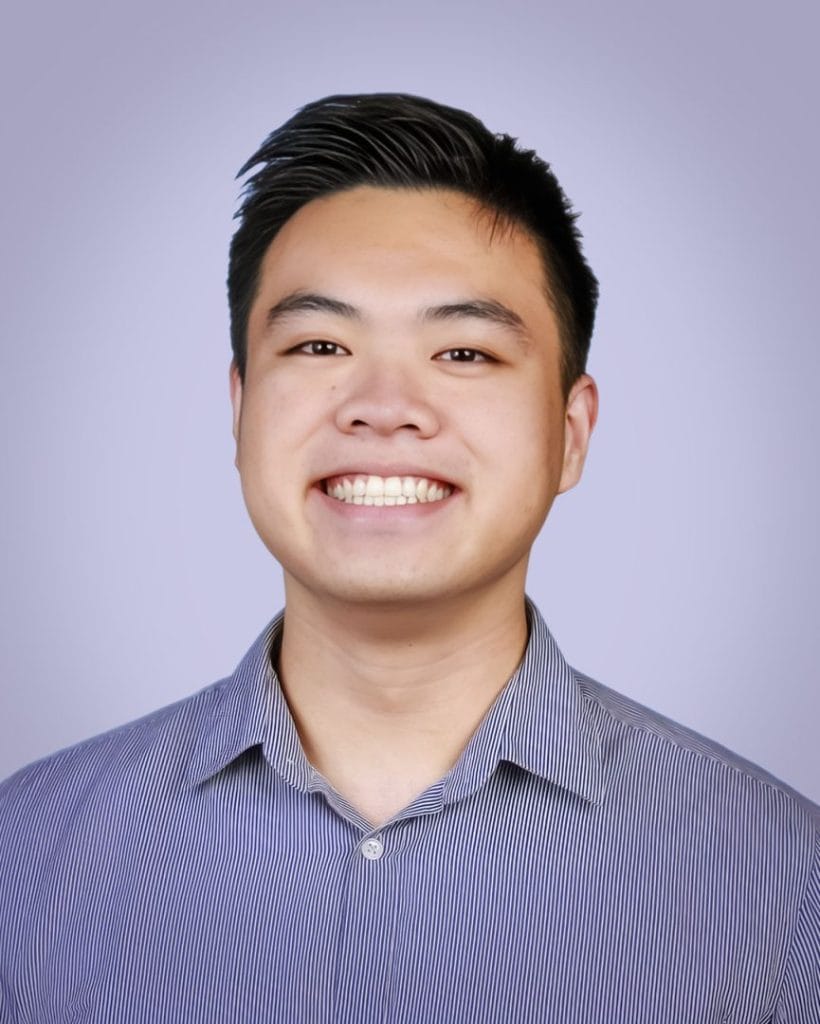
Micheal Quach


November 2026 Honoree
Micheal Quach
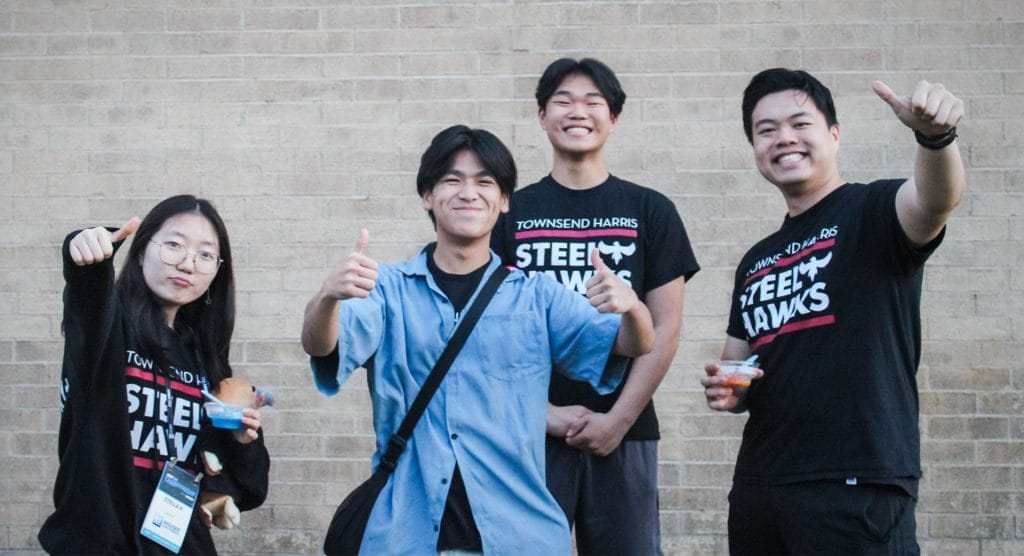
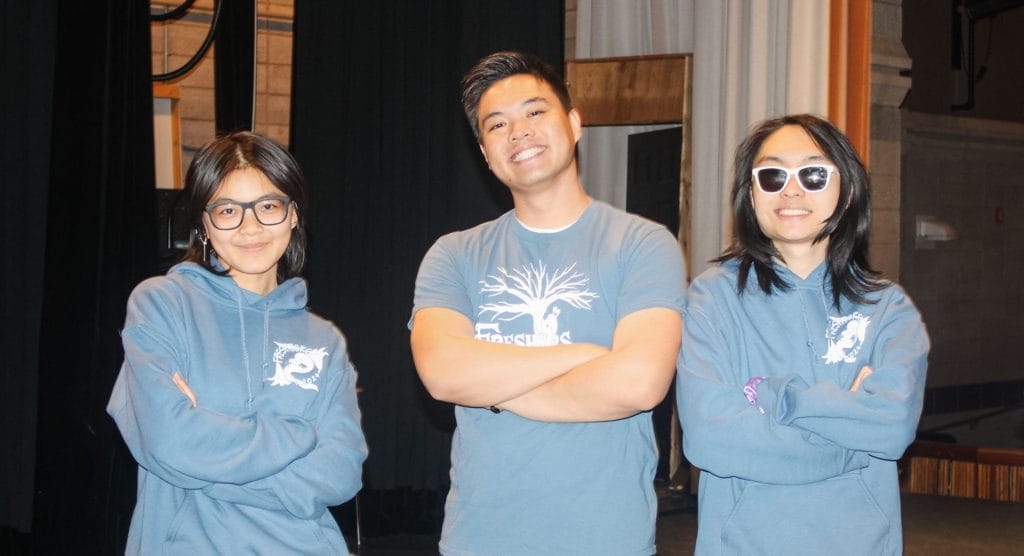
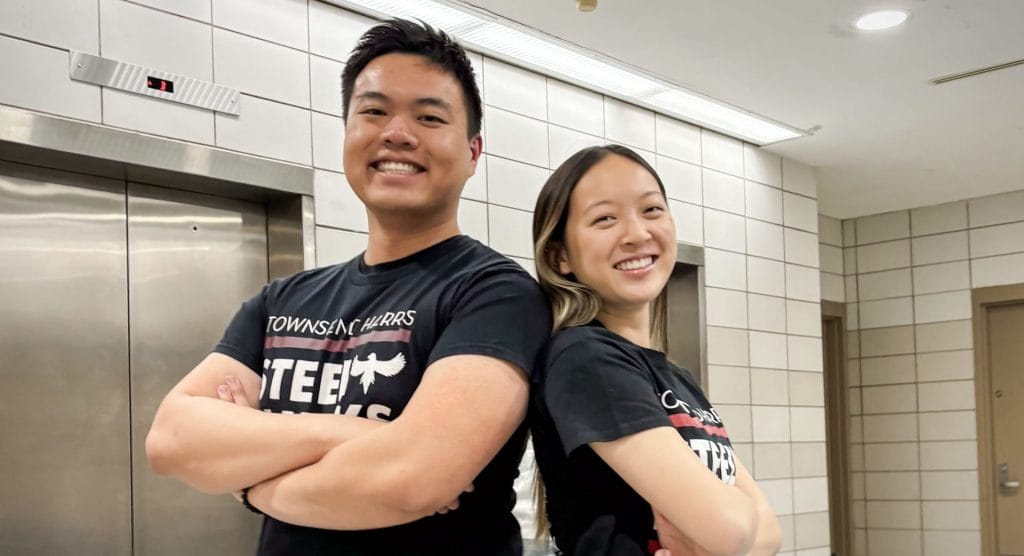
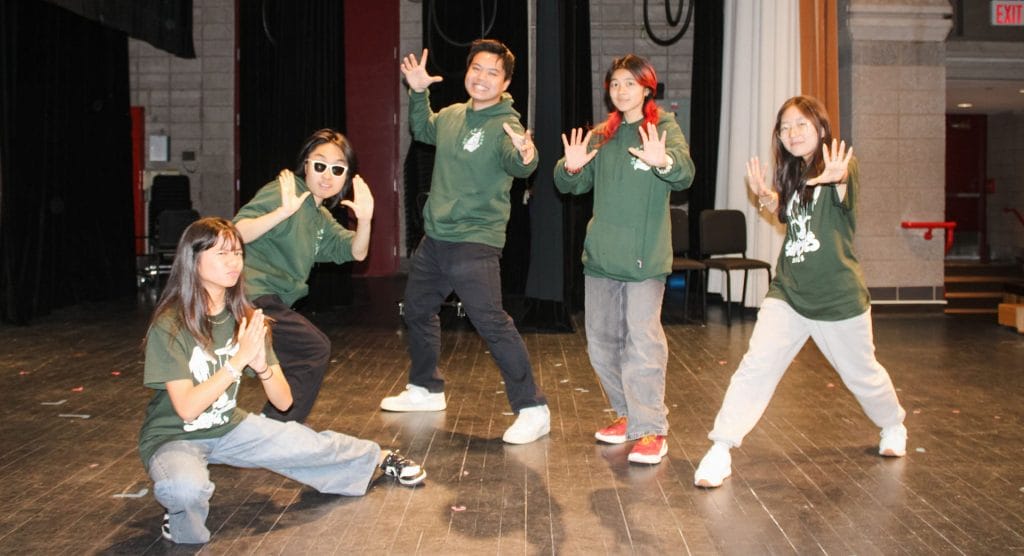
with his students
Townsend Harris High School
, Flushing
, New York
Available On:


LISTEN TO THE EPISODE
"I always told myself that if I was given the opportunity, I wanted to do the same thing and make sure that I helped other people feel as recognized and as appreciated as my teachers did for me."
Micheal Quach
"Knowing that there was someone who trusted in me, even when I lacked confidence in myself, that was very reassuring."
Haein Kang
"As soon as a student or you feel welcomed in a space, then the rest will follow. I do think that you do your best when you feel supported."
Micheal Quach
"He really made sure that students succeeded, not just as students in physics class, but as people, as a member of society."
Haein Kang
"Being a part of these different extracurriculars, these different academic teams, and seeing how much they're willing to sacrifice and how hard they're willing to work has only made me a better teacher."
Micheal Quach
"A teacher is someone who's supposed to care about their students, not just as someone who's there to learn, but as someone who's going to grow into a member of our society."
Haein Kang
"The fact that, although challenges may come their way, they know now that they're far smarter and far stronger than they initially thought or gave themselves credit for, and that's pretty much all I could hope for as a teacher."
Micheal Quach
"If someone were to ask me if there was one teacher who I would go back and sit in a class and just learn, I think without a doubt it would be Mr. Quach."
Haein Kang
"I feel like the world needs more teachers, so seeing the amount of students who want to go into education or the amount of students who want to go into a profession that is so intrinsically linked to helping and serving other people means a lot to me."
Micheal Quach
Description
Micheal Quach, a high school Science teacher at Townsend Harris High School in Flushing, New York, is the recipient of our November 2026 Honored National Teaching Award. He was nominated for this award by his former student, Haein, who joined us in this episode to share the impact of Micheal’s teaching.
You’ll hear about:
- Micheal Quach’s journey to becoming a teacher.
- The impact Micheal has had on Haein.
- Micheal’s dedication to creating an encouraging environment where students believe in themselves.
- Micheal’s passion for supporting students both personally and academically.
You’ll also hear from Aimee Cunningham who shares about a teacher who left an incredible impact on their journey in our segment “Teachers Who Inspired”. Most recently, Aimee served as President and CEO of The Boone Family Foundation. Aimee is a highly experienced principal in the progressive movement with significant fundraising, strategic planning, and management expertise. Over the last 20 years, Aimee has led work on the politics and policies that impact women and families, particularly around access to sexual and reproductive health care.
Links Mentioned
- Nominate a teacher for our Honored National Teaching Award: https://www.honored.org/nominate/
- Read the incredible nomination for Micheal Quach: https://www.honored.org/nominees/micheal-quach
- Follow us on Instagram: https://www.instagram.com/honored/
- Follow us on Twitter: https://x.com/honored/
- Follow us on Facebook: https://www.facebook.com/Honored.org/
- Follow us on LinkedIn: https://www.linkedin.com/company/honored.org
- Follow us on TikTok: https://www.tiktok.com/@honoredteachers
Credits
-
- Music by DanaMusic: https://pixabay.com/users/danamusic-31920663/
- Music by AudioCoffee: https://www.audiocoffee.net/
Transcript
MICHEAL QUACH: A lot of them, after my class, have recognized and said that they’ve had a new sense of self-confidence or self-efficacy. The fact that, although challenges may come their way, they know now that they’re far smarter and far stronger than they initially thought or gave themselves credit for. And that’s pretty much all I could hope for as a teacher, the fact that outside and beyond my class, beyond high school, they have the belief in themselves that they’re able to achieve everything they’ve ever wanted to.
HANNAH BOWYER-RIVETTE: Hello everybody, and welcome back to Inspiring Teachers: The Honored Podcast, where we shine a spotlight on life-changing teachers across the country. I’m Hannah, your podcast host, and our podcast is brought to you by Honored, which is a national nonprofit organization dedicated to honoring and elevating great teachers nationwide. Every month of the school year at Honored, we select an exceptional educator in the United States to be the recipient of the $5,000 Honored National Teaching Award. To learn more about our organization, you can go to our website at honored.org.
We are so excited to have you listening in on another Honoree podcast episode. Today, we are joined by Micheal Quach, a high school Science teacher at Townsend Harris High School in Flushing, NY. He was nominated for this award by his former student Haein, who has joined us today to help share the impact of Micheal’s teaching.
Before we dive into Micheal’s story, we are excited to kick off our Honoree episode with our special segment, ‘Teachers Who Inspired, where we invite individuals to share a story about a teacher who had a lasting impact on their lives. Today, we’re thrilled to have our guest on our special segment, Aimee Cunningham. Most recently, Aimee served as President and CEO of The Boone Family Foundation. Aimee is a highly experienced principal in the progressive movement with significant fundraising, strategic planning, and management expertise. Over the last 20 years, Aimee has led work on the politics and policies that impact women and families, particularly around access to sexual and reproductive health care.
AIMEE CUNNINGHAM: The person who came to mind for me was my eighth-grade Language Arts teacher, who is named Perry Degener. And he was important to me, and still is, because he really pushed me as a writer not just to do the things you learn to do when you’re in elementary and middle school; where to put a semicolon, not to use run on sentences, things like that, but encouraging me to find my voice as a writer and to write things that are authentic to me. Even when I was doing something, for example, like a research paper, there’s a way to pull your voice through in that way.
And in 1993, when I was in eighth grade, I was deeply invested in writing the worst short stories you’ve ever read in your life. Everybody in the story died a tragic death by the end. I mean, it was very, very dramatic. And I can remember one time turning in a short story, or a personal essay, or something like that. We had to write 500 words every night on the topic of our choice.
And Mr. Degener ran across the center, we were in kind of an open classroom setting, ran across the pod, and put his hand on my shoulder and said, “You did it. I read your writing from the assignment from last night, and I could finally hear your voice.” I love writing. It is one of my favorite ways to communicate. And every time I write something that is important to me, sometimes even if it’s just an email, I think about Mr. Degener saying, “I want to hear your voice here.” I probably could have talked about a dozen other teachers, but that is really something that continues to affect my life in the most wonderful way today.
HANNAH BOWYER-RIVETTE: Throughout the rest of the episode, we’ll share Micheal’s story and the incredible impact he has on his students’ lives. To start us off, you’ll hear from Micheal, who reflects on what led him to being an educator as he was inspired by his teachers who poured into him and helped him believe in his potential.
MICHEAL QUACH: If I’m being completely honest, when I was a kid, I probably would not have ever chosen to become a teacher. I was very influenced and inspired by the type of TV shows I watched as a kid. So my first dream job was actually to be like a doctor or a surgeon, based on all the medical shows I used to watch growing up. And then, as I progressed into middle school and high school, I would say that I grew up to be quite an anxious and insecure person.
So, I went throughout high school feeling like I wasn’t good enough, I had a lot of imposter syndrome, and I think it was really my teachers who accepted me for who I was and really showed me grace and patience, all of which I didn’t think I deserved at the time. I really didn’t think that was worth anyone’s time or attention, but nonetheless, they showed me a lot of effort and guidance, and I always told myself that if I was given the opportunity, I wanted to do the same thing and make sure that I helped other people feel as recognized and as appreciated as my teachers did for me.
I think it really does take only one person to change another person’s life. I used to think growing up that I was not smart enough or not good enough to make a profound impact on the world, but I think that, especially given my time as a teacher within these last four years, I really don’t take any interaction for granted. And you don’t ever truly understand how much of an impact you leave on other people or the world around you until later on. Teaching has been my dream job since I was 14 years old. I would say that by far it is the hardest thing I’ve ever done in my life, but along that same sentiment, by far it’s also the most rewarding and most meaningful thing I’ve ever done in my life.
HANNAH BOWYER-RIVETTE: To learn more about Micheal’s impact, we spoke with his former student, Haein, who was lucky enough to spend junior and senior year in his classroom. She credits Micheal with helping her believe in herself and celebrates how he created an encouraging environment where every student felt seen and valued.
HAEIN KANG: When I look back on my education years prior to college, there was really one teacher who really believed in me and encouraged me when I was personally going through a lot of self-doubt; it was Mr. Quach. For context, I had Mr. Quach my junior year when my physics teacher was out on paternity leave, and then I had Mr. Quach my senior year for AP Psychology. And I feel like junior year for all high school students is a pretty important and pressuring time.
And everyone is going through a lot of things in that time academically and personally. And I think Mr. Quach really, from the start, he really made sure that we knew that he was always there if we needed support. And knowing that there was someone who trusted in me, even when I lacked confidence in myself, that was very reassuring. And it led into my senior year, when I was awaiting on the result that I was stressing about my junior year, to have the same person who knows the struggle that I was going through. I think that in itself, the presence was really encouraging.
And so I think in that I was able to sort of ground myself and grow as a person, not just as a student. And I think that still carries to this day as I navigate college. It’s like different kinds of self-doubt. But even in that moment, just having had Mr. Quach as a teacher, grounds me in the sense of knowing that there’s someone who’s always going to cheer me on, check in on me, and that I can update the highs and lows that happen to me.
And I feel like his class was the only class where I felt like the teachers really cared about me beyond being a student, but as a person. And it was very visible how much he cared about each and every one of his students. And because of that, his class was very encouraging, and I learned a lot, and he would always encourage me, regardless of the outcome, and I was very inspired by that.
HANNAH BOWYER-RIVETTE: Micheal is passionate about fostering an environment of hospitality, transparency, and mutual respect to build strong student connections. He cultivates a safe community where students can show up as they are and bring their unique abilities. By investing in his students beyond academics, he helps them build confidence both inside and outside of the classroom.
MICHEAL QUACH: I think fundamentally the biggest characteristic or biggest aspect I want to foster in my classroom is this idea of hospitality. That we don’t need to have known each other for super long, or we don’t need to be the best of friends, or you don’t really need to know your classmates for you to care about the other person. Just by the fact that we are in this shared space, we should have some responsibility to look out for one another, and that idea of hospitality has always been super important to me.
Whether it’s been as a teacher or a member of church, or when I was a student myself. I think this idea that being accepted for who I am, and this idea of coming as you are, it doesn’t matter how good I am, it doesn’t matter how good you are, or what you think you can bring, or what you think you lack. Just the fact that everyone feels welcomed enough to at least be safe and comfortable means a lot to me.
And I really do think that this idea of hospitality comes first, and as soon as a student or you feel welcomed in a space, then the rest will follow. I do think that you do your best when you feel supported. And then I think the other thing that’s super important to me is this idea of transparency. That whatever is going on, whatever mistakes you make, and whatever mistakes I make as a teacher as well, I feel like being able to communicate that back and forth between teacher and student is really important beyond just what’s happening inside the classroom.
I want to support you with whatever endeavors, or expectations, or goals you have in your extracurriculars, or your sports or jobs, etc. And I think understanding that your life extends beyond the classroom is super important.
HANNAH BOWYER-RIVETTE: One way Micheal connects with his students is by sending out Google Form check-ins to invite them to reflect on their lives. By giving them the opportunity to share their thoughts and experiences, they gain self-awareness and the understanding that there is someone who cares about them beyond just academics.
HAEIN KANG: I think the most visible or noticeable aspect of being cared for is that he would periodically send out Google Forms that would ask us if anything was coming up in the weeks, how we were feeling, if we were going through anything personally that we struggle with. And so those are purely not academic, which I feel like helped to instill a sense of personal stability in knowing that there was at least someone in the school environment who really cared about students’ wellbeing outside of the classroom.
I think what Mr. Quach said about knowing that you have a life out of classroom, he really took that to heart and really made sure that students succeeded, not just as students in physics class, but as people, as a member of society. And he was an emotional anchor for a lot of my friends and myself in the class. Whenever we were struggling, we knew that we could go to it and tell him what we were going through, and then he wouldn’t try to push any solutions on us, but listen and be there for whoever needed that support.
And I really appreciated that because that not only helped me to succeed academically but personally, and really enjoy the time that I spent in high school, which I feel like it’s not the norm for a lot of people. But he really made sure that the environment included each and every one of his students, which I feel like everyone knows and appreciated.
HANNAH BOWYER-RIVETTE: Micheal’s commitment to his students extends into his involvement in school organizations such as the Robotics Team and Science Olympiad. His students’ passions fuel him to engage further in these organizations to support them in achieving their dreams. Witnessing their passion and being part of their journey allows him to further connect with his students and become a stronger teacher.
MICHEAL QUACH: So it’s actually a super funny idea. When my students are even when you say, “Oh, you’re so involved in robotics, Science Olympia, and all these things,” because pretty much everything I’m involved in now as a teacher, I was not involved in as a student. And when I was a student, I was like, man, robotics, Science Olympiad, the school play, all these things feel not that cool, and I don’t want to do that.
So it’s always shocking when even my friends who went to high school with me see that I’m in charge or involved with so many of these things nowadays, and I really attribute that to the passion that the students have. I think seeing how important this is to them and seeing how hard they’re willing to work for their own dreams inspires me to want to be a part of that story. I want to be able to share in both their struggles as well as their success.
And I think, honestly, being a part of these different extracurriculars, these different academic teams, and seeing how much they’re willing to sacrifice and how hard they’re willing to work has only made me a better teacher. Because it really puts into perspective that this isn’t just a job, but the time I’m spending here is actively building up these students and helping them achieve their dreams. I’m very grateful and thankful to say that my dream job involves helping other people find their dreams as well. It’s really due to the students’ own passions that inspired me to be a part of this.
HANNAH BOWYER-RIVETTE: To build on his connections with his students and support their learning, Micheal also brings real-world examples to the classroom. By incorporating current events, pop culture, and his students’ interests, he creates an engaging classroom environment where students feel excited and connected to their learning.
MICHEAL QUACH: I think I really enjoy this aspect of teaching, being able to bring in pop culture or things that the students are already used to in everyday life into the classroom. Admittedly, it’s also the reason why I spend so much money in the classroom, because sometimes I’ll be scrolling on the internet and be like, “Yeah, that’s such a cool thing,” and I’ll buy something, and then I’m forced to think of a way to integrate that into the classroom.
But for both physics and AP psychology, I’m thinking I’m very fortunate to be very aware of what’s popular, but what’s also important to the kids nowadays. So whether or not it’s the newest technology that’s come out, finding ways to integrate that, or maybe a viral YouTube video that’s come out, something that’s trending on social media. I think it’s really exciting to see the ways that I can connect physics and AP psychology and bring that to life for the students.
Where at first glance it might seem totally unrelated to school, and they’ll see me bring it up in my slideshows or my lessons, and you’re like, “Oh, Mr. Quach is so cringy, why is he bringing this up?” And it’s actually pretty exciting to see when they realize that, oh, it actually has some applications to physics or psychology. I think it’s really amazing too, because it also helps bring the students’ personalities to life.
I think, especially for students who might feel disconnected or disengaged, seeing something that they’re so passionate about be integrated into the curriculum helps them stay grounded and invested in it. So it’s been a challenge, but also very fortunate blessing of mine to be able to focus on that, to see the ways in which I can bring the students’ interests and passions into my curriculum, and being culturally responsive and seeing the ways in which I can reach them where they’re at.
HANNAH BOWYER-RIVETTE: Expanding on Micheal’s real-world connections in the classroom, Haein shares some of her favorite moments. She loved how Micheal would incorporate memes and timely topics to genuinely connect with the students in ways that were relevant to their generational culture.
HAEIN KANG: I remember in AP psych, for every single lesson, he would have a meme that was related to the concept that was being taught in class, like every two slides. And I think that was probably my favorite part of the lesson, because I feel like in high school, not a lot of teachers incorporate memes into their lesson plans. They might try to relate to their students by giving them stories of what happened back in the days, but I think memes really helped to reiterate the concepts.
And because it’s psychology and it’s very prevalent in our daily lives, it was a lot easier to understand the different concepts, and that helped with my learning. But also, it made the class a whole lot fun, because you never knew what memes he was going to put up on the slides next, and so I think that was my favorite part of his class.
HANNAH BOWYER-RIVETTE: Micheal hopes that after his students leave his classroom, they carry with them greater self-confidence and the belief that they can face challenges beyond what they think they are capable of. If they remember anything, he wants them to know they can trust their abilities and will always have someone who believes in them.
MICHEAL QUACH: I’ve had a lot of students reach out to me or fill out end-of-year reflections. And a lot of them admittedly will be like, “Yeah, I don’t know how much physics I’ll remember after this year, or I don’t know how much AP psychology I’ll use going on after this class.” But something I’m very thankful, and something that’s been very consistent throughout all the student reflections, is that a lot of them, after my class have recognized and said that they’ve had a new sense of self-confidence or self-efficacy.
The fact that, although challenges may come their way, they know now that they’re far smarter and far stronger than they initially thought or gave themselves credit for, and that’s pretty much all I could hope for as a teacher. The fact that outside and beyond my class, beyond high school, that they have the belief in themselves that they’re able to achieve everything they’ve ever wanted to. I think so often other people, or the world, or maybe your own self-doubt convinces you that you’re not good enough.
I was definitely one of those students who thought they were not good enough. So to hear that after my class, that the students know that not only they are good enough, but now they are inspired to help others feel supported as well. That means the most to me. That now they have an understanding of their own self-worth, but to help other people feel recognized, validated, and appreciated as well.
HANNAH BOWYER-RIVETTE: Building on Micheal’s hopes for his students, Haein reflects on the impacts Micheal has left on her. Through Micheal’s teaching, she learned that teachers genuinely care about their students and want to be invested in their academic and personal lives. The confidence she gained has stuck with her and has allowed her to find more success in college in communicating with and learning from her professors.
HAEIN KANG: I think everything he said and more is probably everything that all of his students carry, but something new that, as I was reflecting through this session, that I realized that I carry with me was my perception of teachers in general has shifted since meeting Mr. Quach. I think, especially going into college, these professors are very renowned in their fields, and even though they put up office hours, it’s really hard to find the time to go because a lot of students feel like they’re infringing on the professors’ free time.
But during my time with Mr. Quach, something that he’s always told his students is to never feel like a burden whenever you’re coming to him with something that you’re struggling with. And even if you weren’t struggling with something, he would always be there to talk to you, just about everyday stuff, you know what’s been going on, things we’re excited for the weekend, and that sort of shifted my perception of teachers from people who simply teach and end the interaction after class is over to people who are actually there for you and care about you, even beyond the classrooms.
And so I think because of that, I was a lot more confident and bold in approaching my professors the last two semesters in college, and I was able to gain a lot of insights that are not merely related to academics or the research that they’re doing, but about their own perspectives in life or what they went through in their journey in becoming professors.
And I think that was very insightful, and I don’t think I would have harbored that confidence had it not been for Mr. Quach who really taught each and every one of his students that a teacher is someone who’s supposed to care about their students, not just as someone who’s there to learn, but as someone who’s going to grow into a member of our society, and so I think that is probably one of the biggest takeaways that I had the last two years that I had Mr. Quach as my teacher.
HANNAH BOWYER-RIVETTE: In reflecting on his impact, Micheal shares how attending his students’ graduation is a moment every year that reminds him of the importance of his work. Whether he had a student for one or four years, seeing their growth and successes is invaluable, as he witnesses them taking the next step to pursue their dreams.
MICHEAL QUACH: Something that I always try very hard to do is to attend graduation every single year, and, like Haein said, I’ve had many students where I’ve known them across different years. I’ve had many students where I’ve gotten to teach them from physics into AP psychology, but there are also some students I’ve gotten to work with since they were freshmen, and now they graduated.
So, I think seeing them be able to walk across stage, especially when so many of them had so much self-doubt to begin with, especially at the start of high school, or freshman, or sophomore year, and seeing the transition in their own abilities, but also belief in themselves, and seeing how joyous they are walking across the stage reminds me that’s all worth it. I hope it’s a reminder to all students that a lot of the struggles that you go through are temporary, and that as long as you believe in yourself and you don’t give up on yourself, that it is truly possible to achieve anything you’ve ever wanted to do.
And I think seeing all of my students walk across stage is a reminder of that. And besides that, I think especially when students like Haein reach out, or when graduates come back and visit, and I hear updates of all the amazing things they’re doing now, and they’re like, “Wow, I hated STEM and science and math when I was a freshman in high school, and now I’m majoring in this, or now I’m pursuing law, I’m pursuing cinema, I’m pursuing all of these things that I never thought were possible.”
And seeing them come back and update me on their lives is really heartwarming and encouraging, and it reminds me of the small but meaningful impact I’ve had on their lives. And obviously, I’m a sucker for all the students who tell me that because of my class, they themselves want to be a teacher in the future also. That also is always really inspiring to hear. I feel like the world needs more teachers, so seeing the amount of students who want to go into education or the amount of students who want to go into a profession that is so intrinsically linked to helping and serving other people means a lot to me. The fact that they’ve grown to be such selfless but also responsible people makes me super proud.
HANNAH BOWYER-RIVETTE: In wrapping up our conversation, Haein expands on why Micheal is the one teacher who left the biggest impact on her life. His care and unwavering belief in his students, along with his dedication to creating an engaging and encouraging learning environment, will stick with Haein long after her time in academia.
HAEIN KANG: If I’m being honest, I have had a lot of great teachers in my life, both in and out of school. I’ve had a lot of mentors who guided me through a lot of difficult times, but if someone were to ask me if there was one teacher who I would go back and sit in a class and just learn, I think without a doubt it would be Mr. Quach. I think it’s very telling when students who have already graduated high school come back, reach out to him, and go back to high school just to see him and say hi.
I think that’s a very telling sign of what a great teacher he is, and not just as a teacher, but as a person who genuinely cares about each and every one in his life, and managing the classes of like 30 students. That’s a lot more work than just creating lesson plans, and I really appreciated all of his efforts that he put into the classroom, and I’m going to be very lucky to find a teacher like him as I continue on in my academic journey in college.
HANNAH BOWYER-RIVETTE: Thank you so much for listening and joining us today to learn more about Micheal Quach, our November Honoree and recipient of the Honored National Teaching Award. To read more about his story, you can visit our website at honored.org or click the link in the episode description. If you have a teacher who you want to recognize and nominate for our teaching award, you can head to honored.org/nominate to recognize a teacher today. If you enjoyed today’s episode, you can follow us and leave us a review on whatever podcast platform you’re listening in from. Thanks again for listening, and make sure to tune in next month to hear the incredible story of our December Honoree.
Photography By:
Micheal Quach's Students
Your teacher could be featured on The Honored Podcast. Nominate them for our $5,000 Honored National Teaching Award!
More Honoree Stories

September
Madeline Gerena Franco
Whitney M. Young Magnet High School
Chicago, Illinois

