Anna Tykwinski


October 2026 Honoree
Anna Tykwinski
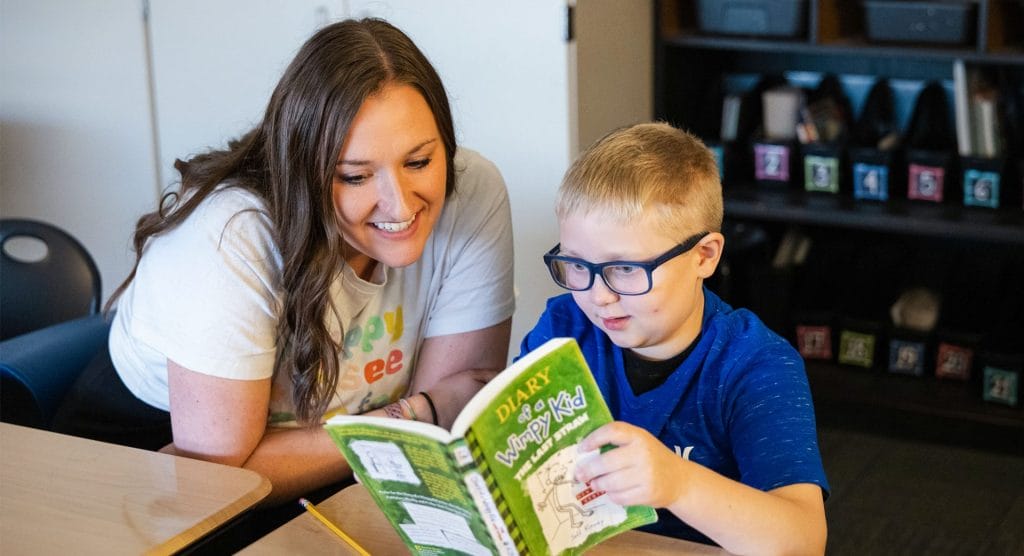
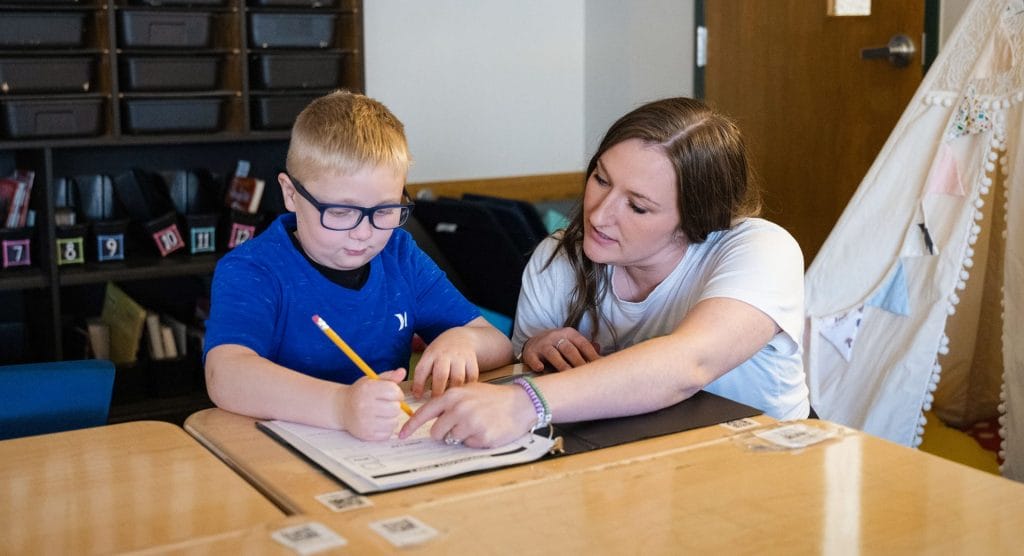
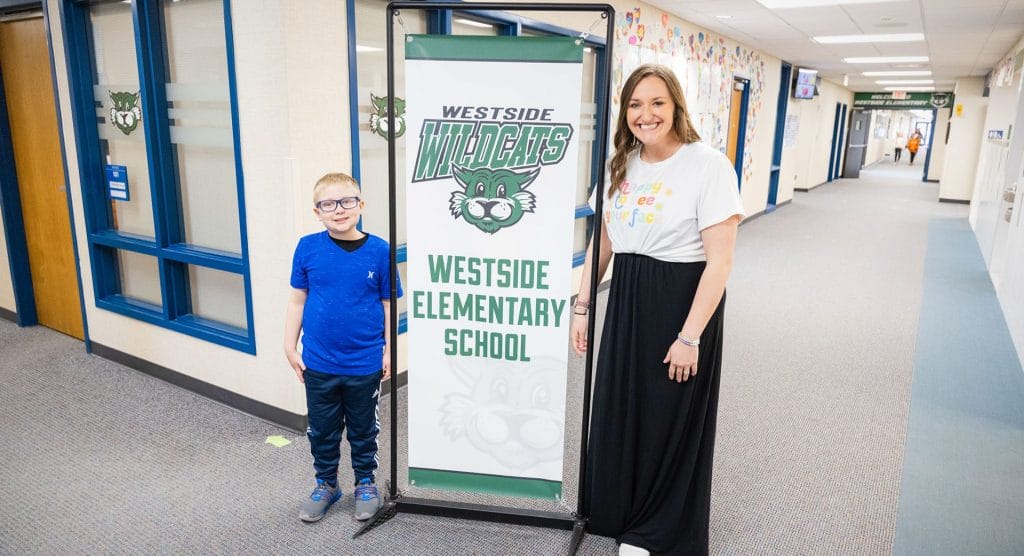
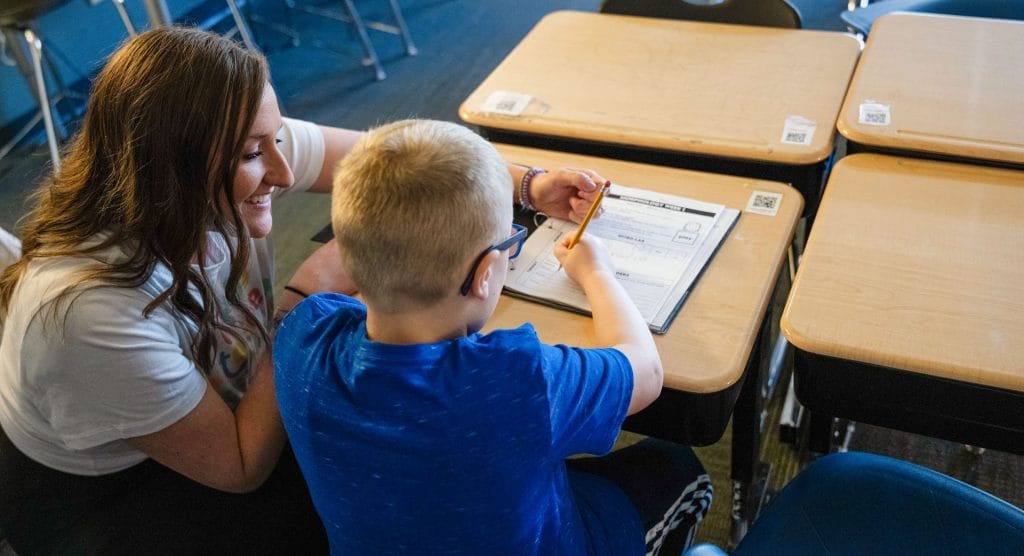
with her student, Dax
Westside Elementary School
, West Fargo
, North Dakota
Available On:


LISTEN TO THE EPISODE
"I want each student to come in here and feel important, feel valued, know that when they share something about their Taekwondo competition or their dance competition, that the class is truly excited for them and proud of them."
Anna Tykwinski
"She has always given him every opportunity that she can to watch him succeed, and he is doing it."
Jamie
"I want there to be a genuine connection between us, and I want them to want to come in."
Anna Tykwinski
"My favorite thing about my teacher is she's a great teacher, and she helped me with, and I'm proud of, is reading and writing."
Dax
"I try to remember that they're kids. We can do academic things, but we can turn it with some social skills too."
Anna Tykwinski
"She has truly taken the time to get to know him and who he is and what his needs are."
Jamie
"It's been amazing watching [Dax] grow, and I truly feel like he feels comfortable in here now."
Anna Tykwinski
"It's so nice to know that he has that full team at school that fully cares about him, and it's nice to know that he has a team that is not just me."
Jamie
Description
Anna Tykwinski, a 3rd-grade teacher at Westside Elementary School in West Fargo, North Dakota, is the recipient of our October 2026 Honored National Teaching Award. She was nominated for this award by the mom of her student, Dax. Joining Anna in this episode are Dax and Dax’s mom, Jamie.
You’ll hear about:
- Anna Tykwinski’s journey to becoming a teacher.
- The impact Anna has had on Dax and his family.
- Anna’s dedication to creating strong, meaningful relationships with her students.
- How Anna has supported Dax in transitioning from spending most of his day in the special education classroom to the general education classroom.
You’ll also hear from JJ Abrams, an American producer and filmmaker known for his work in action, drama, and science fiction. He shares about a teacher who left an incredible impact on their journey in our segment “Teachers Who Inspired”.
Links Mentioned
- Nominate a teacher for our Honored National Teaching Award: https://www.honored.org/nominate/
- Read the incredible nomination for Anna Tykwinski: https://www.honored.org/nominees/anna-tykwinski/
- Follow us on Instagram: https://www.instagram.com/honored/
- Follow us on Twitter: https://x.com/honored/
- Follow us on Facebook: https://www.facebook.com/Honored.org/
- Follow us on LinkedIn: https://www.linkedin.com/company/honored.org
- Follow us on TikTok: https://www.tiktok.com/@honoredteachers
Credits
-
- Music by DanaMusic: https://pixabay.com/users/danamusic-31920663/
- Music by AudioCoffee: https://www.audiocoffee.net/
- Teachers Who Inspired Segment: https://www.youtube.com/watch?v=8pmZ4_I_mgo
Transcript
ANNA TYKWINSKI: I want each student to come in here and feel important, feel valued, know that when they share something about their Taekwondo competition or their dance competition, that the class is truly excited for them and proud of them. And we’re like a little family during the day, so we want to have that connection between me and with them, and then the students together, and really feel connected together.
HANNAH BOWYER-RIVETTE: Hello everybody, and welcome back to Inspiring Teachers: The Honored Podcast, where we shine a spotlight on life-changing teachers across the country. I’m Hannah, your podcast host, and our podcast is brought to you by Honored, which is a national nonprofit organization dedicated to honoring and elevating great teachers nationwide. Every month of the school year at Honored, we select an exceptional educator in the United States to be the recipient of the $5,000 Honored National Teaching Award. To learn more about our organization, you can go to our website at honored.org.
We are so excited to have you listening in on another Honoree podcast episode. Today, we are joined by Anna Tykwinksi, a 3rd-grade teacher at Westside Elementary School in Wells Fargo, North Dakota. She was nominated for this award by the parent of her student, Dax. To help share the impact of Anna’s teaching, we are joined today by Dax and Dax’s mom, Jamie.
Before we dive into Anna’s story, we are excited to kick off our Honoree episode with our special segment, ‘Teachers Who Inspired, where we invite individuals to share a story about a teacher who had a lasting impact on their lives. Today, we’re thrilled to have our guest on our special segment, JJ Abrams, American producer and filmmaker known for his work in action, drama, and science fiction. This audio is credited to TEACH.org, and you can find more information on the source of this audio in the episode description.
JJ ABRAMS: The first star I ever met was my favorite teacher. His name was Joe Papaleo. He was this awesome small Italian gentleman, and he was just the greatest, and he did what most writing professors are supposed to do, but he did much more than that. He would spend hours in his office with me, going over the work I was doing. He was a published author, so I was impressed.
He was the first person that made me believe that my voice mattered, and that what I wrote actually could be something, could be published someday. What I didn’t even realize was he made me feel confident, and he made me feel real. And before Joe Papaleo, I was a guy who wrote, but after Joe, I was a writer. I’ll never forget him, and I will always be grateful for him.
HANNAH BOWYER-RIVETTE: Throughout the rest of the episode, we’ll share Anna’s story and the incredible impact she has on her students. To start us off, you’ll hear from Anna, who reflects on what led her to being an educator as she nurtured her passion for helping and teaching others from a young age.
ANNA TYKWINSKI: My mom, growing up, was a teacher, and my aunt was a teacher, and from a young age, which I feel like a lot of teachers say that from a young age, when we played house, or when I played with my stuffed animals, or my dolls, I was always the teacher. I’d line them up and read stories to them. It was what I have done my whole life. And so then I went off to college.
I started with teaching, and then some of the classes that I took were more psychology and child psychology, and I really enjoyed those, so I kind of went down that lane a little bit more, and I actually got my social work degree first, and I worked in the hospital setting with a social work degree for a little while, and then really missed being around kids.
And while I was in college, I always worked at a preschool or a daycare too, and I found that that’s where my love was. And so I went back to school and finished my education degree, and then right out of there, I got a long-term sub position in the school, and then she decided to stay home, and I was able to stay, and I’ve been here ever since.
HANNAH BOWYER-RIVETTE: To learn more about Anna’s impact, we spoke with Jamie, the parent of student Dax. Jamie celebrates how Anna has gone above and beyond to support her son, recognizing the care and dedication she brings to her work every day. Dax also shares his favorite parts of Anna’s classroom.
JAMIE: I decided to nominate her because teachers, their jobs are extremely difficult these days. I know a ton of teachers through friends, family, clients, and so I hear their stories all the time, and I know how difficult they are. And so I also know how exceptional she is. She has gone above and beyond for Daxton, and I know that with how stressful their jobs are, they can get burnt out really easily. And so acknowledging what they’re doing and making sure they know the impact of what they’re doing is important, so that they want to keep doing what they’re doing for these kids.
DAX: My favorite thing about my teacher is she’s a great teacher, and she helped me with, and I’m proud of, is reading and writing. She gave us free time, and like parties and stuff.
HANNAH BOWYER-RIVETTE: Building strong relationships with her students is key to Anna’s teaching practices. From the beginning of the school year, she prioritizes creating a classroom community where students feel safe and connected. Her genuine connections and encouragement for students to connect with each other set the foundation for learning.
ANNA TYKWINSKI: I feel like I really spend time building those relationships early on, and even when I see them in the hallway, the younger students, ones that could potentially be mine or not, getting to know them and building those relationships, because later on it will pay off. Even if I spend more time doing that before we dive into all the academics, partly for me to build that connection with them, but even as a class in general, to have a tighter classroom community, benefits us in the long run.
And I think of teachers that I had growing up, I don’t remember the math lesson they taught me or the science experiment, but I remember those teachers that showed an interest in the activities I was doing, or asked about my siblings, or things like that, the ones that I genuinely wanted to go to class to see, and I want to be that for students too. We spend a lot of time together, a lot of hours during the day, lots of days throughout the year, so I want there to be a genuine connection between us, and I want them to want to come in. I want to get excited to see them, and I feel like it makes our class function better.
We have more fun together, we can have little inside jokes together because we all get to know each other, and spend that time building the community. I want each student to come in here and feel important, feel valued, know that when they share something about their Taekwondo competition or their dance competition, that the class is truly excited for them and proud of them.
And we’re like a little family during the day, so we want to have that connection between me and with them, and then the students together, and really feel connected together. And I want to be that for them, or if they are having a rough morning and a rough day, I want them to know, okay, when they come in here, though it can be different. I want to be that warm welcome because some mornings, I have two toddlers at home, some of them the mornings are a train wreck, but when I get them in here, I want them to feel that comfort, feel the ease of we’re good, taken care of in here for the school day.
HANNAH BOWYER-RIVETTE: Anna has taught Dax for 2 years in a row as she transitioned alongside him from 2nd to 3rd grade. Last year, although Dax spent most of his days in the special education classroom, Anna built a strong, meaningful connection with him. Through her support, he now spends most of his day in the general education classroom, helping him build confidence, strengthen social skills, and form meaningful friendships.
ANNA TYKWINSKI: I started with Dax last year, so I had him in second grade, and I looped up this year. And last year I had Dax for, he was in my room for about an hour, but I had him one-on-one, or like four in a group, for only about 20 minutes. So it was trickier to build that connection; that’s not a lot of time, but I tried to find his interests as quickly as I could to hook him in. So I found out he loves nonfiction, and he loves history, and things like that. So, any chance I could, dove into that with his group.
And then, he would have some tough days, and I think reminding him, “Yeah, we all have these really tough days, but we’re going to start over, we’re not going to bring it up, we’re not going to hold on to it, we’re going to move on past it, and if you need a fresh start an hour from now, we can do a fresh start an hour from now,” giving him that freedom to do that. And then when I looped this year, I did request, I said, “You know, I feel like I’m not done with him yet, I feel like we’re just getting somewhere, and then I had to move on.”
And so I told them from the start, “I already have the connection with them. Let’s try to have them in the room more if we can.” I feel like it’s easier, we’re all starting fresh together, and the beginning part of the year is really, like I said, when we build those connections and that comfortability in the room, and I want him here for it. And so we started, and he is now in my room, 95% of the day, and doing fantastic. He doesn’t even have BT’s with him anymore. He is in here, truly like any other student that I have in here, which is so fun.
And there are moments that we have to adjust a couple of things, if I’m doing a new seating arrangement, and I know I’m going to do that the day before, I’ll probably let him know, or let his mom know, like, “Hey, just so Dax knows, we’re going to rearrange things tomorrow.” Things that could potentially disrupt his routine, I like to make sure that they know ahead of time, and so he doesn’t feel like something sprung upon him. But with his learning differently, and other kids learning differently, it’s good for everyone.
It’s great for him to like, “Hey, I understand you learn differently, but sometimes you do have to be a little flexible,” and also goes the same with other students, like, “Hey, he might learn differently than you, you’ll be okay.” Everyone has to take a breath and be flexible, and it’s been good for the class, and it’s been so fun watching him gain more friends and social skills.
He can go to social skills, or you can practice social skills, but until you’re shoved in a classroom with 24 kids that are your age, and you’re playing a board game, and someone’s going to lose, or someone’s going to go out of turn, those are the real social skills, and when you can put them into place. And it’s been amazing watching him grow, and I truly feel like he feels comfortable in here now, not just like, last year sometimes I felt like he would walk in and feel like an extra in our class because he wasn’t in there the whole time, and he’s in here all day, and he’s just one of the class, and I think he feels that, and that helps with him being so successful this year.
HANNAH BOWYER-RIVETTE: Expanding on the relationship Anna has built with Dax, Jamie shares how Anna has taken the time to truly get to know him. This year, she has given Dax opportunities to be independent in the classroom without a paraprofessional or behavioral tech. By believing in his abilities, Anna has helped Dax feel more comfortable, confident, and engaged in the classroom.
JAMIE: She has truly taken the time to get to know him and who he is and what his needs are. When he started with her, he had such bad anxiety, he didn’t want to be in the classroom. Or if he was in the classroom and they were doing something, he wasn’t participating: he was there, but he wasn’t really participating, or if they went and sat on the carpet, he would sit in his desk, he wasn’t fully active in the class.
And she built that bond with him and figured out what he needed to be in that class, and to feel welcome, and to want to participate, and kept building that until now, this year, he is 90% of the day he’s in the classroom. And not only that, I will say this, the last three weeks, he’s always had a para or a behavioral tech with him in the classroom, even if he hasn’t really needed them, they’ve been in the classroom, just in case.
And she has given him the opportunity to be completely independent in the classroom, had to talk with him, and said, “I think you can do this, let’s try it and see how you do.” I’m not sure any other teacher would have given him that opportunity to even do that, and she has. And I could even cry just saying that because he’s been successful, he’s been doing it, he wants to be successful for her, because she’s giving him all these opportunities.
And she messaged me that night, and said, “I had a talk with Dax, and he wants to try doing it completely independent tomorrow,” and I said, “Yeah, I think you can do it, let’s give it a try, and I have confidence in him,” and she has always given him every opportunity that she can to watch him succeed, and he is doing it.
And he’s never struggled academically, that he does very well, but socially, he’s struggled a little bit with, you know, his brain works a little bit differently as far as figuring out how to navigate making friends and stuff. And so being in the classroom full time, he’s been able to start figuring out those social interactions better and how to make friends and get along with the other kids, and Anna said that he’s coming leaps and bounds with where he was on that too, because he is in there full time, and he can kind of learn better on how to interact with them, because he’s there.
HANNAH BOWYER-RIVETTE: An important piece of Anna’s teaching philosophy is maintaining positive communication with parents. She regularly shares encouraging updates and celebrates moments that happen during the school day. As a mom herself, she understands how meaningful it is to be included and hear about the positive experiences your child is having at school.
ANNA TYKWINSKI: Taking away that, “Oh gosh, the school is calling, what happened, what’d you do, even like, who’s sick, who got hurt, whatever it is.” I think it also started when I became a mom, it was kind of the same thing, like if daycare sent me a message, it was like “Great, who’s sick? What happened?” And then it’s like, “Oh, they’re just painting, it’s a cute picture, or something like that.”
I think, as a parent, and even as a teacher, these are their kids, but I’m with them for a lot of the day, so you’re going to miss out on some of the amazing things that they do, and it doesn’t take that long, and so I’ve really tried to remind the parents, “Hey, they’re doing great.” Because every once in a while, they are going to get a message of, like, “We had a tricky day today,” or like, “Hey, we’re missing a library book, or we forgot our boots today,” some of those nagging type things.
But even if it’s something little, like, “Hey, just so you know, your child has great manners all the time.” What parent wouldn’t want to hear that? And sharing those positive messages of they’re still doing really well, or like, it’s so comforting that they’re respectful all day, and sending those messages to Dax too.
I try to do it for all of them, but I also know it’s been a little rocky sometimes, so reminding them, “If you don’t hear anything, he’s also doing really, really well,” and even a quick little story of, like, “Oh my gosh, you should have heard him talking with his friends today, and they were bonding over the Titanic,” or whatever it is, or “They played football together, and he had four friends that he was playing with, and they were laughing the whole time.” Just sending those quick messages, I also know as a mom, I would love them.
And Jamie is so supportive, checking in, or like this morning, Dax ran out of the van to come say hi to me, and she messages right away, “I hope you guys have a great day,” and she’s so supportive, which I’m so thankful for. It’s been so great getting to know her for two years and Ryan too for two years, and it’s nice too when we are trying to transition or trying new things with Dax, they’re so trusting, which means a lot, because it’s their child, but they’re like, “You know him well too, we trust what you’re doing, and we’ll support it,” which really means the world.
HANNAH BOWYER-RIVETTE: Reflecting on the impact of Anna’s positive communication, Jamie shares that she looks forward to updates that bring exciting stories about Dax’s successes throughout the school day. Even during more challenging moments, Anna continues to remain encouraging. For Jamie, it has been reassuring to know that Dax has a team at school that truly cares about him.
JAMIE: It wasn’t something that I was used to at all, but to have a kid that has struggled some in the past, the first time the phone rings or you get this message, and your heart sinks, and you’re like, “Uh-oh, what happened?” And then you start to realize that you start to get used to these positive things, like, “Oh my goodness, I have a story to tell you about how this went today, or a funny thing that he did.”
And or if it has been a tough day, even, and maybe I don’t even realize that I’m a little bit stressed, and she’ll send me a message at 8:30 at night, just like, “We’ve got this, it’s going to be a better day tomorrow,” and the fact that she’s at home and has two littles of her own, and she’s thinking about her kiddos at school at night time, and how she’s fully in all of it that they’re her kids too. And it’s so nice to know that he has that full team at school that fully cares about him, and it’s nice to know that he has a team that is not just me. I’m always fighting for him, and whatever, but that he has other people who have his back and care about his success too.
HANNAH BOWYER-RIVETTE: While academics are a priority in Anna’s classroom, she believes it is essential to recognize that her students are still children learning to navigate the world around them. Whether it’s developing social skills, practicing adaptability during tricky situations, or simply making time for fun activities, Anna supports her student’s personal development and learning processes. She creates an environment where students are engaged and encouraged to put their best effort into everything they do.
ANNA TYKWINSKI: It’s tricky sometimes because they are kids, and I try to remember that they’re kids. We can do academic things, but we can turn it with some social skills too. We can do our math activity as a game and talk about someone’s going to lose, and we’ll be okay, or you might get out on the game, and how do we handle it? Or if someone gets the answer wrong, how do we handle that as a class, making sure, “Hey, it’s okay, try again.” Little things like that.
Even though they are third graders, practicing how to line up and stand there and be patient, or if our computer isn’t working, learning how to be patient and how we can be flexible and change what we’re doing and be okay with that. And also like I said, remembering that they’re children but taking the time also to let them be kids, let them do show and tell still, still do little read-alouds with them, and keep them happy to be here, because the second they lose interest in school, they’re going to have a long road ahead.
So, trying to keep it still fun, because they have to come here anyway. So, I’d love to make it a great experience for them, and have them want to come in here, and be excited to learn, and also have fun, and make friends, and things like that during the day. And trying to take some of that pressure off, too.
There’s certain tests that we do three times a year. We do it in the fall, in the winter, and in the spring, and they’re like, “What did I get? What’d I get? And I’m like, “How do you feel about it? Do you feel like you did your best? Do you feel like you took your time and answered your questions?” And they’re like, “Yeah.” I’m like, “Then that’s great, then you did great, it doesn’t matter every time what the score actually says, but how do you feel that you did?” Even teaching them to try their best every time, and then the scores will eventually go where they need to go.
HANNAH BOWYER-RIVETTE: In wrapping up our conversation, Anna reflects on the moments throughout her teaching career that remind her of the impact she is making. For her, some of the most meaningful moments are when her previous students stop by her classroom in the mornings or at the end of the school day. These continued connections remind her of the relationships she’s built and the difference she continues to have in her students’ lives.
ANNA TYKWINSKI: For me, it’s my returning students coming back to me. We have from 8:00 to 8:10 in the morning, that’s kind of their time to come in, use the bathroom, and put their stuff away. And when I have fourth and fifth graders that still come down and say hi to me in the morning, or at the end of the day, if I see them transitioning, and they’ll pop in and still, come give me a hug, check in on my day, I check in on their day, that reminds me, they’re mine for this year, but I always, I always tell my students, once you’re mine, you’re always mine.
So even when you’re in eighth grade, you were still once my student so I’m still going to care about you, and you’re still on my list of students that I’ve had and loved. So I think that’s what means the most to me, when they take their free time to come on down and say hi and come back to the room, and it means a lot to me that they care enough to come back.
HANNAH BOWYER-RIVETTE: Thank you so much for listening and joining us today to learn more about Anna Tykwinski, our October Honoree and recipient of the Honored National Teaching Award. To read more about her story, you can visit our website at honored.org or click the link in the episode description. If you have a teacher who you want to recognize and nominate for our teaching award, you can head to honored.org/nominate to recognize a teacher today. If you enjoyed today’s episode, you can follow us and leave us a review on whatever podcast platform you’re listening in from. Thanks again for listening, and make sure to tune in next month to hear the incredible story of our November Honoree.
Photography By:
Avery Nelson
Your teacher could be featured on The Honored Podcast. Nominate them for our $5,000 Honored National Teaching Award!
More Honoree Stories


September
Madeline Gerena Franco
Whitney M. Young Magnet High School
Chicago, Illinois