Madeline Gerena Franco


September 2026 Honoree
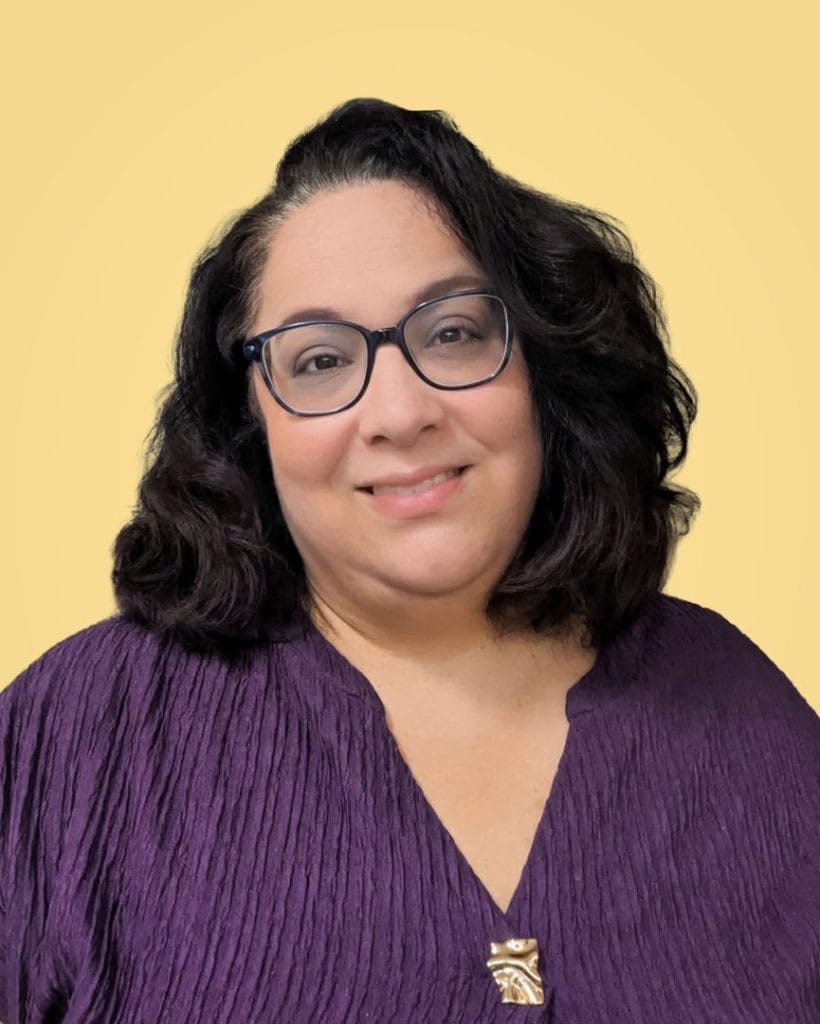
Madeline Gerena Franco
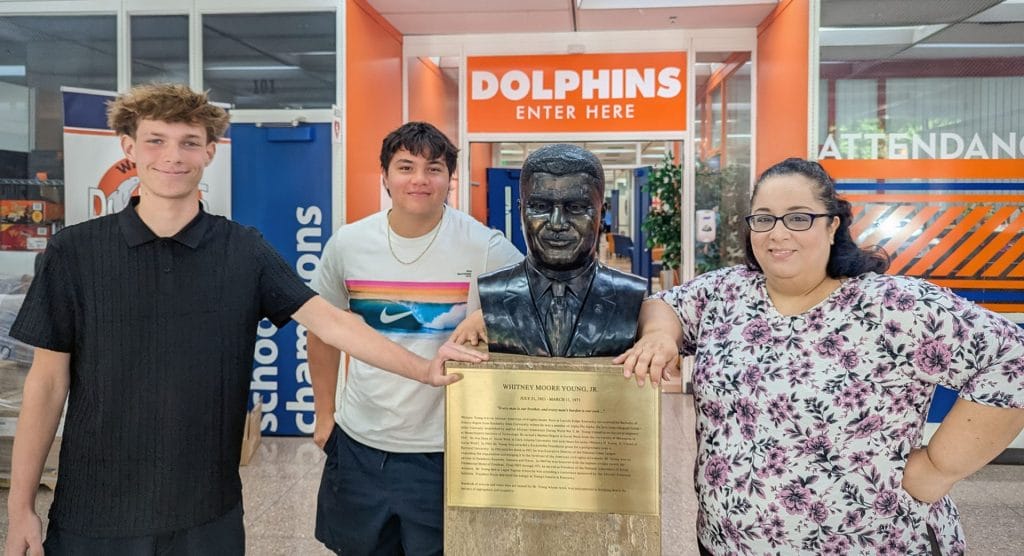
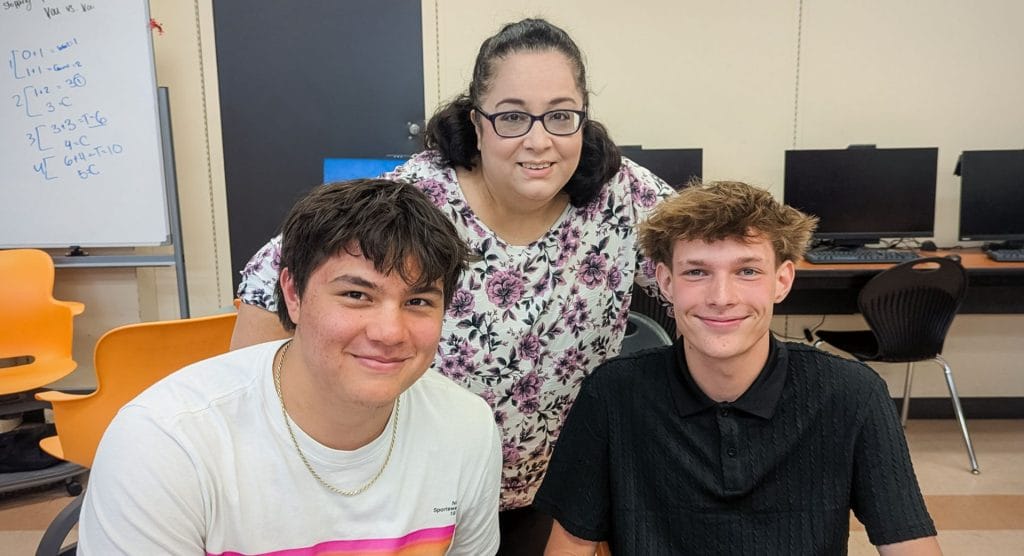
with her students, Joey O'Brien and Logan Jones
Whitney M. Young Magnet High School
, Chicago
, Illinois
Available On:


LISTEN TO THE EPISODE
"I'm hoping for my minority students to feel represented, to feel seen, because that's important. You want to feel seen, you want to feel heard, and hoping to make that gap of that bridge a little smaller each and every step of the way."
Mrs. Franco
"She breaks down really complicated terms and really complicated units into really small activities where we can truly understand the content that's given to us in a way that will be fun for us and the class."
Joey O'Brien
"I try to make sure collaboration is really pushed in my class, creativity is pushed, problem-solving skills, because you have to be able to look for those errors and mistakes, and also trying to see things from different perspectives."
Mrs. Franco
"I've definitely seen my communication skills grow, not just in this class, but all of my classes, my out of school relationships, and my relationships with teachers."
Logan Jones
"Being able to communicate, being able to go through their process of thinking, explaining to the class what was their outcome, are huge skills that will help them in my class, in their next class, in college, and even in their future careers."
Mrs. Franco
"I just showed up to Ms. Franco's class one morning. But with no notice, she still supported me with my new schedule and gave me a lot of comfort that I could succeed even if things weren't going my way."
Joey O'Brien
"It's really being open mind, like how much of technology is helpful to us, how much is it taking away skills that we're going to end up losing."
Mrs. Franco
"I've also learned how much technology impacts every part of our lives. It really made me realize the importance that technology has and is continuing to have as it grows."
Logan Jones
Description
In celebration of National Coding Week in September, we have partnered with Kode With Klossy to honor an incredible Computer Science teacher. Kode With Klossy creates learning experiences and opportunities for young women and gender expansive youth. Their programs ignite a spark that fuels their scholars’ agency to pursue their passions in a tech-driven world.
Madeline Gerena Franco, a high school Computer Science teacher at Whitney M. Young Magnet High School in Chicago, Illinois, is the recipient of our September 2026 Honored National Teaching Award. To help share the impact of Mrs. Franco’s teaching, we will also hear from students, Joey and Logan.
You’ll hear about:
- Mrs. Franco’s journey to becoming a teacher.
- The impact Mrs. Franco has had on her students.
- Mrs. Franco’s dedication to creating an engaging, interactive classroom environment.
- Mrs. Franco’s passion for being a Hispanic, female role model in STEM.
You’ll also hear from Osi Imeokparia, who is the CEO of Kode With Klossy. She shares about a teacher who left an incredible impact on her journey in our segment “Teachers Who Inspired”.
Osi Imeokparia is the CEO of Kode With Klossy, a 501c3 nonprofit focused on closing the gender equity gap in tech. Technology has been the through line in Osi’s multi-sector career across for-profit, nonprofit, philanthropic, and political organizations. Before joining Kode With Klossy, Osi worked in philanthropy as a Vice President of Technology and Head of Justice & Opportunity at the Chan Zuckerberg Initiative (CZI). Prior to CZI, Osi was the Chief Product Officer for the Hillary for America presidential campaign from launch to election day. Before pursuing philanthropic and nonprofit work, Osi spent 15+ years as a product leader in startup, mid-size, and large for-profit software organizations.
Links Mentioned
- Nominate a teacher for our Honored National Teaching Award: https://www.honored.org/nominate/
- Read the incredible nominations for Mrs. Franco: https://www.honored.org/nominees/madeline-gerena-franco
- Learn more about Kode With Klossy: https://www.kodewithklossy.com/
- Follow Kode With Klossy on Instagram: https://www.instagram.com/kodewithklossy/?hl=en
- Follow us on Instagram: https://www.instagram.com/honored/
- Follow us on Twitter: https://x.com/honored/
- Follow us on Facebook: https://www.facebook.com/Honored.org/
- Follow us on LinkedIn: https://www.linkedin.com/company/honored.org
- Follow us on TikTok: https://www.tiktok.com/@honoredteachers
Credits
-
- Music by DanaMusic: https://pixabay.com/users/danamusic-31920663/
- Music by AudioCoffee: https://www.audiocoffee.net/
Transcript
MRS. FRANCO: Now that I became a female educator in STEM, and there’s been a big push, I want to say nationwide regarding STEM careers and pushing females in it. I do take pride in it, not only because I’m a female, but I’m also Hispanic. And that’s what I’m hoping for, for my minority students to feel represented, to feel seen, because that’s important. You want to feel seen, you want to feel heard, and helping make that gap of that bridge a little smaller each and every step of the way.
HANNAH BOWYER-RIVETTE: Hello everybody, and welcome back to Inspiring Teachers: The Honored Podcast, where we shine a spotlight on life-changing teachers across the country. I’m Hannah, your podcast host, and our podcast is brought to you by Honored, which is a national nonprofit organization dedicated to honoring and elevating great teachers nationwide. Every month of the school year at Honored, we select an exceptional educator in the United States to be the recipient of the $5,000 Honored National Teaching Award. To learn more about our organization, you can go to our website at honored.org.
We are so excited to have you listening in on another Honoree podcast episode. In celebration of National Coding Week in September, we have partnered with Kode With Klossy to honor an incredible Computer Science teacher. Today, we are joined by Madeline Gerena Franco, a high school Computer Science teacher at Whitney M. Young Magnet High School in Chicago, Illinois. To help share the impact of Mrs. Franco’s teaching, we will also hear from students, Joey and Logan.
Before we dive into Mrs. Franco’s story, we are excited to kick off our Honoree episode with our special segment, ‘Teachers Who Inspired, where we invite individuals to share a story about a teacher who had a lasting impact on their lives. Today, we’re thrilled to have our guest on our special segment, Osi Imeokparia, the CEO of Kode With Klossy, a 501c3 nonprofit focused on closing the gender equity gap in tech.
Technology has been the through line in Osi’s multi-sector career across for-profit, nonprofit, philanthropic, and political organizations. Before joining Kode With Klossy, Osi worked in philanthropy as a Vice President of Technology and Head of Justice & Opportunity at the Chan Zuckerberg Initiative (CZI). Prior to CZI, Osi was the Chief Product Officer for the Hillary for America presidential campaign from launch to election day. Before pursuing philanthropic and nonprofit work, Osi spent 15+ years as a product leader in startup, mid-size, and large for-profit software organizations
OSI IMEOKPARIA: One of the things I’ve been really fortunate to have is really wonderful teachers who have been able to throughout my K through 12 education were really impactful, and specifically, I think that the one that I want to talk about is a teacher that I had in high school. I went to high school in Illinois, in Chatham, Illinois, specifically. And this particular teacher taught geometry, and I think one of the things that was powerful is that she spoke to us as though we were. She didn’t speak down to us, right?
And I think part of what she also did, that I think was really a wonderful practice that we try to do also at Kode with Klossy is not only just sort of meet young people where they are, but create playful and fun ways for them to engage in a topic as dry as geometry.
And so she would come up with fun little jingles to help us remember, cosine, you know, SOH-CAH-TOA, SOH-CAH-TOA, like things to help us remember the different parts of the sort of curriculum that were important and just really made the classroom a fun place to go to, a sort of destination you got excited every afternoon, or at least I did, because maybe I’m just a nerd, But I was very excited every afternoon to go to geometry and sort of engage with this teacher to engage in the topics, and so that’s the teacher for me that I think about when you ask me that question.
HANNAH BOWYER-RIVETTE: Throughout the rest of the episode, we’ll share Mrs. Franco’s story and the incredible impact she has on her students. To start us off, you’ll hear from Mrs. Franco, who reflects on what led her to being an educator as she grew up surrounded by a family of teachers.
MRS. FRANCO: I became a teacher mostly because in my family there is a lot of educators, different levels of educators. So, my sister was a teacher, she recently retired. My brother is a teacher also. I had an uncle that was a dean, so aunts in special ed, and aunts also, and I have a few cousins that are in counseling. So education has been a part of my family, in addition to the corporate world. So either, if you’re not in corporate, then you’re in education, and that’s how I’ve seen it throughout my family.
So, at first, I started in the corporate field, teaching computer science. I loved computer science from a very early age. And then I started after I had my daughter, started thinking about, okay, let me now get into education, let me try a different approach. There was a big push for STEM, and looking for STEM educators, and that’s when I started getting into teaching.
HANNAH BOWYER-RIVETTE: To learn more about Mrs. Franco’s impact, we spoke with her students, Joey and Logan. They share how grateful they are for Mrs. Franco’s flexibility and understanding that her class is just one of many for them. They also celebrate how she makes complex topics engaging through interactive, hands-on lessons.
JOEY O’BRIEN: During Ms. Franco’s class, the thing I was most surprised by was her commitment to our wellness. Her grading schedule was really flexible, especially with a lot of other AP course classes happening as the students take her class. And so it would just allow us to have a lot of flexibility to take time on what we needed, and then come back to the coursework, and then truly understand it at a time where we could.
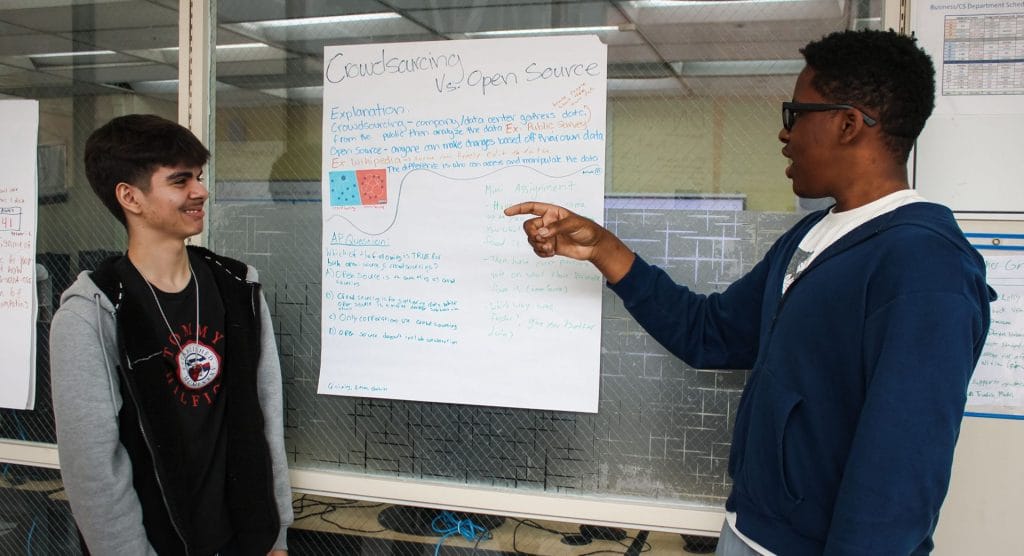
LOGAN JONES: I think that a main thing that stood out to me, especially being a high school junior, and I’m taking a lot of hard classes, like I’m taking this is an AP class, but she was very, she taught very interactive lessons and fun activities that also taught us about computer science principles and stuff like that. One thing that we played was red light green light, which was for iteration, and we also learned about fault tolerance with a lot of hands-on activities.
So I think one of the main things was she taught us lessons, usually within groups, and we would do a lot of hands-on activities that taught us about the lesson, but also kept it fun, so it wasn’t just a lot of book work or online work that can get very mentally draining.
HANNAH BOWYER-RIVETTE: Mrs. Franco shared with us that “computer science is more than just learning to code; it is a way of thinking.” She expands on what this means to her and how this guides her teaching practices. Beyond technical skills, she emphasizes the importance of life skills such as collaboration, self-confidence, problem-solving, and creativity, and how these skills work together to support success both inside and outside the world of computer science.
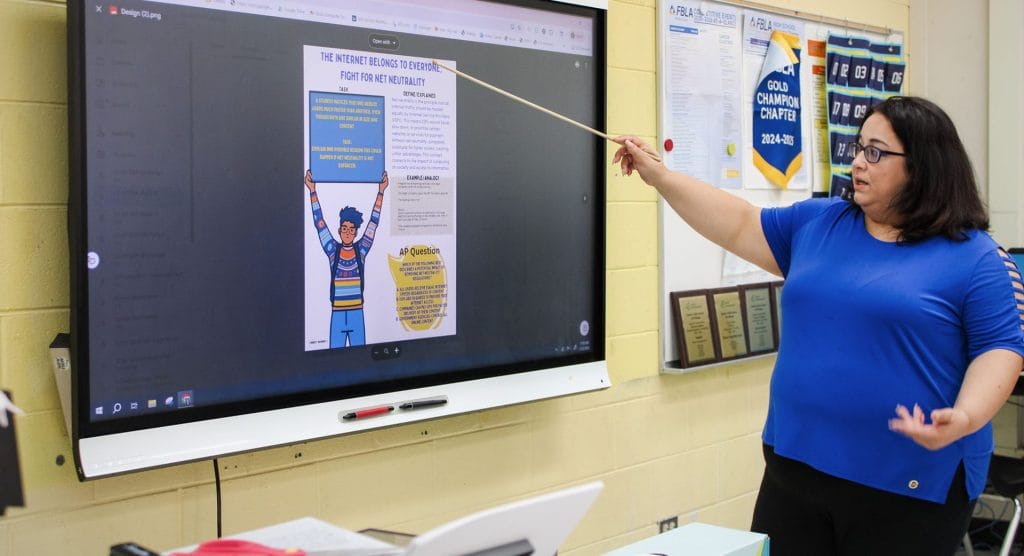
MRS. FRANCO: Well, it’s just automatically people have that assumption that computer science is just coding, but there’s more to just coding, it’s more to just learning a computer language, and that’s a stereotype that I try to break when I’m teaching the course. Computer science is an umbrella of different types of topics within it. Of course, coding is a part of it, but then you have network administrators, you have cybersecurity specialists, you have data analysis.
So you have all these specialists under that same umbrella, and with that, they’re skills that require to be known, like critical thinking skills, being able to collaborate, because it’s not one person making a game, it’s a collaboration of team, of individuals, some doing graphics, some doing the coding, some testing. So all of those different components are what make a good game.
So I try to make sure collaboration is really pushed in my class, creativity is pushed, problem-solving skills, because you have to be able to look for those errors and mistakes, and also trying to see things from different perspectives. That’s really important when it comes to computer science, and especially with them two. They’re taking AP Computer Science Principles, and they have to submit their own project to The College Board as a requirement for this course.
So helping them get into their mindset of what they want their code to look like, how they want their program to work. That’s me facilitating those ideas and skills, and the confidence that helps them move forward. And that’s why computer science is just more than coding, it’s a whole lot of life skills involved within it.
HANNAH BOWYER-RIVETTE: Creating an engaging, interactive classroom environment is key to Mrs. Franco’s teaching philosophies. She is passionate about breaking down difficult concepts into smaller, more approachable lessons that stick with her students. Through her creativity and adaptability, students are excited to come into her classroom every day.
JOEY O’BRIEN: I feel like almost all of our lessons we did in class this year were really interactive, and I feel like it’s the way that she teaches, she breaks down really complicated terms and really complicated units into really small activities where we can truly understand the content that’s given to us in a way that will be fun for us and the class.
LOGAN JONES: For our fault tolerance unit, we had an interactive activity where we’d get in groups, and we’d have this long string of yarn, and then everybody would go wrap it around their hands and walk around. And then Ms. Franco designed this game where it was natural disasters, and each natural disaster would have a different amount of cuts to the string, so she would come around with scissors and cut the string, and you tried to see basically how fault-tolerant you can make a network to be able to survive all the cuts.
And I thought it was really fun, it got a lot of people talking, and she made it competitive with two groups going. So there’s always a little bit of competition, it gets heated sometimes, but it was overall a very fun way to learn about that.
HANNAH BOWYER-RIVETTE: Building on her interactive approach, Mrs. Franco describes how she creates custom lessons that connect technical concepts to her students’ lives. At the beginning of the school year, she takes the time to get to know her students while also allowing them to get to know her. By learning about their interests and what their generation is connected to, she designs activities that feel relevant and engaging.
MRS. FRANCO: I use a little cheat that I have at home, which is a teenager, and I always ask her, “Oh, what’s trending? What’s new? What are students into?” So she is my first go-to person, where I get some of my ideas from. And then, in addition to that, over the year, you start learning a little bit, especially in the first few months of the school year, you start learning, and starting conversations, and building relationships with your students. So that’s how I know whether they play sports, that’s how I know what movies they’re into, and then in exchange I share that same information with them.
I tell them, “Okay, I’ll tell you something about me, I’ll tell you who my celebrity crush is.” And so that’s like number one pop quiz for today. Who’s Ms. Franco’s celebrity crush? And so I start joking around about it, and then I use it throughout the whole entire school year, my celebrity crush. So it’s a way to build that, and then by sharing that, they start telling me what celebrities they like, and that’s the starting point. And then I start learning about different trends, different things, different lingo. So I start using some of their lingo, and they’re like, “Oh my god.”
And same with their mannerisms too, whatever is trending, I’ll do that as well, and they’re like, “Oh, oh, okay, she knows what that means,” and I’m like, “Yep, yep, yep.” And so those are things that I start using in the class, and then I start creating some of the lessons based off of things that I know they’re familiar with. Like, if I’m going to teach a topic about data, I use Pokémon, because if you look at a Pokémon card, there’s a lot of information on there. So that’s another thing that I do. I create these forms, and I make it an adventure story.
So they’re reading these forms, answering questions about the topics that we’re learning. I have this one about Minecraft, and how it relates to pixels and digitized imaging, and so they’re reading the storyline and answering questions regarding pixels, binary, and analog data, to digital data, and it’s a way of how they’re like, “Oh, this is what we’re learning in class, this is a new way of approaching it.” It’s intriguing to them because it’s different. It’s not a regular worksheet; it’s a storyline, and that’s a few of the things that I do to liven up the class.
It’s different from a routine, and I feel like if I’m very repetitive on my structure, I think they’ll get bored. And so when I can throw in an activity, when I can show them a video, when I can do some group work, they come in the class, they don’t know what’s going to happen, and I think those are things that helps build. And when you can throw in a joke every now and then, especially on April Fools, I got them good with a whole flood drill, that was my GOAT right there,
HANNAH BOWYER-RIVETTE: For Mrs. Franco, critical thinking, problem-solving, and communication are three of the most important skills her students develop in her class. Regardless of whether her students pursue a career in technology, her classes equip them with vital skills to support them in any path they choose.
MRS. FRANCO: I want to say the number one skill regarding whatever major they go into, I want to say it’s really critical thinking and problem solving. Those are the two major skills that my students walk out of the class with. They start to communicate more. There’s particularly one student this year. She stressed a lot. She had a lot of anxiety when it came to presentations, and throughout the school year, she started to slowly progress, and now she’s able to communicate a little bit more and control her anxiety when it comes to talking with people and exchanging information.
And these are all things that I have to do to build up my students in the classroom. It’s sometimes giving a little trinket, a little sticker for participating, giving them a little figurine, giving them a pen, because it’s hard. It’s hard to stand in front of people, and a lot of them feel that they’re going to be judged. So, being able to communicate, being able to go through their process of thinking, explaining to the class what was their outcome, are huge skills that will help them in my class, in their next class, in college, and even in their future careers.
HANNAH BOWYER-RIVETTE: In our conversation, Joey and Logan reflect on the lessons and skills they will carry with them beyond their time in Mrs. Franco’s classroom. For Joey, he will always remember the supportive and encouraging environment Mrs. Franco created from his first day in her class. For Logan, he is proud of his communication skills that have grown both academically and personally.
JOEY O’BRIEN: I was talking about Ms. Franco’s really supportive environment that she provides. I was actually transferred out of one of my classes halfway through the year, and it was so abrupt. I just showed up to Ms. Franco’s class one morning, and I was like, I’m in this class now. But with no notice, she still supported me with my new schedule and gave me a lot of comfort that I could succeed even if things weren’t going my way.
LOGAN JONES: I think one of the big things for me, like you guys were talking about earlier, was communication. Sometimes, definitely in the past, and my earlier years of high school, I’ve struggled with presenting or communicating well with teachers or uncomfortable scenarios for me.
And the way that she brought these uncomfortable things for some people, like presenting and stuff, and made it feel like, oh, everything’s going to be fine, you can talk your mind and stuff, really helped me throughout the year, and I’ve definitely seen my communication skills grow, not just in this class, but all of my classes, my out of school relationships, my relationships with teachers, and stuff like that. And I think it’s really going to help me while I’m applying for colleges and stuff like that in the future.
HANNAH BOWYER-RIVETTE: With the ever-changing landscape of technology, Mrs. Franco is passionate about supporting her students to become responsible, critical users of technology. She teaches her students to view tech as a tool; one that has the ability to both help and hinder them. With the rise of AI, she encourages her students to think critically about bias, overreliance on technology, and the broader impacts it has on our everyday lives.
MRS. FRANCO: The number one thing is telling them and showing them how technology should be used as a tool, and that’s probably one of the lessons that I try to begin with in the beginning of a school year with everyone. Of course, there’s always the topic about, oh, AI, AI, but then it’s like when we talk about AI bias, where is this AI coming from? Who created the AI? Who’s really point of view is being addressed? Is it your point of view? No, it’s not. It’s not who you are. And you have to make that mark of who you are as an individual when it comes to that.
It’s important to show that technology is there, but it shouldn’t be used for everything. There are skills that we’ll end up losing. And just recently, in Chicago, which is brand new to us, is the Waymo cars, the smart cars. They’re starting now to appear in our streets, and we started to have that conversation, you know, it’s a rite of passage for a sophomore to get a driver’s license, and if we’re going to have these smart cars, where does that rite of passage go for them?
They know their sophomore year well, “I’m going to start taking driver’s ed, I’m going to start learning how to drive a car,” but then if you’re creating a vehicle to do that, you take away that passion of theirs, that rite of passage. And it’s helpful for those that can’t drive, that may have a disability, but at the same time, how far is it going to take away from our own personal skills? So it’s a little bit controversial, and it’s things that we have to be open mind with, and how my students say they have to be woke, that’s their way. So it’s really that. It’s really being open mind, like how much of technology is helpful to us, how much is it taking away skills that we’re going to end up losing.
HANNAH BOWYER-RIVETTE: Expanding on the impacts of technology, Joey and Logan share how Mrs. Franco has developed the way they think about and interact with tech. Through her class, they’ve gained a deeper understanding of how much technology impacts our everyday lives and the amount of work and creativity it takes to build and manage it.
LOGAN JONES: Ms. Franco has definitely changed my ideas of technology. I feel like going into this class, because of how convenient technology is in our day-to-day lives, I didn’t really think of it as hard or like, oh, I can just do any of this with my phone or something. But to learn how all of this stuff was created in the first place, and how all of these convenient things are actually being worked on. And the jobs that people have to do to keep up the internet and stuff like that. It really changes your perspective on how something so convenient to our everyday lives has grown and will continue to grow.
I also, I’m a really outdoorsy person, and I play football, I like to go outside and do stuff, and I always associated technology and stuff as more of an indoor thing or stuff like that. But I’ve also learned how much technology impacts every part of our lives, it’s not limited to this one box of things, it impacts our cars or phones, it impacts everything. So it really made me realize the importance that technology has and is continuing to have as it grows, which I never really realized before.
JOEY O’BRIEN: I feel like I used to use computers or technology without really thinking about it. I wouldn’t know what I was doing, but I would kind of get there based off of basic knowledge. But being in Ms. Franco’s class, it helps me understand a lot of the parts of the system and how the system works.
After completing her class, I feel really confident in my ability to use computers and phones and technology, but I also feel like I truly understand what’s going on when I’m computing, and I feel like the way that Ms. Franco starts her teaching very simplified to people who might not have as much experience with computers, it allows us to all be on the same basis of thinking throughout the whole year and have the same experience almost.
HANNAH BOWYER-RIVETTE: In wrapping up our conversation, Mrs. Franco speaks about the gender and ethnicity gap that exists within the STEM field. As a female Hispanic STEM educator, she takes pride in serving as a role model for students who may face more barriers than others. She is passionate about encouraging all students to pursue a career in Computer Science if it is what they are passionate about, and creating a classroom where students feel represented and supported.
MRS. FRANCO: There is a big gender gap. I noticed the gender gap when I was in college. So, as a college student, back when I started learning about computer science, I was one of very few females in the classroom. It was predominantly male, but now that I became a female educator in STEM, and there’s been a big push, I want to say nationwide regarding STEM careers and pushing females in it. I do take pride in it, not only because I’m a female, but I’m also Hispanic, so I am a minority.
And one thing that I do with my students is I show a picture of everyone in my department, and I tell them, “Pick the one that has a computer science degree,” and so they’re picking, and some of them, they think about it, they’re like, “You’re the only one,” and I go, “Exactly.” Because there’s a shortage of computer science teachers. So some of our math teachers also teach computer science. Some of our science teachers also teach computer science.
So when they see that, they’re like, “Wow, she’s the only one, she’s a female, and she’s Hispanic, she’s a minority, and she’s teaching us this class. So that alone already breaks some of those barriers, those stereotypes that are out there. And iterating the fact that it is a field, but if you like it, you’re passionate about it, you can make a career within it. And so I’m hoping that as an educator, they see me, and that I tell them my story of teaching computer science, me working in the field of computer science, the things that I’ve done.
You know, I do love playing a joke at Best Buy. When I go in, and they talk to me like I don’t know much about computers, I’m like, “Oh, really?” I give them a minute, and then when I start ranting all these other facts that I know them as an employee won’t know, they’re like, “Oh, you know your stuff,” and I go, “Yeah,” and I like sharing that, and I like telling that to the girls. I was like, you know how awesome and how empowering that feels.
And saying those little things to them helps them, like saying, “Yeah, I like that. I like how I can have that power card, and no one knows about it yet.” And when I can show it, it impresses them, and that’s what I’m hoping for, for my minority students to feel represented, to feel seen, because that’s important. You want to feel seen, you want to feel heard, and hoping to make that gap of that bridge a little smaller each and every step of the way.
I’m blessed right now that I had two female Senior Experience, which is an independent study class, so they’re like my little understudies, and one of the girls is going into cybersecurity, and I’m very happy for that. She really wants to go into that career. And then my other female wants to go into software engineering. And I’ve told them my experience, I shared it with them, and I always tell them, you can always contact me, we can always discuss. But to keep them motivated, and telling them “You are going to be special, you are special, and this is a good thing for you, as long as you’re passionate.”
HANNAH BOWYER-RIVETTE: Thank you so much for listening and joining us today to learn more about Madeline Gerena Franco, our September Honoree and recipient of the Honored National Teaching Award. To read more about her story, you can visit our website at honored.org or click the link in the episode description. If you have a teacher who you want to recognize and nominate for our teaching award, you can head to honored.org/nominate to recognize a teacher today. If you enjoyed today’s episode, you can follow us and leave us a review on whatever podcast platform you’re listening in from. Thanks again for listening, and make sure to tune in next month to hear the incredible story of our October Honoree.
Photography By:
Jasmine Robledo
Your teacher could be featured on The Honored Podcast. Nominate them for our $5,000 Honored National Teaching Award!
More Honoree Stories
September
Madeline Gerena Franco
Whitney M. Young Magnet High School
Chicago, Illinois