Kode With Klossy is Closing the Gender Equity Gap in Technology


Kode With Klossy is Closing the Gender Equity Gap in Technology
Kode With Klossy
, Global
Available On:


LISTEN TO THE EPISODE
"That like-minded community is something that we think is really, really valuable as we think about why women and other gender expansive people are not as represented in technology."
Osi Imeokparia
"We create a variety of skill building experiences and support a community for young women and gender expansive people between the ages of 13 and 26 that allows them, through our support, to have multi year continuous programming that helps them go from curiosity to career."
Osi Imeokparia
"What we have seen through our work, the stories of our community, and the way we approach our programming is that the culture and environment of learning matters just as much."
Osi Imeokparia
"Everybody here who has the ambition and interest to learn about this technology is welcomed very intentionally through the ways that we create our program design to join us on that journey."
Osi Imeokparia
"We want to have people be responsible builders and inventors of AI, and we want them to be empowered or critical users."
Osi Imeokparia
"We see everything from fashion tech ideas to education and healthcare and mental health and climate, and we see how our young people are intersecting technology with a number of areas, inclusive of social impact, where that has real possibility."
Osi Imeokparia
"I think this idea of pursuing coding as a vocational training, as opposed to a skill-building and a world-opening idea, that it doesn't have to be learn to code, get the job; it can be learn to code, build the skills, do whatever you want."
Osi Imeokparia
Description
Osi Imeokparia, the CEO of Kode With Klossy, joins us for an organizational spotlight podcast episode. Kode With Klossy is a 501c3 nonprofit focused on closing the gender equity gap in tech.
Technology has been the through line in Osi’s multi-sector career across for-profit, nonprofit, philanthropic, and political organizations. Before joining Kode With Klossy, Osi worked in philanthropy as a Vice President of Technology and Head of Justice & Opportunity at the Chan Zuckerberg Initiative (CZI). Prior to CZI, Osi was the Chief Product Officer for the Hillary for America presidential campaign from launch to election day. Before pursuing philanthropic and nonprofit work, Osi spent 15+ years as a product leader in startup, mid-size, and large for-profit software organizations. While at Google, Osi spent almost a decade working on ad technology. At eBay, she worked on seller and trust & safety products for the marketplace, and she began her career at a venture-backed collaboration software startup.
You’ll hear about:
- Kode With Klossy’s mission and initiatives.
- Kode With Klossy’s continuous support programs for young women and gender expansive youth ages 13 to 26.
- The importance of community building when it comes to encouraging young people and minorities to experience the STEM field.
- How Kode With Klossy teaches their scholars to be responsible, empowered builders and users of tech.
- The incredible success of Kode With Klossy’s programs.
Links Mentioned
- Learn more about Kode With Klossy: https://www.kodewithklossy.com/
- Follow Kode With Klossy on Instagram: https://www.instagram.com/kodewithklossy/?hl=en
- Follow us on Instagram: https://www.instagram.com/honored/
- Follow us on Twitter: https://x.com/honored/
- Follow us on Facebook: https://www.facebook.com/Honored.org/
- Follow us on LinkedIn: https://www.linkedin.com/company/honored.org
- Follow us on TikTok: https://www.tiktok.com/@honoredteachers
Credits
- Music by DanaMusic: https://pixabay.com/users/danamusic-31920663/
- Music by AudioCoffee: https://www.audiocoffee.net/
Transcript
OSI IMEOKPARIA: Being surrounded by other people who are just as ambitious, who are just as interested in learning, and specifically in figuring out how they can use technology to solve problems and to pursue opportunity. That like-minded community is something that we think is really, really valuable as we think about why women and other gender expansive people are not as represented in technology. And so that is an equal part of what we focus on, skill building and community.
HANNAH BOWYER-RIVETTE: Hello everybody, and welcome back to Inspiring Teachers: The Honored Podcast, where we shine a spotlight on life-changing teachers across the country. I’m Hannah, your podcast host, and our podcast is brought to you by Honored, which is a national nonprofit organization dedicated to honoring and elevating great teachers nationwide. Every month of the school year at Honored, we select an exceptional educator in the United States to be the recipient of the $5,000 Honored National Teaching Award. To learn more about our organization, you can go to our website at honored.org.
We are so excited to have you listening in on another organizational spotlight podcast episode. Today, we are joined by Osi Imeokparia, the CEO of Kode With Klossy, a 501c3 nonprofit focused on closing the gender equity gap in tech. Technology has been the through line in Osi’s multi-sector career across for-profit, nonprofit, philanthropic, and political organizations.
Before joining Kode With Klossy, Osi worked in philanthropy as a Vice President of Technology and Head of Justice & Opportunity at the Chan Zuckerberg Initiative (CZI). Prior to CZI, Osi was the Chief Product Officer for the Hillary for America presidential campaign from launch to election day. Before pursuing philanthropic and nonprofit work, Osi spent 15+ years as a product leader in startup, mid-size, and large for-profit software organizations.
To start our episode off, you’ll hear from Osi, who reflects on a teacher who left a lasting impact on her life. Her high school geometry teacher created a classroom environment that made learning interactive and engaging, helping Osi develop a deeper connection to the learning material.
OSI IMEOKPARIA: One of the things I’ve been really fortunate to have is really wonderful teachers who have been able to throughout my K through 12 education were really impactful, and specifically, I think that the one that I want to talk about is a teacher that I had in high school. I went to high school in Illinois, in Chatham, Illinois, specifically. And this particular teacher taught geometry, and I think one of the things that was powerful is that she spoke to us as though we were. She didn’t speak down to us, right?
And I think part of what she also did, that I think was really a wonderful practice that we try to do also at Kode With Klossy, is not only just sort of meet young people where they are, but create playful and fun ways for them to engage in a topic as dry as geometry.
And so she would come up with fun little jingles to help us remember, cosine, you know, SOH-CAH-TOA, SOH-CAH-TOA, things to help us remember the different parts of the curriculum that were important and just really made the classroom a fun place to go to, a destination you got excited every afternoon, or at least I did, because maybe I’m just a nerd, but I was very excited every afternoon to go to geometry and engage with this teacher to engage in the topics, and so that’s the teacher for me that I think about when you ask me that question.
HANNAH BOWYER-RIVETTE: Founded in 2015 by Karlie Kloss, driven by her own experiences in a coding class, Kode With Klossy creates learning experiences and opportunities for young women and gender expansive youth. Their programs ignite a spark that fuels their scholars’ agency to pursue their passions in a tech-driven world.
OSI IMEOKPARIA: Kode With Klossy is the name of the organization, it’s Kode spelled with a K, and Klossy spelled with a K. And we were founded by Karly Kloss, who’s an entrepreneur, philanthropist, and a supermodel back in 2015. And it was really founded on the spark of generosity that Karly had after taking her first coding bootcamp herself.
So she took the camp, it was run by Flatiron, and she noticed, as we probably have all noticed, what the environments are where we’re learning, as we just talked about how important that is, and she noticed that there were no other young women in the class with her. And so after taking that course, she decided that she would, in 2015, use her social media presence specifically on Instagram to post an offer to her community, which was, I will pay for 21 scholarships for other young women to take the course that I just did.
And we’re talking about a course that costs multiple thousands of dollars. And so she used her financial resources and the generosity there to offer that to her community. And for the 21 scholarships, there were thousands of people that were clamoring for that opportunity, and that was the spark that had Karly think to create an organization around this idea of creating more access to computer science and coding education.
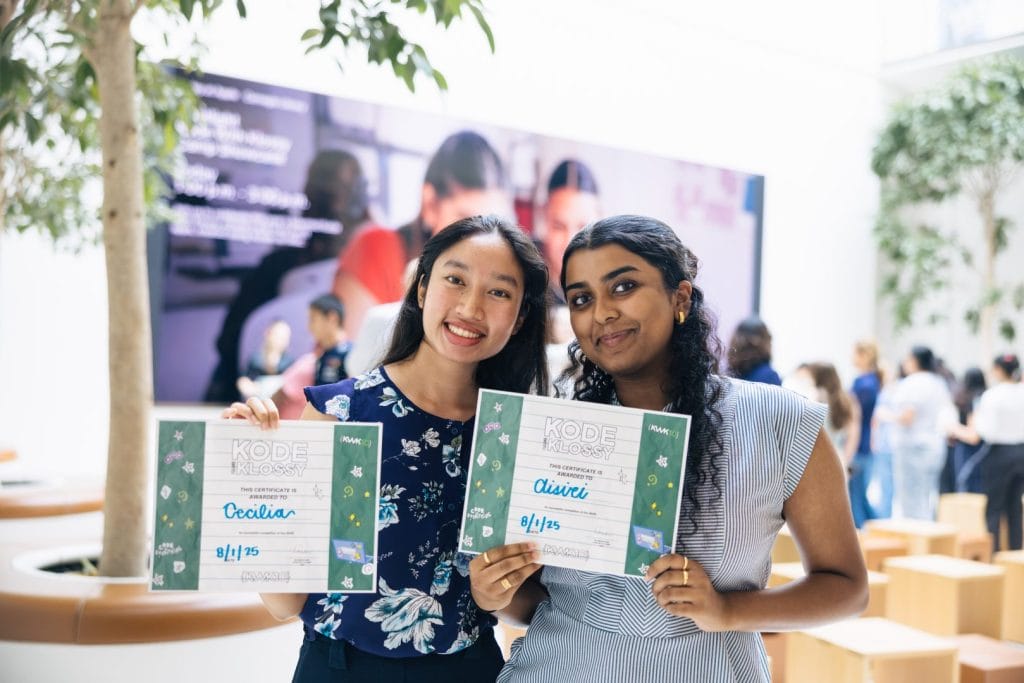
Fast forward 10 years, so we just celebrated our 10th anniversary in 2025, Kode With Klossy is still very laser focused on the mission of closing the gender gap in technology, and we create a variety of skill building experiences and support a community for young women and gender expansive people between the ages of 13 and 26 that allows them, through our support, to have multi year continuous programming that helps them go from curiosity to career. And so we think about things like peer support, the education, leadership development, we think about the totality of the skills that are going to support somebody through that process.
But we also believe that the skill-building is just one component of what we do. The real power is in that peer support model, being surrounded by other people who are just as ambitious, who are just as interested in learning, and specifically in figuring out how they can use technology to solve problems and to pursue opportunity. That like-minded community is something that we think is really, really valuable as we think about why women and other gender-expansive people are not as represented in technology. And so that is an equal part of what we focus on, skill building and community.
HANNAH BOWYER-RIVETTE: To learn more about their programs, Osi shares about their continuous support for young women and gender expansive youth between the ages of 13 and 26. Through learning experiences, peer support, and workforce development opportunities, they create pathways that allow scholars to grow within their community across multiple formative stages of life.
OSI IMEOKPARIA: We have an incredible team here at Kode With Klossy. There are 16 of us. And our model is that, as I mentioned, we provide continuous support programs from the age of 13 to 26, and we largely think about it in two segments. Our programs for 13 to 18 year olds are the pathway that you onboard to our community, and then once you’re part of our community, our programs are really to get you to come back, continue your skill building, and to engage in that peer support. And so, for the 13 to 18-year-old onboarding programs, we offer two main programs.
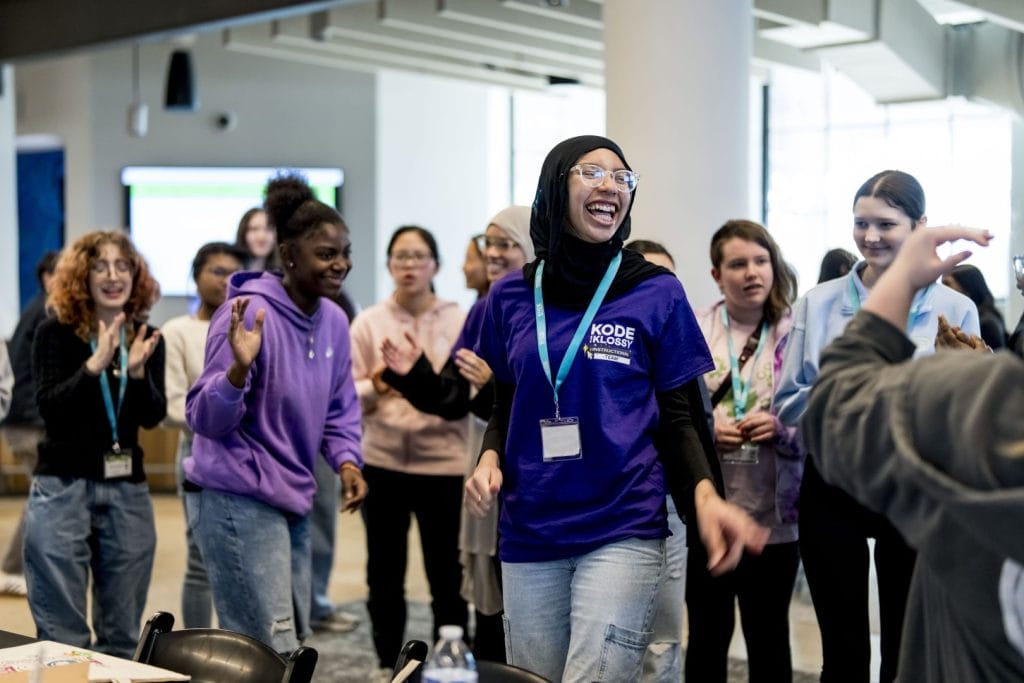
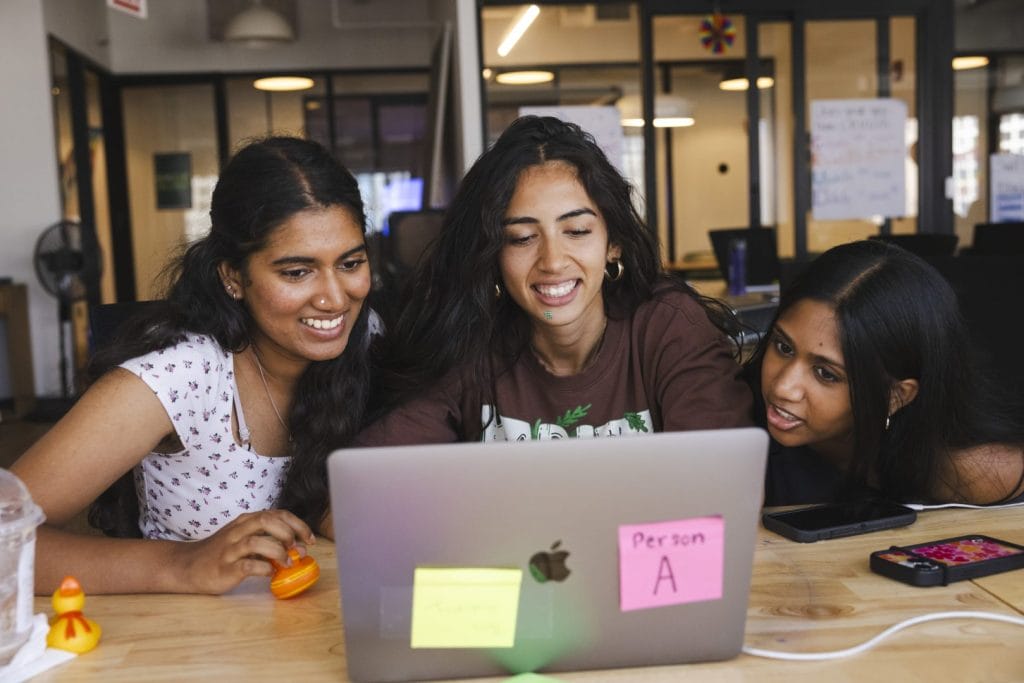
The first is a program called CODE-A-BRATION, which is a two-day experience that we do in our target cities throughout the United States, and we also live stream across the world, so you can participate both in person and virtually. And in those two days, you are learning the fundamentals of AI and ML in a project-based, rigorous, but joyful environment, and those are the three pillars, if you will, of how we think about our pedagogy. The rigor is important, but the joy is just as important, and we try to make our programming as accessible as possible.
And so, in those two days, you are building a project, you have an outcome that you can show, and you’re really focused on AI and ML. Our other onboarding program is for 13 to 18-year-olds, and that is a two-week camp experience. And camps not only have an AI, ML curriculum, just as CODE-A-BRATION does, but there are also two other curriculum that we offer in camp. We offer a data science curriculum and a web development curriculum in camp. And we offer those camps both in person and virtually. So, for 13 to 18-year-olds, there are two pathways that you can join us: a short form program for two days or a longer form program for two weeks.
Once you’re part of our community and part of our peer support group, we then have a program that we call Challenges, and these are multi-week asynchronous learning programs where you can learn either mobile app development – we have a mobile app development challenge going on right now – or we have a series of challenges focused on various parts of the data science pipeline, whether that’s finding and sourcing data, creating a machine learning model, or data storytelling. So, we have a variety of different challenges on the mobile application side or the data science side that you can do once you’re part of the community.
And then, once you’re 18 years or older, we have a new set of programs that are focused on helping you prepare for the workforce. And so those programs look like, on the technical side, a program that we launched called the AI BuildLab, which helps you learn the fundamentals of agentic coding. We have a program called the Technical Leadership Accelerator, which is really focused on how you develop technical skills around communication, and facilitation, and diagnostic questioning. How do you actually be a great technical communicator? Because that is a large part of leadership.
And then we also have a development program that we just recently called the Future Fund, which is a leadership development program for a select number of fellows every year, where they can work on personal brand, they can work on executive mentorship, and really focus on how do they develop a set of workforce skills that they can then take into their future career.
For us, I think a lot of research shows that in that teenage years, where you’re forming your identity, unfortunately, the research shows that young girls and their interest in STEM declines quite sharply during those teenage years, and so intervening with programming that shows the possibility, that makes it exciting, and is rigorous, is really important. And so we very intentionally have focused on that 13 to 18 age group as the starting point because of that precipitous cliff that the research shows happens in STEM interests.
HANNAH BOWYER-RIVETTE: Expanding on the impact of their programs, Osi reflects on the barriers that prevent women and People of Color from entering STEM fields. In tackling these barriers, research shows that although access is important, it isn’t the root issue. Having a supportive and encouraging learning environment that cultivates a strong sense of belonging is just as important in helping young people feel empowered to pursue interests in technology.
OSI IMEOKPARIA: Our community is quite diverse in terms of our lived experiences at Kode With Klossy. About 80% of our young people identify as people of color, 40% qualify for free and reduced lunch, we have a global community. So there’s every dimension of lived experience and diversity in our community, because the common thread that prevents women and gender expansive folks is not those differences of lived experience, for the most part. Of course, there are challenges of access, right?
Some people don’t have access to laptops, and some people can’t afford or don’t have access to these programs in their schools. So certainly I don’t want to minimize the role that access plays, but one of the things we know from the data, for example, from Code.org is they’ve done incredible work to make sure that computer science fundamentals are available in lots of K through 12 schools and high schools throughout the United States.
And despite that work, their State of the Union report that they release every year shows that even in the same high school where computer science is available equally to young boys and young girls, young boys are twice as likely to take that class, and so for us, that just speaks to access is not sufficient. There’s something else happening, so if you believe, like we do, that the issue is not access, it is not ambition, and it’s certainly not ability.
What we have seen through our work, the stories of our community, and the way we approach our programming is that the culture and environment of learning matters just as much. And if you don’t have a culture and a learning environment that allows you to take risks and to fail and not fear failure, allows you to express your ambition and not be ashamed of your ambition and your interest in technology. Really, the conditions of learning matter so much. And so for us, we diagnose it all down to it’s not access, it’s not ability, it’s not ambition.
It’s really about the cultures of learning or the cultures in the workforce that are preventing young women from finding their place in this incredible sector. And so what can we do to model cultures of learning that are more successful, and to work with our corporate partners to think about corporate environments that can be more successful, so that these talented individuals can thrive in those spaces? And so for us, it’s really that environmental and culture layer that we see the fundamental root cause of why we’ve been talking about this gender gap for 30, 40 years, and it still hasn’t closed.
We think it’s something more fundamental than some of the program work might assume that right now. We all know what it feels like to walk into a room and feel welcomed versus walk into a room and feel tolerated. Those are two different things, and we try to be the former. We try to say, everybody here who has the ambition and interest to learn about this technology is welcomed very intentionally through the ways that we create our program design to join us on that journey,
HANNAH BOWYER-RIVETTE: Alongside technical skill building, community building is a central part of Kode With Klossy’s approach. Their community allows their scholars to cultivate a sense of belonging and encourages them to take risks, gain confidence, and pursue their goals regardless of their previous technological experience.
OSI IMEOKPARIA: It’s everything from hearing from a young woman in a camp who is in an AP computer science course in her high school. Why are you here? You already know how to code; you’re sort of already doing it. Why this program? And to hear reflected back, “I am here because I want to be surrounded by more peers that look like me, have the same ambition, and welcome me into this space.”
And so it’s everything from that individual story to hearing from our community. “Hey, I’m rooming together, and I found out that my roommate was a former Kode With Klossy alumni, and we went to the local coffee shop, and we found more alumni.” And seeing it actively happening in the world that they’re able to take what was an experience with us and move it into experiences that support them beyond just Kode With Klossy programming.
All the way through hearing again from our community the reason I was able to complete my degree was because I felt like I could always go back to the Kode With Klossy community find people to form groups with to do hackathons or to help me through a particularly tough assignment, or to give me a word of encouragement when I wasn’t finding that in my CS class in college, and that’s the reason why I was able to persevere and persist and get my degree at the end of the day.
And one of the things we’re really proud of is that around 70% of our young people go on to get computer science minors or majors, and not that the degree is the end all be all, but it is a signal for us that there’s something different happening here, given that the national average is something more like in the three to four percent range, to know that about 70% of our young people persist through that milestone is really important and a testament to their ambition and their support of each other.
HANNAH BOWYER-RIVETTE: In reflecting on the outcomes achieved through Kode With Klossy, Osi shares how their continued support programs support their scholars’ long-term growth. They not only support scholars in pursuing degrees and careers in technology, but they also give them an opportunity to develop the confidence and skills they need to continue to find growth and retention in their professional journeys.
OSI IMEOKPARIA: Degree acquisition is one of them. I think another thing that we’re very proud of, as I mentioned, is that our thesis is that if we can support you longitudinally over multiple years, that will pay off. And so one of the signals that we look for is how often are people coming back to do programs with us? And so we’re seeing great return rates every year from our community coming back to continue to tap into that support. And ultimately our north star is to think about the retention through the whole pipeline into career.
So it’s not enough just to get the job; we want to see people stay in the job and really have an impact on their company and on the industry because they were retained, not just hired. And so we think about things like how are we changing the rate of promotion to manager, right? So there’s great work from McKinsey and Lean In, every year they do a State of the Women in the Workplace report, and one of the things they’ve highlighted for the last, I would say, nine to 10 years is this idea of the broken rung, which is that unfortunately for every 100 men that are promoted to their first manager position, only 80 women are promoted.
And that’s not good because that then limits the number of women who are then eligible to enter the C-suite, so you’re starting very early to narrow your pool of eligibility. But it gets a little worse, for tech, that number is even starker. So overall it’s 100 to 80. In tech, it’s 100 to 52. So for every 100 men promoted to their first manager role, only 52 women will be promoted.
And so when we’re thinking about our value proposition, our north star, the metric that we are most interested in moving, it’s how are we supporting you with programming that helps you build your technical skill and your leadership skill, so that ultimately you are retained in the workforce and can change those first manager leadership retention rates, so that we actually are broadening the pool of people that will eventually enter the C-suite. So the broken wrong is something that we very much are anchored as a north star, and that’s why, again, our support ranges is 13 to 26 because that retention pathway is so important, not just hiring, it’s retention.
HANNAH BOWYER-RIVETTE: With the ever-changing landscape of technology and the rise of AI, Kode With Klossy supports their scholars to be responsible, empowered builders and users of tech. Through their AI habits system, scholars develop critical skills in approaching AI in a responsible way while understanding the impacts it has on society, ethics, and creativity.
OSI IMEOKPARIA: So we think about this idea of the duality of the sort of person that we are trying to support. We want to have people be responsible builders and inventors of AI, and we want them to be empowered or critical users. So it’s actually not sufficient in our minds that young women are just using technology that other people built. We want to think about the building and invention side as well, so that duality is really important. So that’s a first framework for how we think about it: building, invention, and usage.
And then when we think about what are we doing, one of the things that we started to do two years ago is incorporate an AI habits framework into each part of our curriculum. So you might be taking web development curriculum, but you’re going to hear about AI habits. You might be taking a data science curriculum, but you’re going to hear about AI habits. And the AI habits are really a list of sorts of five habits in terms of how you should think about using AI, and the goal is really to make sure that we’re developing high agency with all of our young people.
The AI is not in charge of you; you are still in charge. And here’s again a five-step rubric, or way of thinking about how you should approach using it, that is helpful to think through. And then on the building and invention side, we are supporting programming, both in terms of number one, our agentic coding program, that’s great, if these tools exist, we’re going to help you learn how to use them in the best way possible. So, whether that’s Codex or Claude, or any number of the agentic coding tools, how are we helping you know the tools, so you can show up competently when you are asked about these things?
But then also when we think about how are you taking your high agency skill set and point of view and using that to think about how you might build these tools differently. And so we have a curriculum that we call Culture of Tech, which is a curriculum within our curriculums where we talk about the impact of AI on a number of different parameters of civic society ethics, and we have them actually talk through and engage with some of the difficulties of what this technology represents.
And so for us, it’s about helping develop healthy habits, it’s about having active and forefronted conversations. And then helping build the technical foundation so that you actually know if I’m now inventing my own approach, or mode, or system, I know the technical fundamentals, and I have the values framework to apply that in a responsible way.
HANNAH BOWYER-RIVETTE: The transformative power of technology is seen throughout Kode With Klossy’s programs and outcomes. From education to healthcare to fashion to mental health to climate, they encourage scholars to intersect technology with their passions to create meaningful change. Through their programs, they are creating well-rounded inventors who lean into their values and follow their passions.
OSI IMEOKPARIA: I think that that’s the power of technology, and has been the power of technology even before AI. So, I think we need to remember that the world of technology was a helpful lever for change in general. And then AI has sort of unlocked a new sort of step change in capability. What we talk about a lot is that, as a community, you can intersect technology with anything that you’re passionate about or interested about. And that certainly can, and often is, for our community, social impact causes, but it’s not limited to that, right?
And so, we see again, because we do a lot of project-based learning, and everything we have in our programs, you deliver something. We see a lot of projects from our community. And so we see everything from fashion tech ideas to education and healthcare and mental health and climate, and we see how our young people are intersecting technology with a number of areas, inclusive of social impact, where that has real possibility.
And I think this ties back to our earlier conversation, about having some education and grounding in the ethical and civic impact implications of AI and technology, we hope is helpful to creating well-rounded inventors and builders. And so, if your intersection of interest happens to be tech, AI, and climate, you now can lean on some of your culture of tech learnings, you can lean on your habits learnings to help you think about that problem in a way that really helps you lean into values and lean into responsibility. And so again, I would say broadly, we love all intersections of tech; our community certainly has a lot of intersections that overlap with social impact, and we’re really proud of that.
HANNAH BOWYER-RIVETTE: Although many of their scholars go on to pursue degrees and careers in technology, Kode With Klossy equips them with invaluable skills such as analytical problem-solving and big-picture thinking that support them regardless of their future endeavors. The fundamental understanding and comfort with technology allow their scholars to succeed in any career they pursue as they engage with tech in their personal and professional lives.
OSI IMEOKPARIA: I shared the stat earlier that 70% go on to get degrees, which means 30% don’t, right? Because we can all do math, right? And we know that about 60% of our community go on to get technical roles. So that means 40% of them are not. So then the question is, what value has Kode With Klossy added for those people who didn’t get the degree and didn’t get the tech job? And so I think it’s really, really fun about what we do, and why I think coding is still a powerful learning tool, even if you don’t end up coding, or if the robots are doing all the coding, it helps you think through problems analytically, and it helps you think about the full big picture and the system, not just the weeds or the grass level problem.
And so that system thinking, that problem-solving muscle, often referred to as computational thinking, that whole skill set is something that you learn as you learn to code, whether you go on to code or not, it’s orthogonal to the value of that way of problem solving and thinking systemically. And so we are really proud of that, and we think that that’s a value that we provide to the 30% who don’t get the degree, and the 40% who don’t go into the tech careers. The other thing that’s really fun about technology, it’s everywhere, right?
So, even if you don’t end up becoming an engineer or data scientist or product manager, we have people who have gone on to be tech journalists, right? So, their fundamental understanding and comfort with technology allow them to be a better journalist. We have people who go on to do tech policy, so their fundamental understanding, and comfort, and literacy with technology allows them to be better lawyers.
And so I could go on and on and on down the line about why technical fluency, literacy, and understanding are so important, no matter what role you end up going into, and that problem-solving muscle that you develop through learning how to code is so, so important as well for those kinds of roles and careers that you might pursue. I think this idea of pursuing coding as a vocational training, as opposed to a skill-building and a world-opening idea, that it doesn’t have to be learn to code, get the job; it can be learn to code, build the skills, do whatever you want. And there’s value in learning to do hard things, to face challenge, to be persistent, that journey is also part of the reward as well.
HANNAH BOWYER-RIVETTE: In wrapping up our conversation, Osi reflects on the impact of being part of an empowering community where she witnesses the incredible growth of scholars every day. She shares a story about one scholar who has been part of their community since age 14, who is now a software engineer at Amazon. To watch the trajectory of her career and to see how she returns to support young scholars at Kode With Klossy as an instructional assistant reminds Osi of the lasting ripple effect of their mission.
OSI IMEOKPARIA: Anytime the work gets hard, or you’re having a bad day, I think being in community with and proximity to the young people in our community automatically makes me think we’re gonna be better as adults. We’ve sort of screwed so many things up. And you’re like, okay, I’m gonna go hang out with some Kode With Klassy people, and they’re gonna give me hope for the future. For me, I think a specific story is folks like there’s a young woman in our community named Ronnie, who we have seen grow from the time she joined us when she was 14, and now she’s a software engineer at Amazon.
Like, what an arc, and this idea that this young, eager person, you know, we could do those, how it started, how it’s going, pictures, I love that. But this young person that we met at 14, who was bright and ambitious, has done this incredible arc. Ronnie has done a number of programs with us. Ronnie has come back to be an instructor assistant, which is a role that we have where you can be paid to be a near-peer mentor, and supporter, and facilitator in our program. So, Ronnie has been an IA a number of times, Ronnie has interned with us.
And so at each point of this interaction, again, this longitudinal support arc that we hope we are offering, we have seen Ronnie grow. And I saw Ronnie in a basketball game last year, and the energy and the excitement that she had in starting this role in her career to me is powerful because she’s going to have a ripple effect on the people that she meets at Amazon. And so this notion that there are ripples from Ronnie that will impact other people just through the way that she approaches technical work, the way she creates inclusive environments, that to me is the big payoff, and a story that sticks with me, for sure.
HANNAH BOWYER-RIVETTE: Thank you so much for listening and joining us today to learn more about Kode With Klossy. To read more about this spotlight, you can visit our website at honored.org or click the link in the episode description. To learn more about Kode With Klossy, you can visit their website at kodewithklossy.com. If you enjoyed today’s episode, you can follow us and leave us a review on whatever podcast platform you’re listening in from. Thanks again for listening, and make sure to tune in next month when we will share the incredible story of our October Honoree.
Your teacher could be featured on The Honored Podcast. Nominate them for our $5,000 Honored National Teaching Award!
More Honoree Stories
September
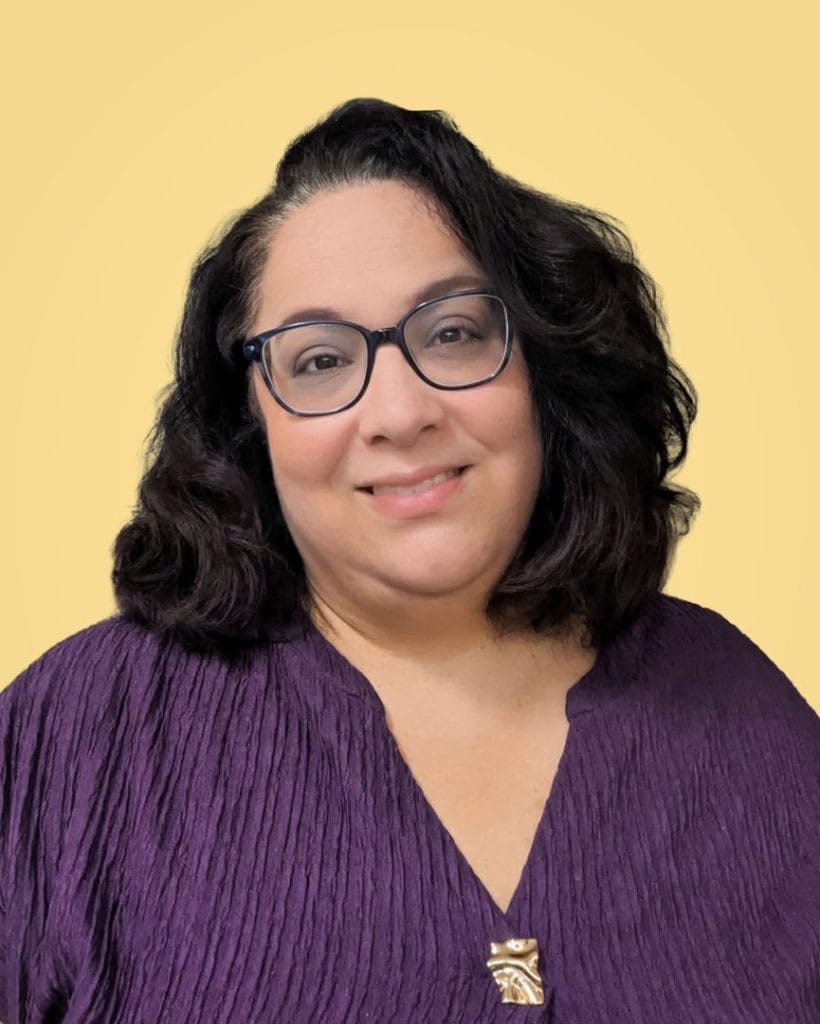
Madeline Gerena Franco
Whitney M. Young Magnet High School
Chicago, Illinois