Jennifer Garner


September 2025 Honoree
Jennifer Garner
Honored Advocate for Teachers Award
, Charleston
, West Virginia
Available On:


LISTEN TO THE EPISODE
"I have met the most incredible people on the planet, and they are teachers in America."
Jennifer Garner
"[My elementary school librarian, Mrs. McCann] was really just fostering this idea that I was special, just me, and that I could grow up and do anything in the creative world that I wanted to."
Jennifer Garner
"Kids will do anything to get to school, to get to their teacher, to get to food, to get to the safety of a classroom. When kids are really up against it, teachers are their lifeline."
Jennifer Garner
"You have to be present. There's such value in just showing up and being in someone's space and in their home. Even or especially if it's something that is hard for them."
Jennifer Garner
"Most kids are born with the capacity to do anything in the world and go anywhere and be anyone. It's the moment they leave the hospital and go home. And that zip code, or where they go home, is really what defines the trajectory of their lives."
Jennifer Garner
"Here we entrust our children, our most precious resource, of our families, of our communities, of our country, and we give them to these people and say, "Here, build them up. What can you do for us? Help us with them." And then we completely undervalue them as a society. In pay, in status."
Jennifer Garner
"If your kids' teacher is doing a great job, or handles a lesson really well, or handles a tricky, emotional moment really well, we should honor these teachers all the time. Don't wait for Teacher Appreciation Week."
Jennifer Garner
Description
Award-winning actress, philanthropist, and entrepreneur Jennifer Garner joins us for an episode to celebrate receiving our first-ever annual Honored Advocate for Teachers Award!
Garner is known for her versatility in a wide range of starring-roles in Alias, Dallas Buyers Club, Love Simon, Juno, and more. Most recently, Garner executive produced and starred in the hit Apple TV+ limited series The Last Thing He Told Me, based on the eponymous New York Times bestseller by Laura Dave, and the Netflix comedy features Family Switch and Yes Day, which became Netflix’s biggest Kids & Family film release after launching on the platform. Next, Garner will star and executive produce a sequel to Yes Day for Netflix and The Five-Star Weekend for Peacock. Garner recently wrapped production on Season 2 of Apple TV+ The Last Thing He Told Me where she also serves as an executive producer.
In 2017, Garner co-founded a leading childhood nutrition company Once Upon a Farm. As Chief Brand Officer, she has helped grow the company with the goal of providing organic, crave-worthy snacks and meals for children of all ages. As a businesswoman, Garner has worked with major brands including Neutrogena and Capital One, and also joined the Virtue Labs team to amplify and raise awareness about the unique health and beauty benefits of the company’s premium hair care line.
As a philanthropist, Garner is a Save the Children Trustee and has worked with the organization since 2008. In 2014, Garner joined the global non-profit’s board of trustees, deepening her commitment to issues affecting children in America and around the world.
You’ll hear about:
- The teachers who have left a life-changing impact on Jennifer.
- The incredible work Jennifer is doing with Save the Children.
- The effects of generational poverty on education.
- The importance of teacher recognition and how to take action to recognize teachers.
Links Mentioned
- Follow Jennifer Garner on Instagram: https://www.instagram.com/jennifer.garner/
- Learn more about Save the Children: https://www.savethechildren.org/
- Nominate a Teacher for our Honored National Teaching Award: https://www.honored.org/nominate/
- Follow us on Instagram: https://www.instagram.com/honored/
- Follow us on Twitter: https://x.com/honored/
- Follow us on Facebook: https://www.facebook.com/Honored.org/
- Follow us on LinkedIn: https://www.linkedin.com/company/honored.org
- Follow us on TikTok: https://www.tiktok.com/@honoredteachers
Credits
- Music by DanaMusic: https://pixabay.com/users/danamusic-31920663/
- Music by AudioCoffee: https://www.audiocoffee.net/
Transcript
JENNIFER GARNER: Kids will do anything to get to school, to get to their teacher, to get to food, to get to the safety of a classroom. When kids are really up against it, teachers are their lifeline.
HANNAH BOWYER-RIVETTE: Hello everybody, and welcome back to Inspiring Teachers: The Honored Podcast, where we shine a spotlight on life-changing teachers across the country. I’m Hannah, your podcast host, and our podcast is brought to you by Honored, which is a national nonprofit organization dedicated to honoring and elevating great teachers nationwide. To learn more about our organization, you can go to our website at honored.org. While you’re there, if you have a teacher you would like to recognize, you can nominate them for our Honored National Teaching Award at honored.org/nominate.
We are so excited to have you listening in on our special episode to celebrate the first-ever recipient of our Honored Advocate for Teachers Award, Jennifer Garner. This annual award is presented to a public figure who consistently uses their platform to uplift teachers and advocate around key issues that educators face.
Award-winning actress Jennifer Garner has enjoyed a successful career at the top of her field in both film and television and has also taken on the role of philanthropist and entrepreneur. As a philanthropist, Garner is a Save the Children Trustee and has worked with the organization since 2008. In 2014, Garner joined the global non-profit’s board of trustees, deepening her commitment to issues affecting children in America and around the world.
To start our episode off, Jennifer shares about the teachers who have shaped her life. In elementary school, her librarian, Mrs. McCann, took the time to find her strengths and celebrate what makes her special. Jennifer shares more about how Mrs. McCann nurtured her love of books and reading and created a safe haven for her in the library. Her librarian’s encouragement instilled in Jennifer the belief that her creativity is celebrated and limitless.
JENNIFER GARNER: So I grew up in Charleston, West Virginia, and my older sister was a really big presence in the town in my childhood. She was great at math, she was great at any language she took on. She’s just a really brilliant person, and she was celebrated for her academics. And I look a lot like her. And so people were constantly trying to fit me in the same box as Melissa, and say, “Oh, you look just like Melissa. I can’t wait to have you in class.” And I felt all of this pressure to be like her, when really I am not. We are very, very different. I’m much more goofy. I’m much less organized. If you saw my desk, my sister would flip if she saw it. We’re very typical, firstborn, middle child, and then my youngest sister, who’s like the best blend of everything.
So I had a lot of special teachers in elementary school. And they did a good job of pulling out what was special about me, like I loved to write poetry. And the person who fostered the creative side of me the most when I was little was my school librarian. I loved books, and I loved going into the library. And she would let me, first, she would help me choose a million books to read every single week, and I read through this whole little school library. And then she would let me shelve the books and put the new cards in the card catalogs, and then help order the books and choose the books with her that were to come to our library with our tiny little budget.
And then she helped me write my own first book called T-Bear Goes to Mars. And T-Bear is my teddy bear that my dad gave me when I was three, and he slept with me every night. And I wrote a book, and Mrs. McCann and I took pictures for this little book. And she created it; it was put together with like manila folders that were cut into rectangles. And then Mrs. McCann, the librarian, must have typed the story onto it. And then there were pictures of me and T-Bear that we set up. And we painted a refrigerator box as the spaceship. And we did this whole thing because I wanted to grow up and be Beverly Cleary and Shel Silverstein, a mix of those two. And I wanted to be a librarian like her. So Mrs. McCann made my little book its own little card catalog card. And it was in the card catalog, and she shelved it in the library. And she was really just fostering this idea that I was special, just me, and that I could grow up and do anything in the creative world that I wanted to.
And that mentorship and that just belief in me, and that special relationship that she and I had really helped me blossom as a little kid, who was kind of like gangly and all over the place, and my handwriting was messy, and I’m messy, and so she made me feel not those things. She made me feel special.
HANNAH BOWYER-RIVETTE: Expanding on her childhood, Jennifer reflects on a mentor outside of the classroom who had a life-changing impact on her. She expands more on the lessons she learned through her ballet teacher, Mrs. Denton Pasinetti, who demanded Jennifer’s best. In the dance studio, Jennifer learned how important it is to show up, put in the work, and carry herself with integrity.
JENNIFER GARNER: So then from there, Ms. Denton really took over. I was dancing with a different teacher who moved away when I was little, and I moved over to Ms. Denton’s studio. And she is just a total, she’s still doing this. She’s a total powerhouse. She’s not doing all these things, but she was a math teacher at our high school. She had the ballet studio. And then several nights a week, she had ballet company rehearsals. And the other nights of the week, she also ran, and still runs, our local community theater, which is renowned. Like people drive for hours to be in Ms. Denton’s productions. By the way, her name is Nina Lou Denton Pasinetti. She’s since been married.
Everyone calls her Mrs. Pasinetti, but her husband, Tom, understands that she is Ms. Denton to me, and I can’t change that. So apologies to anyone, she is Mrs. Pasinetti. Anyway, Ms. Denton, I had her. I did not have her for math, but for my whole childhood in ballet and in ballet company, and then also in the community theater. And she was tough. She’s a real hard ass. She did not put up with anything. If you were five minutes late, you had to watch class. And sometimes I remember when I was little, I didn’t want to take class, so I hid in the hallway until it had been, like I was seven minutes late.
And so that day, she brought out costumes, and she let everybody but me try on costumes and play, and they all did all this fun stuff just to show me, “Kiddo, don’t mess with me. Be on time.” So from then on, I was always on time, because what was the point if she was going to torture me? You had to be on time. You had to wear black and pink. You had to have your hair properly in a bun. You don’t leave class in the middle to get a sip of water. You know, now all these kids are so worried about being hydrated, like we had water every hour and a half period. That was it no matter what, and we’d have bright red faces sweating, and she’s like, “Yeah, you’ll get a break when class is over in an hour.” She was very, very tough.
I remember the first time she told me she was proud of me, is like one of those moments in my life that I remember, because she really does not still, she does not say these things lightly. And she means it when she says it. And it was after my eighth-grade year. During my eighth-grade year, I think I won a scholarship to a summer intensive program at North Carolina School of the Arts, and it was this five-week program. And she was, I think she was the head of the West Virginia Dance Teachers Association or something. So with that hat on, she had to write to congratulate me for winning this scholarship. And at the end of it, she said, “And personally, as your teacher, I want you to know I’m very proud of you.” And at the time, I didn’t save things. I wish I still had that card because I can still picture her handwriting. It still means so, so much to me. And that is a pretty great teacher, who can give you, I feel like, my work ethic. I mean, my parents were such hard workers, but Ms. Denton demanded it of me and demanded that I show up. And she has such integrity. I never heard her curse. I never heard her complain, but she demanded the same of us.
HANNAH BOWYER-RIVETTE: Growing up in a small town in West Virginia, in an area surrounded by generational poverty, Jennifer witnessed the impacts generational poverty has on education. As her own platform grew, she knew she wanted to use her voice to help this very issue. For over 15 years, she has worked with Save the Children’s U.S. programs in a variety of ways. An important piece of her work is visiting communities throughout Rural America to see what they are up against and ensure Save the Children is addressing their needs. She then takes these stories to state and federal policy makers to advocate for change on a larger level.
JENNIFER GARNER: Well, growing up where I did, I was surrounded by generational world poverty. And even talking to Mrs. McCann, because I saw her the last time I was home, I see her a lot, my librarian. So I was talking to Mrs. McCann about the kids that we had at my little elementary school, and the mix of my parents were transferred there when I was three. My dad was a chemical engineer for Union Carbide. And there was kind of this professional world of chemical engineers. And there was a chemical industry in my hometown, and all the people who supported them, the doctors, the lawyers, you know what I mean, all of that.
And then there was the other side of things, which were kids who came more just from outside of town, just a little bit, who had grown up with a history of generational world poverty. And so those kids were in my class as well. And it really just rubbed up against me that some of us, without ever thinking about it, went from kindergarten to first grade to second grade to third grade. Like we just passed through the grades, expecting to pass through, expecting to do well, and for these other kids who were our friends and who are our buddies on the playground. And were so strong and clever and smart and funny. But they were struggling, and it just wasn’t fair.
Because you could see how smart they were, you could see how game they were. You could see all of these things. They were trying hard, but the divide was what homes these kids were coming from, what zip codes we were coming from. And so it just drove me nuts. And so when I had a little bit of a voice and people were saying, “Oh, you could work in this area, you could work in that area,” I knew I wanted to do something that was helping kids. And I just realized more and more that I wanted to help kids in Rural America.
And so I reached out to Save the Children. Mark Shriver was running U.S. programs. He created, he built it, he ran it for over 20 years. And I just reached out to him and said, “Can I sit with you? I really want to know what you’re doing, and I want to work with you.” Then we had this really great conversation, and at the end of it, I said, “I hope it’s okay. I am planning to work with you, if that’s okay.” And so we did, and what I do for Save is a blend of things. To me, the most important thing is to go on site visits themselves so that I can meet the families all over the country. See what they’re up against, see what their lives look like. See the ways that Save is addressing their needs and helping, or what they could be doing better, and also their communities.
You have to be present. There’s such value in just showing up and being in someone’s space and in their home. Even or especially if it’s something that is hard for them. Like a trailer in a trailer park. Or I’ve been in homes that have no heat, and the oven is open, and little toddlers are running around. Or in homes that have just a stove in the middle of the home to try to heat it, and kids have blisters on their hands from running into it. Or homes that have no running water. Rural America can look like a third-world country.
So the most important thing I do is site visits and school visits. Going to see the schools and meet the teachers and meet the educators and what they’re up against, and then going to tell those stories on the state level, to the state governments and to policy makers, and then to federal policy makers as well.
HANNAH BOWYER-RIVETTE: Building on her work with Save the Children, Jennifer reflects on the vital role teachers and principals hold in school communities. She tells stories of communities impacted by the opioid crisis and how teachers are not just teaching, but stepping in to meet children’s most basic needs. Through her experiences, she has seen that despite all of the odds stacked against them, kids will do anything to get to school, to get to their teacher, to get to food, to get to the safety of a classroom. When kids are really up against it, teachers are their lifeline.
I have met the most incredible people on the planet, and they are teachers in America. I mean, my kids have had just one incredible teacher after another, but my kids are in a really lucky situation, and still, I’m amazed by what those teachers do. But the teachers in America and the principals, the leadership of a strong principal, can change an entire community or a school superintendent, but especially those principals can do anything. I have seen teachers in a community that was just being ripped apart by the opioid crisis, and then that had turned to heroin and meth. And teachers were all adopting kids. 90% of the kids in this school in the previous 12 months, over 90% had had Child Protective Services intervene in their homes. I’ve seen these teachers just taking kids in, pulling them aside, putting them in fresh clothes, and then washing their clothes while the kid is in school and sending them home in fresh clothes. I saw a principal of a school in West Virginia who was adopting his fourth child, who was a student. I’ve seen teachers in Tennessee, there was a teacher who told me that of her first grade, 20 kids, two of them lived with their parents.
There was such a crisis happening in their community, similar to this other school I mentioned in West Virginia, that these kids were just getting themselves to school in anything. They were wearing anything. They were wearing a bathing suit, their pajamas. And this one little girl kept showing up in these big men’s shoes, and they were her uncle’s shoes, and she couldn’t run on the playground, and she couldn’t do anything. But she wanted to get to school because school equaled food, school equaled safety, and school equaled her beloved teacher. So her teacher, Save the Children was in this school, and the teacher said, Save the Children has, we partner with TOMS in Rural America and all over the world. But this little girl would show up in her uncle’s shoes, the teacher would put a pair of TOMS shoes on her, and then she could run and play, and she was so proud. And she’d go home, and the shoes were taken and they assumed to be sold for whatever the family needed them for. And then finally, they said, “Okay, these are going to be your at-school shoes.” After giving her several pairs that disappeared, “These will be your at-school shoes. And then you will wear your uncle’s shoes back home, so you’ll always have shoes safe at school.” But kids will do anything to get to school, to get to their teacher, to get to food, to get to the safety of a classroom. When kids are really up against it, teachers are their lifeline.
HANNAH BOWYER-RIVETTE: In highlighting the importance of teachers, Jennifer expands on the impact she has seen on children growing up on Native American land. Not only are these teachers meeting these children’s needs, but they are also instilling a deep sense of pride in their heritage and language. Through her work with Save the Children, she has seen that although every child has the capacity to learn, the zip code a child grows up in is what often defines the trajectory of their lives. It is through understanding and advocating for rural communities that change can be made to lessen the generational poverty divide.
JENNIFER GARNER: I think about kids growing up on our Native American land, like Dene Nation or in Lake Quinault in Washington State. And the kids growing up on this land, they go to school, and the teachers are so careful that I’ve met there, in New Mexico, to not only make sure their needs are met and that they’re cared for, and that their pride is cared for, but also that they are proud of their heritage and that they speak Dene, they learn things in the classroom through the lens of the Navajo tradition. All of that work is an added layer upon layer upon layer that’s just asked of teachers by their own hearts. They don’t have to do it. They just do it because they want these kids to have the best chance of blossoming. Every parent loves their baby. Every parent wants the best for their baby, and every child has the brain capacity, unless there is something really, really off, most kids are born with the capacity to do anything in the world and go anywhere and be anyone.
It’s the moment they leave the hospital and go home. And that zip code, or where they go home, is really what defines the trajectory of their lives. And so much of that can be combated. You know, so much of what Save the Children does is look at these kids in Rural America, and we want kids to enter kindergarten ready to learn and ready to take advantage of what teachers have to give them. And the way that that happens is, hopefully, a high-quality daycare, a high-quality preschool. I was campaigning for daycare at some point, and this woman who ran a daycare in an urban area in Detroit, actually, she said, “People think we are just wiping noses and graham crackers, and naptime.”
And she said, “No, we’re the architects of these kids’ brains. We are building the brains. We are helping the brains build capacity to learn on top of and scaffold on top of forever so that they can go to kindergarten and sit down and be excited to learn and take advantage of this amazing teacher in front of them who has worked so hard to learn how to teach them and make the world come to life for them.” And so it’s just so important that we remember that what happens at home in those first five years and what happens in early education has everything to do with the trajectory of an education beyond that.
HANNAH BOWYER-RIVETTE: At Honored, we are committed to uplifting and celebrating teachers. Teachers are the backbones of our communities, changing lives and building the next generation of individuals. In our conversation, Jennifer talks more about her passion for the teaching profession and the importance of recognizing their work. So much is asked of our educators, often going beyond the requirements of their job, and yet they often aren’t given nearly enough recognition and value.
JENNIFER GARNER: Nobody honors teachers. They are chronically underpaid. And because they’re underpaid, you know, it’s a female-led profession, it is something that people think is, “Oh, it’s part-time, you’re off in the summer.” I have yet to see a teacher turn her brain off at 3 pm or his brain off at 3 pm. It seems to me to be a 24/7 kind of profession. And then the stress of the summer of what are we going to do to make ends meet? Or how are we going to meet out the pay? Growing up, my teachers went on strike because their kids were getting free and reduced lunch in West Virginia. And there were so many problems for teachers, and I’m sure there still are all over the country.
But here we entrust our children, our most precious resource, of our families, of our communities, of our country, and we give them to these people and say, “Here, build them up. What can you do for us? Help us with them.” And then we completely undervalue them as a society. In pay, in status. And teachers should be. It should be doctors, firemen, teachers, boom, like, boom. And we like to say that, but we don’t do it. So Honored is the first organization that I’ve seen created in so long that it’s like teachers change lives, and we just want you to know we see you and we appreciate you, and I love it.
HANNAH BOWYER-RIVETTE: Taking action to increase teacher recognition can happen on a large scale, a small scale, or anywhere in between. Jennifer shares her thoughts on how we can take action to show appreciation for the teachers who have made and are making a difference in our lives. She expresses that these conversations often start at home. The more we have conversations about the importance of teachers and the life-changing impact they have, the more we can take action to uplift the education profession.
JENNIFER GARNER: I just think, even going and sitting in a teacher’s classroom and talking to her after about what I saw. I don’t know anything, right? I don’t know about educating. I don’t know child psychology or neurology or anything. But I can see a gifted teacher in front of me, and appreciate it and let her know. And I just think, if your kids’ teacher is doing a great job, or handles a lesson really well, or handles a tricky, emotional moment really well, we should honor these teachers all the time. Don’t wait for Teacher Appreciation Week. Write them an email. Just write on a Post-it and leave it on their desk. “Thank you so much. I think you’re doing great.” Send your kid in with an apple or a flower just randomly.
Talk about your kids’ teachers around the table and about what a gift they are to your family and about what they’re teaching you. I think lifting teachers up starts at home. And I think that dinner time is a great time to just remember that teachers are real people who are grading tests and going home and thinking of the best way to explain something and thinking of how to help kids navigate tricky situations. And if you have the opportunity to talk to a child about their favorite teacher, you should do it. I was just thinking. I was just visiting one of my favorite children’s hospitals locally is Children’s Hospital of Orange County. I visit them a lot. And I was just sitting with a child who was going through treatment and who was hoping to get out in time to go home for his sixth-grade graduation, maybe fifth, but I think it was sixth.
And I said, “Who is the teacher who is going to run up and give you the biggest hug? Who’s going to just be the most excited that you’re there?” And he said, “Honestly, every teacher at that school is going to want to hug me.” And he said, “That’s why you got to get out of here.” And I just felt like, oh my gosh. I wish I knew what school he went to so I could call them and tell those teachers the way that they’re inspiring him to push through whatever is so hard for him right now, and be at that graduation so he can see them and they can see him.
HANNAH BOWYER-RIVETTE: Thank you so much for listening and joining us today to learn more about Jennifer Garner, our first-ever recipient of the annual Honored Advocate for Teachers Award. If you enjoyed today’s episode, you can follow us and leave us a review on whatever podcast platform you’re listening in from. To learn more about our organization, you can go to our website at honored.org. While you’re there, if you have a teacher you would like to recognize, you can nominate them for our Honored National Teaching Award at honored.org/nominate. Thanks again for listening, and make sure to tune in again to hear incredible stories from educators leaving a life-changing impact.
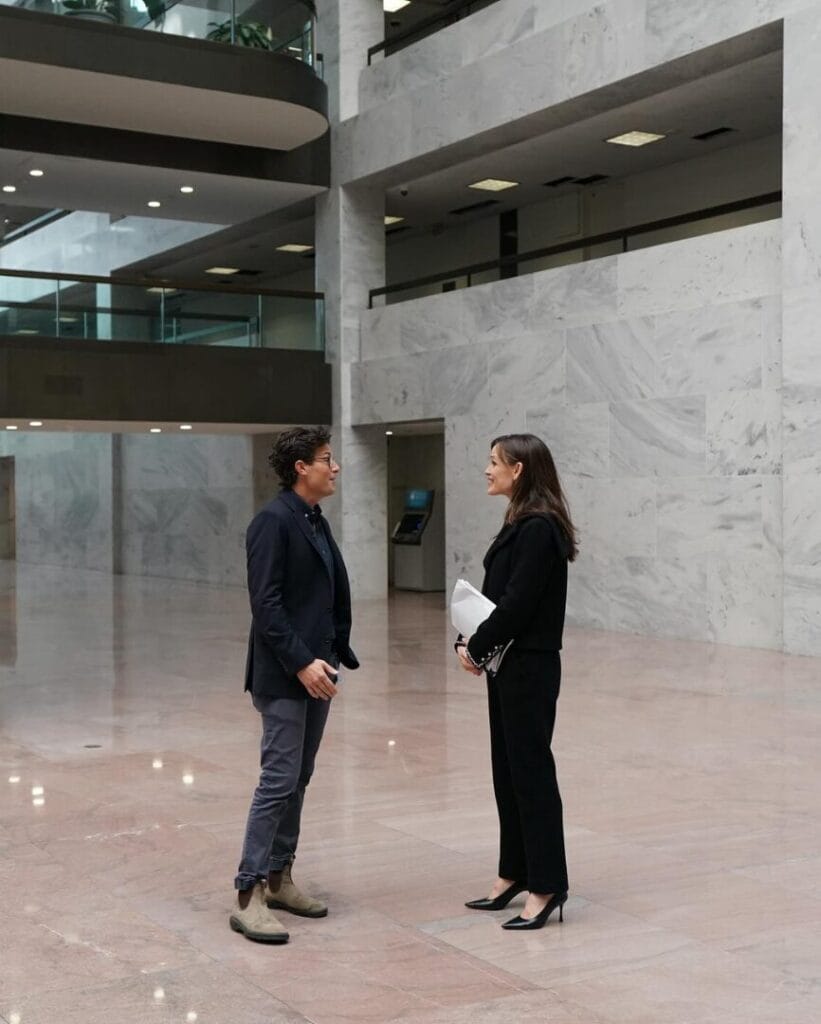
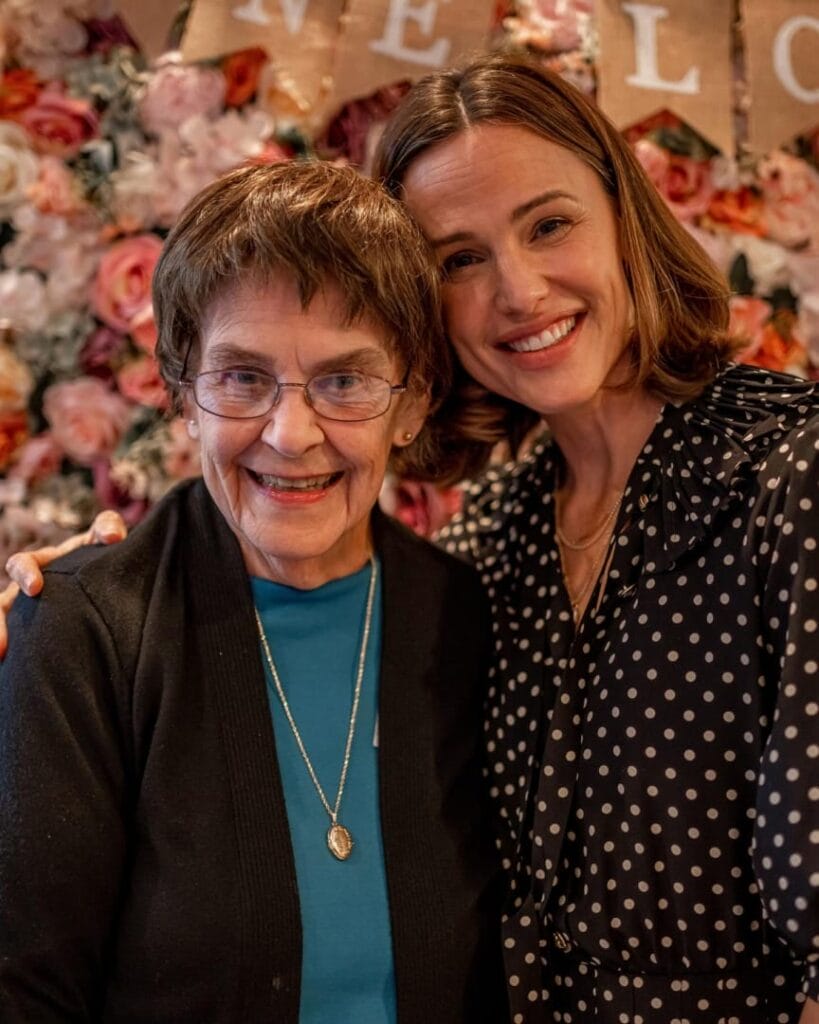
Your teacher could be featured on The Honored Podcast. Nominate them for our $5,000 Honored National Teaching Award!
More Honoree Stories
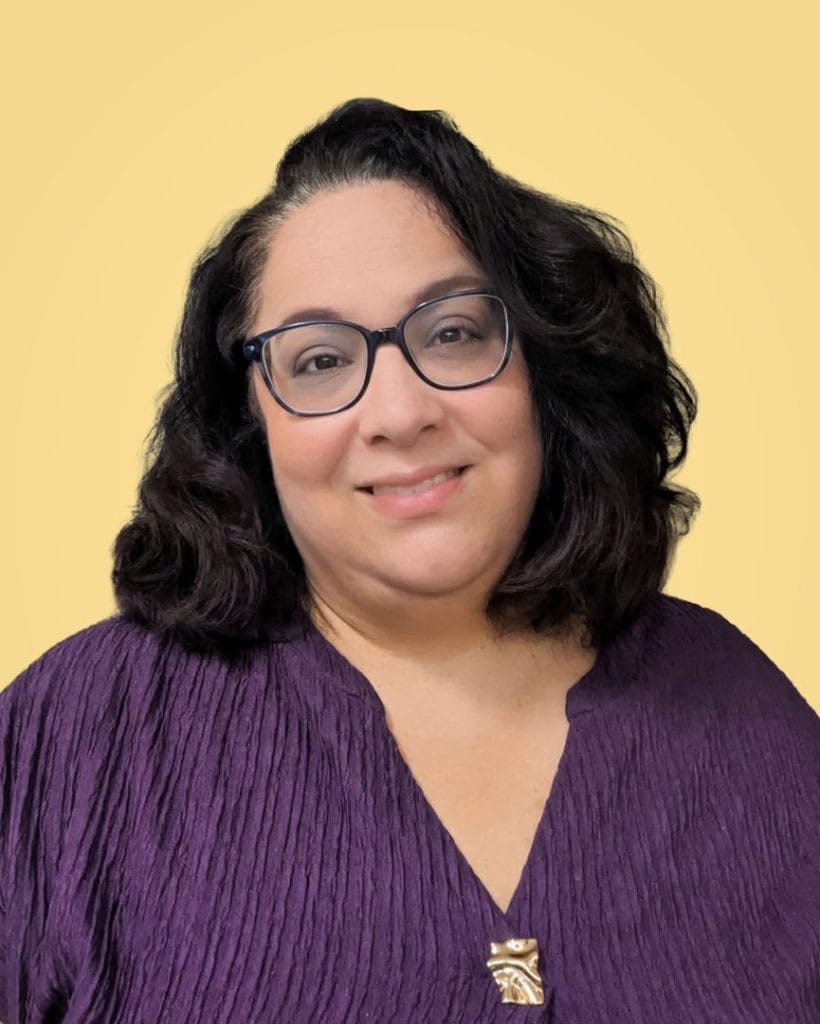
September
Madeline Gerena Franco
Whitney M. Young Magnet High School
Chicago, Illinois